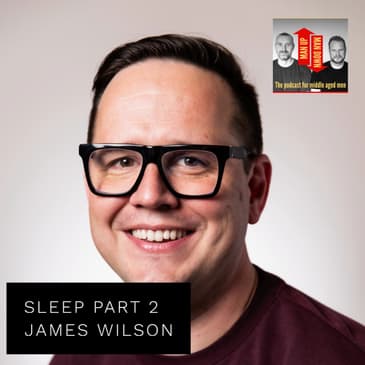
James Wilson, also known as "The Sleep Geek," returned to the "Man Up / Man Down" podcast to discuss the complexities of sleep and the many misconceptions surrounding it. Wilson, who comes from a family with a long history in the bed industry, has expanded his expertise into helping people improve their sleep quality. His work spans various sectors, including sports teams and corporate environments, where he helps individuals identify and address their sleep issues.
Wilson's approach to sleep is both practical and evidence-based. He critiques the wellness industry's tendency to oversimplify or exaggerate solutions, particularly in marketing products that claim to solve sleep problems universally. For example, he discusses the overemphasis on blue light from screens as a sleep disruptor, noting that recent research suggests this impact may be overstated, especially if individuals receive adequate daylight exposure.
Wilson also addresses the common issue of pets disrupting sleep. He notes that while many people allowed pets into their bedrooms during the lockdown, this can lead to significant sleep disturbances. He is now collaborating with a "sleep vet" to develop solutions for this problem, emphasizing that a human bed is not designed for animals and that both humans and pets would benefit from sleeping separately.
Another key topic Wilson explores is the role of genetics in sleep. He explains that many sleep characteristics, such as whether someone is a "morning person" or a "night owl," are inherited. He also points out that sleep disorders and the general quality of sleep can often be traced through family lines.
Wilson's holistic approach to improving sleep involves understanding an individual's unique needs and circumstances rather than relying on one-size-fits-all solutions. He advises listeners to be sceptical of broad claims made by the sleep and wellness industries and to seek solutions that are tailored to their specific sleep challenges. His app, KipMate, is designed to help users identify their sleep problems and find personalized solutions.
In conclusion, Wilson advocates for a more nuanced and personalised approach to sleep, warning against the oversimplified solutions often marketed by the wellness industry. He encourages people to explore their sleep habits and needs comprehensively, considering factors like environment, genetics, and lifestyle.
https://thesleepgeek.co.uk/
Hosted on Acast. See acast.com/privacy for more information.
[00:00:05] Welcome to the Man Up, Man Down podcast presented by Volker Ballueder and David Pawsey.
[00:00:12] We discuss the pressures and challenges faced by men approaching middle age that we're often
[00:00:16] too embarrassed to speak about with our friends. You can find us online at www.manupdown.com
[00:00:26] Enjoy the show and don't forget to subscribe and leave us a review.
[00:00:33] Welcome to another episode of Man Up, Man Down. Again, we've got a returning guest. We've got James Wilson.
[00:00:45] I'm sure that all of you listened to the first episode that we recorded with him. But for those, for the minority that didn't, James is also known as the sleep geek.
[00:00:58] He's the third generation of selling beds. Though sleep has been part of his family for several generations.
[00:01:08] But James has sort of taken this to a whole new level. He's worked with celebrities. He's worked with footballers, international footballers.
[00:01:16] But he's also sort of, well, we're going to cover a lot of a range of topics today.
[00:01:22] But I know that James has also launched KipMate, which I believe is an app with tools to improve sleep.
[00:01:32] But anyway, we're also going to talk about sleep bollocks.
[00:01:36] So thanks for coming back, James.
[00:01:40] Yeah, thank you very much. And how are you both sleeping? Importantly, how are you both sleeping?
[00:01:46] Oh, where do we start? James, good to have you back. Should I start, David?
[00:01:50] Yeah, you go first. Let's talk about sleep first. So this week in particular, I had a bad, bad, bad week. So I normally still go to bed 9-ish, 10-ish and get up at 5am.
[00:02:04] So I still do my 5am routine. I know you're not a big fan. But I went out to an event on Tuesday.
[00:02:10] So I extended my awake time until about midnight, including a drink or two.
[00:02:18] And then I slept longer. I was in bed for about 9 hours, my app said. But I only slept 6 and a half.
[00:02:23] So I was a bit tired, to say the least, on Wednesday.
[00:02:28] And last night, so we're recording this on Friday, last night I had, you know, I woke up. I needed to loo around about 3 o'clock.
[00:02:35] And then as I was going back to sleep, my doc needed out. He needed to loo as well.
[00:02:40] And then my cat came in with a little present. So yeah, it was a bit of a rubbish night last night.
[00:02:47] So I got about 6 hours, 6 and a half. Which to be honest, I can function on.
[00:02:51] But I notice, I mean, I have my nap, as you know, every lunchtime.
[00:02:55] But I'm noticing that I need my nap.
[00:02:59] Looking forward to it today then. Looking forward to your nap today.
[00:03:01] Oh, I do, yeah.
[00:03:03] And it's interesting because it is PECS in my work.
[00:03:07] So like, as we talked about previously, I actually a lot of time go into companies.
[00:03:10] You know, Kickmate is a company. We have an app.
[00:03:12] But actually we are really more than that.
[00:03:14] We are about helping people start the start.
[00:03:17] What is your sleep problem?
[00:03:18] And then we help them work out what's the best thing to solve that problem.
[00:03:22] What's your answer for you?
[00:03:24] And a lot of my work is in corporates and sports teams, as you've mentioned, David.
[00:03:28] And like pets are a problem at the moment. I think a lot of people bought pets during lockdown.
[00:03:34] And then we maybe brought them into our rooms or when they, it looks like our kids, when they're not sleeping, we need to get to sleep.
[00:03:40] So we, we try it on this night, get the best, the best solution we can to that problem.
[00:03:44] And it's often bringing them close to us to a piece.
[00:03:47] And then no, pets could be terrorists when it comes to sleep.
[00:03:50] I've worked with people where, you know, they've been pinned to the bed by a, by a dog massive paw because this dog knows you're going to try and leave.
[00:03:57] And it is not having any of it.
[00:03:58] I've had, um, I, I went with a couple where they've got a double bed.
[00:04:01] So a double bed is 137 centimeters wide.
[00:04:03] They're a double bed.
[00:04:04] So each person actually has 68.5 centimeters in double bed.
[00:04:07] Normally that's less than a baby has in the cot bed.
[00:04:09] And then they put a massive golden retriever in the middle of them.
[00:04:12] And they couldn't understand why they weren't sleeping.
[00:04:14] Um, and you know, it's warm.
[00:04:16] A pet is warm.
[00:04:17] A pet, a pet, you know, it will, it will snore.
[00:04:21] It will bark in its sleep.
[00:04:22] It will trump quite a lot.
[00:04:24] You know, and they are, and they are smelly ones.
[00:04:26] They're good.
[00:04:26] They're going to wake you up.
[00:04:27] They are going to wake you up.
[00:04:28] And I think, um, you know, it is, it is a problem that I'm coming across more and more.
[00:04:33] And actually what we do at Kikme, we were, we just about start working with the UK's only sleep vet.
[00:04:38] So her expertise is up to the training vet.
[00:04:40] She actually, I work for a mattress company.
[00:04:42] So she's, she's, she would come from a slither by ransom me,
[00:04:45] actually developing products for pets that support them properly.
[00:04:49] Cause her bed, a bed, no human bed is not designed for an animal.
[00:04:52] Um, and actually she's trying to drive people, not sleeping in the same environment as the, as the,
[00:04:57] the pets, because it's better for the pair.
[00:04:59] You know, it's better for their sleep, not physically pregnant.
[00:05:00] Cause you know what?
[00:05:01] We snore, we chump, we make noises in our sleep.
[00:05:04] We're likely to wake them up as well.
[00:05:06] So, so we are, we are looking at that kind of a, that kind of solution.
[00:05:11] Like you mentioned cats, cats are hard.
[00:05:13] Like cats are no, in the daytime, they will terrorize you at night.
[00:05:16] I, I have, again, a person who is at front of the street side of her face.
[00:05:19] I had one football I worked with.
[00:05:21] She woke up one morning with a cat in bed next to her.
[00:05:24] She's not got a cat.
[00:05:25] She's got no idea how this cat got in her house and got into bed with her.
[00:05:29] That was, that was a definite cat, cat sleep.
[00:05:33] But also, we're still very similar to humans.
[00:05:35] If we get our animals used to sleeping with us, it's hard to, it can be, it can be difficult to undo.
[00:05:41] I think some of it is about war.
[00:05:43] So when I've, when I've worked, when I've done tried to help people in the past, we've done things like put a hot water bottle in, in the, in the dog's basket.
[00:05:51] Used, used owner's smells.
[00:05:53] So give them some of the smells of the owner, like move the basket slowly out of the room.
[00:05:56] It's not easy.
[00:05:57] And I think, but this is why we bought Lauren in because, you know, this is her, I'll work with the, the pet parents to, to just see.
[00:06:06] And I will interestingly, many of the, many people in relationships, the, there's a couple and one person wants to pet out the room and one person doesn't.
[00:06:14] Um, and, and at that point, that's actually more relationship issue.
[00:06:18] Cause if you're putting your pets well-being above your partner's well-being, I think there's a little bit more, more in play.
[00:06:25] Um, than, than just should this pet sleep in the room?
[00:06:28] And that is the right.
[00:06:30] But these, if that is the case, if people are having those discussions with a partner, it's about compassionate conversations.
[00:06:36] How do we create an environment that works for everyone?
[00:06:38] Um, no, including the pet, but it is.
[00:06:40] Yeah.
[00:06:40] So I can, I can, I can, my, my, um, my advice is, is you need to do it at the right time.
[00:06:45] But we could, you need to do it slowly and you need to, um, slowly move that room.
[00:06:49] For cats, one, one tip that Lauren did give me was a cat flap in the bedroom door can be helpful.
[00:06:54] So if they are a scratcher on the door, actually be allowing them free access to the room.
[00:06:59] Um, see, it could, could be, could be helpful.
[00:07:01] So, see, normally the cats, uh, and I'll let David get a word in at a minute how, how he slept.
[00:07:06] But the, the, the main problem I have with the cats is they, they're bringing in, let
[00:07:10] they, mouths of that or whatever it is.
[00:07:11] Right.
[00:07:12] And, and our cat just starts meowing the whole way.
[00:07:15] Kind of like, you know, meow, meow, meow, you know, look, I got a present for you.
[00:07:19] And I'm like, shut up, you know, eat your rat or do whatever.
[00:07:22] And then the problem is if, if, if he's coming in quietly with the rat, he then wakes up the dog.
[00:07:28] And the dog obviously smells the rat, right?
[00:07:31] I smell a rat.
[00:07:32] And then those two get, and that's, that's the problem.
[00:07:35] Or those dog is in the cage and then he, you know, so that's the problem, right?
[00:07:38] So if, if, if it's just a cat coming in or a cat licking our bed, you know, it's easy, but.
[00:07:43] Anyway, David, how did you sleep?
[00:07:45] Oh no, I'm just loving, loving that insight into your life, Boca.
[00:07:49] Yeah.
[00:07:50] Um, great, isn't it?
[00:07:51] I mean, so I know that this won't be going out, um, for, for a few months.
[00:07:57] Um, but at the moment we're recording, well, I think it is, is it the summer solstice today?
[00:08:01] The summer solstice today, yeah.
[00:08:03] Um, and I just find this time of year, I just really struggle.
[00:08:09] It seems like I, you know, as soon as there's a bit of light, so I'm awake, like really early.
[00:08:16] And I mean, and going back to pets, it seems to be the same with the dog.
[00:08:21] And I'm ashamed to say that it's always my wife that gets up, uh, silly o'clock in the morning.
[00:08:27] Um, I think partly because I'm just like, I'm going to ignore him, you know, if I ignore him, then it will shut up.
[00:08:33] Whereas I'm like, no, if you go down, then you're pandering to him and he knows that he can get you out of bed.
[00:08:38] Um, but yeah, so, and, and I think again, it, it, um, you know, he, even though he sleeps sort of during the day when the sun's out, it does seem to be as soon as the sun comes out, he's like, oh, it's, you know, it's time for me to have my food.
[00:08:54] It's, you know, where's mommy, where's daddy?
[00:08:56] You know, I, I, yeah.
[00:08:57] And I mean, he sort of, he'll, and we've got, so we've got a, um, you know, we can't get upstairs.
[00:09:03] We don't let him upstairs.
[00:09:04] We never have.
[00:09:07] Um, so we've not had that, you know, sleeping in the bed issue, but it is, yeah.
[00:09:12] Waking us up ridiculously early.
[00:09:14] And it makes sense because light is the driver of court.
[00:09:17] Like, you know, as soon as it's like, you start to produce cortisol, you start to wake up.
[00:09:20] We designed as animals, like other doggies to, to react to light in that way.
[00:09:23] So I'm like, you're doing it.
[00:09:24] I think when we, when you're a bit more predisposed to light sleep, a bit more probably predisposed to being a bit of a lark.
[00:09:29] I think then your, your reaction to, to light can be, can be, can be different.
[00:09:34] And I think when I'm working with people, it's often about changing that story because it can become, I know for me, it can become this where I'm like, oh God, here we go again.
[00:09:42] Here we go again.
[00:09:43] Three o'clock in the morning.
[00:09:44] Oh God, I'm not going to get sleep.
[00:09:45] I'm not going to get sleep.
[00:09:46] And it is finding the tools for you that allow your mind to wander from that and to, and to a bit of his acceptance.
[00:09:54] I would say for people I cause in the summer, it is harder to sleep.
[00:09:57] That, that is a, that is a fact that we can't change that, but we can do things.
[00:10:00] So it is just making sure the curtains are blackout or, or you try to block the light out as much as possible.
[00:10:07] You know, you could maybe use an eye mask.
[00:10:10] The blots ones now that are a lot more comfortable.
[00:10:11] You may want to use earplums because you've got, you've got windows open because we're in the middle of summer.
[00:10:15] And therefore, you know, you've then got the noise.
[00:10:17] Our, the village I live in has got a strange hairpin bend, which, which boy races come from all over the north of England.
[00:10:23] And we've got the morning to do a, to do a, a, a, a, a, a turn on.
[00:10:28] Um, and I, and I really wish to, and that, and that, and that can, that can, that can wake me up.
[00:10:32] So I think if somebody is take eight to nine as it comes a little bit, a little bit and, and those tools.
[00:10:37] So it might be, you know, it's one of the things I do is I use it.
[00:10:39] I use eight of the, Z of football teams.
[00:10:41] And I will, I will like, what was a football team?
[00:10:43] It begins with eight.
[00:10:44] One begins with B.
[00:10:45] One begins with C.
[00:10:45] And I might make it more difficult because it's like, it can only be South American team.
[00:10:49] Uh, if you're looking for Z, if you were doing this, FC's Waller in, uh, in, in, in Holland.
[00:10:55] So it'll be a long time to think of that one.
[00:10:56] I think there's also a team in Egypt, um, that is also gives me Z.
[00:11:00] But it can be, you know, you could do things like that.
[00:11:02] I sometimes count back from a thousand.
[00:11:04] Sometimes I use my wife's voice in my head going, James, you can't solve that problem right now.
[00:11:08] Shut up.
[00:11:08] And then that helps me, helps me get back to sleep.
[00:11:10] I might listen to something because our hearing is our alarm system.
[00:11:13] So if we can relax that, we can relax the rest of the body.
[00:11:16] But a lot of it is acceptance.
[00:11:18] I think I, I deal with waking the night so much better because I accept that I wake in the night.
[00:11:23] And I think as we get older as men as well, you know, like, like, well, if it's three o'clock in the morning, we just, you wake up for a week.
[00:11:29] And, and if, as we go for that week and go, oh God, I'm not going to get back to sleep.
[00:11:32] It will come true.
[00:11:33] No, we are in the summer now.
[00:11:35] The biggest problem this summer with sleep is people going, it's too hot to sleep.
[00:11:38] Oh, well done.
[00:11:40] It's now too hot to sleep.
[00:11:42] You've, you've created that.
[00:11:43] No, sleep is about stories a lot of time.
[00:11:45] If we are creating that story for ourselves, it will come true because, because it's, it's sleep is so much about our mindset and we can't force it.
[00:11:52] But we can change the stories that we do.
[00:11:54] We might be rubbish at sleeping, but we've really been tired.
[00:11:56] It might be warm, but you know what?
[00:11:58] It'll be raining in about three, four days.
[00:12:00] You know, and as it gets darker and manier and windier, and actually we're putting the heating on, that can affect, you know, the heating coming on at four or five in the morning can wake us up.
[00:12:09] Yeah.
[00:12:09] No, you know, you're angry about it.
[00:12:11] So I've got neighbors who, if we moved in, started leaving the security lights, like, oh, I will fume it.
[00:12:16] I will absolutely fume him.
[00:12:18] Is he trying to stop me sleeping, this dick stick?
[00:12:21] And, and that's it.
[00:12:22] I had to accept, I had to accept that, you know, he's obviously a millionaire who can leave his security lights and all night.
[00:12:27] That's, that's, uh, that's up to him.
[00:12:30] But I, for a good week, I was like so angry.
[00:12:35] You, you, you have people that drive.
[00:12:37] I mean, I live in a cul-de-sac and even in a cul-de-sac, you get people driving down to cul-de-sac at an incredible speed, you know, at three o'clock in the morning.
[00:12:45] And you go like, you know, what, what, what are you doing in the cul-de-sac at three o'clock in the morning?
[00:12:49] Right.
[00:12:49] Well, when I, when I can't sleep, I like to go to, uh, go for a drive and then, uh, burn down vultures, cul-de-sac.
[00:12:56] Yeah, they already do.
[00:12:58] But you, you mentioned hot, um, you know, not that I want to show off, right?
[00:13:02] But, um, you know, hot, hot, hot bedrooms.
[00:13:05] What, what we've done, um, a couple of years ago now, we actually installed air conditioning in our bedrooms upstairs because we've got solar panels.
[00:13:13] Yeah.
[00:13:13] Um, and, and I got one in the office as well, just, just to show off and the difference it makes when it gets really hot.
[00:13:19] I know it's only one day a year in the UK, but it's, it's getting more.
[00:13:23] So, and, uh, for me, it makes a huge difference.
[00:13:26] And, and the reason we, we originally got the air conditioning was more actually to heat the house in the winter as well.
[00:13:32] Right.
[00:13:32] Using, using solar power.
[00:13:34] Um, but yeah, that makes all the difference, right?
[00:13:36] When, when you go to bed and it's actually 18, 20 degrees, right?
[00:13:40] Once it's 25, 30 outside, you go like, I can sleep tonight.
[00:13:44] Right.
[00:13:44] I mean, I don't wake up.
[00:13:45] Um, and you can control it.
[00:13:47] You can control.
[00:13:48] So really the more we can control our sleeping environment, so the temperature, whether that's between the duvet and the,
[00:13:53] and the mattress, or whether that's actually the room, the easier it is, it is, it is to sleep with that.
[00:13:57] So we are working football.
[00:13:58] Actually, what we get the hotels to do is put the, put the, um, no matter what time of year,
[00:14:02] it's put the thermostat on the air con to 18 degrees.
[00:14:05] Cause it's easier to make it warmer than it is to make it cooler.
[00:14:08] And you go into a hotel, they'll have it on 25 degrees.
[00:14:11] Yeah.
[00:14:11] What are you doing?
[00:14:12] Like, come on.
[00:14:12] That's just, that's just not, that's not on.
[00:14:14] Like that, your purpose is trying to remove my sleep here.
[00:14:17] You know, you're in there and you're like, that's your pants in the first three minutes.
[00:14:20] Cause it's that, it's that warm.
[00:14:21] So I think it's, it, temperature, like the two things you need to fall asleep,
[00:14:24] dropping core temperature, dropping heart rate.
[00:14:27] And, and the controlled environment allows your body then to do what it needs to do.
[00:14:30] Cause your temperature drops to the night about four o'clock in the morning,
[00:14:32] you're at your coldest core temperature wise.
[00:14:34] And then, and then it treats you.
[00:14:35] If you can't go to that process, your body will wake up cause it, it wonders what is happening.
[00:14:39] So what we find with hot weather is the first couple of days are awful, horrible.
[00:14:44] Cause, cause it's, it's changed quite as difficultly.
[00:14:46] It's probably gone from like 15 to 25.
[00:14:47] We have that junk, don't we?
[00:14:48] Like really big junk.
[00:14:49] When your body, when that becomes a norm to your body, then we're looking for a drop
[00:14:54] in core temperature.
[00:14:54] We're not looking for like you've been cool all the time, just a drop.
[00:14:58] So, so that if you could just like a warm shower or put your feet in some like lukewarm
[00:15:03] water, but not cold, not freezing.
[00:15:05] So what freezing does, that shocks you into waking.
[00:15:07] Your body thinks, why have I gone cold all of a sudden?
[00:15:08] And it, it, it, it creates that cold.
[00:15:10] Like, you know, your body's like, I need to investigate.
[00:15:13] So any, any, any time of the year, what we're trying to do is keep the temperature as consistent
[00:15:17] as possible.
[00:15:17] The problem we have then in the winter and often I actually deal with more temperatures
[00:15:21] using in the winter than doing the summer.
[00:15:23] Cause what people do is they turn their heating up in their bedroom really high.
[00:15:26] Now used to before the cost of living crisis, that has actually helped sleep.
[00:15:29] I would say, cause, but what you want is your bedroom in the winter to feel slightly
[00:15:33] cooler than the rest of the house.
[00:15:35] Because, cause that's a really good, like indicates your body, like look, there's a little
[00:15:38] change in temperature.
[00:15:39] What happens next?
[00:15:40] We fall asleep.
[00:15:41] So it's, it's, it's, it's such a fascinating subject when it comes to, like I work a lot
[00:15:45] in Finland and in Finland all year round, we'll have the windows open.
[00:15:48] Airflow coming through all year round.
[00:15:50] Cause it's perfect.
[00:15:51] They believe it, it helps.
[00:15:52] And I, I, no, I think they're right.
[00:15:54] I think, I think getting snug, you know, the house, the room is quite cool.
[00:15:58] You get in bed and get nice and, nice and snug.
[00:16:01] So you, you, you kind of like, you stop being like, so the reason why we fall asleep, we
[00:16:04] sweat is that you get really hot, sweat a little bit, drops your cold temperature.
[00:16:09] Now fall asleep.
[00:16:10] Now what happens with, with being too hot is you then go hot again and you wake up.
[00:16:13] So if you ever had that thing where you're like a really hot boot and you find yourself
[00:16:16] like dropping off, but then you, you then wake up, you're just a little bit too hot.
[00:16:21] But he's like, he's, he's gonna be so fast.
[00:16:23] See, more, more products coming out.
[00:16:24] So you're getting things like, uh, toppers that have systems in them that allow you
[00:16:28] to cool and heat the sleep environment for both people.
[00:16:32] But a simple tip.
[00:16:33] So if you have got someone who is a hot sleeper, what you find is in relationships, one hot
[00:16:37] sleeper, one cold sleeper, one good sleeper, one poor sleeper, one lark, one owl, whatever,
[00:16:41] whatever you believe you're up there has a good sense of humor when it comes to sleep in
[00:16:44] terms of who we attracted to.
[00:16:46] And, um, I think a separate duvets can, can really, really help.
[00:16:51] So like, you know, I think in your book, people are more open to accept for duvets.
[00:16:55] That makes a real difference to your temperature because you're not getting someone else's heat
[00:17:00] making you warmer.
[00:17:01] You've got your own, your own like little environment that allows you to control it as you wish.
[00:17:05] So on that note, um, I, I made a rash purchase yesterday.
[00:17:11] Actually, I shouldn't have bought it.
[00:17:13] And then as soon as I put it in, I was like, I should have just waited till today and asked
[00:17:17] James about it.
[00:17:18] But, um, I mean, I've ordered a duvet that apparently cools you in the summer and warm to you in the
[00:17:26] winter.
[00:17:27] So, you know, and obviously you've sort of talked about, and we've got a king size one
[00:17:32] because yeah, you know, I'm, I'm a classic duvet stealer.
[00:17:36] I thought about Emma Stam, I think they moved it.
[00:17:38] Yeah.
[00:17:38] And, and, you know, sort of, well, like recently I was like, right, well, I'm just going to
[00:17:42] get the duvet from the spare room and, and that sort of helped, but it was almost like,
[00:17:47] all right, now we've got two lots of stuff getting tangled up.
[00:17:51] Um, but yeah, so I've ordered this, this, you know, amazing duvet.
[00:17:55] But so, you know, is, is that a possible or, uh, you know, to crowbar in a reference or
[00:18:02] is that sleep bollocks James?
[00:18:04] I like the way that I would say from your tone of voice, you maybe got an idea of one
[00:18:09] man going to say.
[00:18:10] Yeah.
[00:18:11] Um, so in theory there are materials that can like, so alpaca fleece, for example, is
[00:18:17] really efficient because what alpaca fleece does, it helps wick away moisture.
[00:18:21] What makes you hot and cold is too much moisture in the sleep environment.
[00:18:25] So when you've got like a feather or, or down duvet, that, that creates moisture and traps
[00:18:31] that moisture and that moisture sort of heats up and that's what makes you hot.
[00:18:33] So in, in the winter, in the summer, for example, if you put your duvet in the, in
[00:18:37] the, uh, freezer, like some people suggest, um, that is sleep bollocks.
[00:18:40] If you put your duvet in the freezer in front of your bed, yeah, you might be a bit cold
[00:18:44] for a bit, but then that melts and it ends up, it ends up, the moisture heats and
[00:18:48] makes you hotter.
[00:18:49] So it, it, it, it, it's really about, you know, if it, if it is a material that, that
[00:18:53] can wick quite efficiently moisture out of the environment, then in theory, yes, it can
[00:18:57] help you keep your own, your own temperature.
[00:18:59] I've tried duvets with like, um, outloss treatments, outloss like a PCM, like a treatment
[00:19:03] you use to wick away moisture.
[00:19:05] It's sort of a, a, a treatment you can put on fabric that can help wicking away moisture.
[00:19:09] And, and you know, that does give a little bit of relief, but it might be relief for
[00:19:13] the first 25 minutes, 30 minutes, it might be worth a couple of hours and these things
[00:19:17] don't just apply to duvets, they put them in mattresses as well.
[00:19:19] And you know, they can help, but for example, you know, if you, if you're a woman and you're
[00:19:23] going through, um, and you're going through a menstrual cycle for two of the four week
[00:19:27] cycle, your core temperature is a little bit too hot for sleep.
[00:19:29] So, you know, that duvets is going to have to do a lot of work to get you the right temperature.
[00:19:34] If you, if you're a woman living with a menopause, um, those temperature fluctuations
[00:19:37] can be significant and you can be hot and cold quite significantly in the same night.
[00:19:42] And I think, you know, even for a minute, if you're a man who does a lot of exercise,
[00:19:46] you've got a higher metabolic rate, you're going to sweat a lot.
[00:19:48] You're going to have a lot of like sweat, sweat in the night.
[00:19:50] And that product might be better than if you just use like a 30 and a half talk goose down
[00:19:54] duvet, but, but is it going to be able to like actively, um, like measure, measure
[00:20:00] your temperature?
[00:20:00] So I'd be interested if you could let me know how you found out.
[00:20:04] Yeah, yeah, definitely.
[00:20:05] Definitely.
[00:20:06] That would, that would be interesting.
[00:20:06] So probably I would, I would, I would, um, I would not say bollocks immediately, but
[00:20:14] maybe get your expectations in line, um, in, in, in how it performs is probably the best
[00:20:19] way you're going to.
[00:20:21] I mean, on the note of mattresses, um, since we last spoke, I got a new mattress.
[00:20:25] Hooray.
[00:20:26] Um, so we, but, but I just thought about it because you, you, you mentioned, um, you
[00:20:33] know, different duvets, uh, in, in, in Germany, right.
[00:20:36] Or in the consulment.
[00:20:37] So my parents have different duvets and they have different mattresses.
[00:20:39] Yeah.
[00:20:40] So they, they have a, have a, I don't know, king size bed, but they all both have their,
[00:20:44] uh, I don't know if it's a single mattress.
[00:20:46] I don't know how white they are.
[00:20:47] It's just, yeah, this blade down there is, you know, they see the spurious stem dummies.
[00:20:51] It's a sleep system, not a bed and mattress.
[00:20:53] The duvet is in there, the pillows are in there.
[00:20:56] But yeah.
[00:20:57] And it's like, I, I, I've worked with a company in Finland called Uniculma who, who make the
[00:21:01] bespoke mattresses.
[00:21:02] And me and my wife have got her sides for her and my sides for me.
[00:21:05] And he, I, it is, it is amazing.
[00:21:08] I'm absolutely amazing.
[00:21:09] See, we, we, I wanted to have that.
[00:21:11] So we, we literally went back to, you know, one, one of these big retailers, right.
[00:21:16] And, um, uh, where, where we got our original mattress from eight years ago.
[00:21:20] And they, they usually last about eight years.
[00:21:22] And my wife said, oh, you know, it's, I think it's time.
[00:21:24] Maybe we look for a new mattress.
[00:21:25] And I'm like, yeah, why, why don't we, you know, it was around about Easter.
[00:21:28] Um, you know, they were say it's on as always.
[00:21:31] And, uh, I, I found a complete, um, memory foam mattress and I'm like, I prefer that over
[00:21:36] what we had.
[00:21:37] We had like spring, um, you know, pocket springs and then a bit of memory foam on top.
[00:21:42] And we got that mattress and I loved it, but it was too hard for my wife.
[00:21:47] My wife didn't like it.
[00:21:47] And I'm like, can we just have it split so I can have my bit.
[00:21:50] And so we went back and bought the same mattress again, which I'm like, this is like, you
[00:21:54] have a golf and you buy the golf again and again and again, you just had the same car, right?
[00:21:58] I'm like, you need to try something new, but she, she didn't like it.
[00:22:01] It wasn't for her.
[00:22:02] So we're back to the old model.
[00:22:03] And I'm like, you know, I sleep well, but you know, I think I could sleep better.
[00:22:07] And then I looked at these, um, I mean, that's a brand, right?
[00:22:10] Tempura mattresses.
[00:22:12] I mean, their memory foam and you, you really sink in about two and a half grand.
[00:22:16] Yeah.
[00:22:16] I mean, you need a mortgage to buy a mattress there, right?
[00:22:18] I mean,
[00:22:18] Well, it'd be there that.
[00:22:19] So you think if that was 10 years per night, it would probably cost you about 0.07
[00:22:23] pence.
[00:22:24] And that, and that is, and I think in Germany, the average sale of a mattress in Germany is
[00:22:29] just under a thousand euros.
[00:22:30] In the UK, it's actually desert 500 pounds.
[00:22:32] And we don't spend enough on our sleep.
[00:22:35] I'm not saying you've got to spend a lot of money.
[00:22:37] You don't.
[00:22:37] That's just right for you.
[00:22:38] But, but we don't, we don't approach it.
[00:22:40] So like you, that sleep system that you have in Germany, the reason they do it like that
[00:22:44] is the whole point is there's three things you're trying to do.
[00:22:46] You've got the right temperature, you've got the right support, and then you've got the
[00:22:50] right feel and support and feel are the same thing.
[00:22:52] And we, and we approach it as the same thing.
[00:22:55] I need a firm mattress because I've got a bad back.
[00:22:57] You got a soft mattress that puts your spine in the right position, but that feel might not
[00:23:01] be what you're culturally used to.
[00:23:03] So a lot of our, the feel part of it is very cultural.
[00:23:06] So when I was working, we had a bed shop.
[00:23:07] We'd like, I read, we, we did some quite, um, quite unique stuff and we had customers all
[00:23:12] over Europe.
[00:23:13] And you'd find like, like in Italy, it's like rock hard, rock hard.
[00:23:17] And then you get an American customer in, they want like a big Blomange, like cloud-like
[00:23:21] mattress from, in terms of feel.
[00:23:23] But you can make both those mattresses support somebody.
[00:23:26] Rock hard are probably a little bit harder because you need a little bit of give to get your
[00:23:29] spine straight, but it's, it's those, when we find a mask, we don't think about those
[00:23:33] three things, it's temperature, it's feel and it's, um, support.
[00:23:36] And then like you've, you've just focused with different shapes.
[00:23:39] You know, I am broad shouldered, not what should, my wife is very petite.
[00:23:43] She's got a real curve to her spine.
[00:23:45] She needs softness around her hips and firmness around the shoulders.
[00:23:48] I need softness around my shoulders and firmness around my hips.
[00:23:51] You get in an off the shelf, one mattress for everyone.
[00:23:55] But no, and especially, we're a bit out of that now, but the, the, those one, those
[00:23:58] mattress bed in a box, one mattress for everyone will, will solely have a problem for you.
[00:24:03] Again, there's a, one of the problems, the reasons Sleek Bollocks came about.
[00:24:07] So you mentioned Sleek Bollocks earlier.
[00:24:08] We have a Sleek Bollocks Awards.
[00:24:10] We have a newsletter.
[00:24:11] So you can search for Sleek Bollocks newsletter.
[00:24:13] We have a podcast, Sleek Bollocks podcast.
[00:24:16] Um, we talk, it's this sort of stuff, you know, it's like your expectation needs to be
[00:24:20] right.
[00:24:20] If you were trying to get a mattress for broad shouldered, no curves to your back, hips,
[00:24:26] narrow shoulders, big curves to your back, um, hips, you know, it's not gonna be the
[00:24:30] same mattress.
[00:24:31] It's not, it is very unlikely the same mattress could be done, but it could do.
[00:24:34] There are these technologies out there and that, at the KickMick, we're just developing
[00:24:37] a mattress.
[00:24:38] Um, and the problem we're trying to solve is around, um, is around, uh, support and it's
[00:24:43] around temperature.
[00:24:44] For, for a phone type mattress, for a temper type mattress.
[00:24:47] And we're here in a technology that's got like a unique feel to it.
[00:24:50] Um, because that feel I find actually, cause what I try to do with a mattress when I'm
[00:24:54] developing it, I'm trying to hit most people, 85, 88% of people.
[00:24:58] And I think that that technology does that job really, really well, but I'm not going
[00:25:03] to stand here and go, that mattress is right for everyone because that's, that is bollocks,
[00:25:06] you know, but that mattress is really good for most people.
[00:25:09] And, and that's what I'm, that is what I'm, I focus on when, when we're developing, you know,
[00:25:14] colors.
[00:25:14] And when we, as we expand the range, we'll, we'll do things for certain sleep issues.
[00:25:19] Cause all of them, when we talked about duvers, we talked about mattresses, what's your problem
[00:25:23] and what's the product that can solve it best?
[00:25:25] And at KickMick, we try and take people on that journey.
[00:25:26] What's your problem and what's the, the, the answer to your, to your problem?
[00:25:30] So it might be, you know, I've read some marketing material of a mattress company.
[00:25:35] It's like, our mattress will solve your sleep problem.
[00:25:37] Right.
[00:25:37] Well, if I've got sleep apnea, your mattress can't solve that problem.
[00:25:41] You know, if, if, if, if my dog's waking me up in the middle of the night, your mattress
[00:25:45] can't solve that problem.
[00:25:46] And this is what I don't like about, about the sleep world at the moment.
[00:25:50] It's unregulated and there is so much bullshit out there.
[00:25:53] People just making clear.
[00:25:55] There's an iMass house.
[00:25:56] We talked about iMass and blocking the light out, David.
[00:25:58] This iMass is brilliant.
[00:26:00] It's comfortable.
[00:26:01] It blocks the iMass, the light out.
[00:26:03] That is what your iMass should do.
[00:26:05] Do you know what their marketing is focused on?
[00:26:06] My iMass will mean that you never have to use Botox again.
[00:26:11] What the nerve are you on about?
[00:26:13] What are you on about?
[00:26:13] The founder of the company claimed he founded it because he had chronic insomnia.
[00:26:16] And guess what?
[00:26:18] This iMass sold his insomnia.
[00:26:19] And you see it around a brain supplement company.
[00:26:22] Founder's got a podcast, quite well known, constantly banging about.
[00:26:25] This brain supplement cured my chronic insomnia.
[00:26:28] Might have done.
[00:26:29] Might have done.
[00:26:30] That's a data set of what?
[00:26:31] We can't, we can't.
[00:26:33] You shouldn't be saying it like that.
[00:26:34] We should be putting more nuance and we should be saying like, it worked for me, but I'm
[00:26:39] not though.
[00:26:39] You know, it might work for you.
[00:26:41] I really don't like these definites that the sleep will, not just sleep, well-being.
[00:26:45] No, we're all the well-being rulers.
[00:26:46] We all see it.
[00:26:47] This will definitely solve your issue.
[00:26:50] No, it might not.
[00:26:51] Because one, you don't know what the issue is.
[00:26:52] And two, that might not work for me.
[00:26:54] And I think that's, that's what I'm, a lot of my work as a Sleeky, a lot of what I'm
[00:26:58] battling against is just trying to give people the right information to make the right
[00:27:01] decisions around getting them sleeping better, not feeding them a load of bollocks.
[00:27:07] I mean, well, yeah, you know, you've sort of touched on the point.
[00:27:11] I mean, you sort of said about the sleep industry.
[00:27:13] I mean, you know, and in our pre-show conversation, you know, you said that it's sort of the wellness
[00:27:22] industry in general.
[00:27:23] And, you know, and I think, again, it's almost like another sort of unintended consequence
[00:27:28] of the pandemic is that, well, you know, in a good way, there is a lot more interest
[00:27:33] in wellness.
[00:27:34] But as you say, it means that the market is being flooded with, with, you know, well,
[00:27:40] charlatans, for once a better word, but, you know, people that are unqualified.
[00:27:45] You've been healthily skeptical, isn't you?
[00:27:47] I'm actually, in October, I'm talking at a QED festival, which is, which is a skeptics festival
[00:27:52] alongside people like Robin Ince and some, and some scientists and some people, um, to
[00:27:56] people like a lady who's written a book looking at goop and that sort of culture in the stakes,
[00:28:00] that wellness thing in the stakes.
[00:28:02] And I think, I think that skepticism is important.
[00:28:04] So I think there's a thing I always say to people about like research, for example, you
[00:28:07] know, like, so mouth taping won the Sleep Box Awards this year because mouth taping uses
[00:28:11] research.
[00:28:12] There's a little bit of research into mouth taping around sleep apnea.
[00:28:14] There are lots of people in moderate sleep apnea who were maybe, they were having apnea episodes
[00:28:19] eight times an hour.
[00:28:20] So mouth taping reduced it by maybe down to six, something like that.
[00:28:24] I can't remember the exact figures, but it was something like that.
[00:28:26] So you, you had, you had a, and you now got sixth.
[00:28:29] In terms of your health, that will not make a massive, a massive difference.
[00:28:32] If you make that percentage, it's actually like 25% reduction and you, and you, and that,
[00:28:37] and that's what they do.
[00:28:38] And also, but this is one piece of research with 20 people and what, what people are doing,
[00:28:42] they are using research in this way of like little pieces of research and then exaggerating
[00:28:47] the claims.
[00:28:47] And I always sort of say to people that all opinion is based on self-interest and all research
[00:28:51] is also based on self-interest.
[00:28:53] And if you are, if you are looking at some, some research, then you, then you, you need
[00:28:58] to have that sense of skepticism that, that even if it's a million people, this, this product's
[00:29:03] being tried on, you could be a million and one that it doesn't work on.
[00:29:06] And, and, and just bear that in mind when you're making a decision.
[00:29:10] Um, no, if you may suggesting this mattress or try this or try that, have they got the
[00:29:15] same sleep issue as you?
[00:29:17] Is it the same answer?
[00:29:18] And I think that applies to, to like everything that we do.
[00:29:20] You, you've got to like go on a journey and try and find those, those answers that were,
[00:29:24] that were for you, but do it with that sense of skepticism.
[00:29:26] Because I think at the moment we are flooded that, and he sat, he's marketing.
[00:29:31] I think we're all from like a business background.
[00:29:32] It's marketing.
[00:29:32] It's just like, Louis come and don't make a marketing all the time, innit?
[00:29:35] They're all just copying each other, making wildly false claims.
[00:29:38] And as a consumer, like where do you even start?
[00:29:42] Hello folks, it's Volker here.
[00:29:44] I hope you enjoy this week's episode.
[00:29:47] As you know, I coach executives, whether that is for leadership skills or sales leadership
[00:29:53] skills or working as a therapist too.
[00:29:56] There are a few ways I can help you to get unstuck, improve your work-life balance or become
[00:30:01] a better version of yourself.
[00:30:03] So you will be more productive and have more time for your family.
[00:30:07] Whatever it is, you can join my client list of people from General Electric, Pepsi, DHL,
[00:30:14] Boots and many others.
[00:30:16] Book a free exploratory call via my website www.openart.us.
[00:30:23] That's O-B-N-A-T dot U-S.
[00:30:27] Now back to the show.
[00:30:32] I mean, you sort of mentioned about research.
[00:30:37] I mean, from your life, and obviously that is sort of one of the things that's often talked
[00:30:41] about sleep is that we don't know a great deal about it.
[00:30:46] But I mean, have there been sort of any recent studies or, you know, is that like an area
[00:30:52] that there is much work going on?
[00:30:56] I think there is.
[00:30:56] And there's a lot of like interesting and there's a lot of interesting research out there.
[00:31:00] I would say I'll give a plug for another podcast.
[00:31:02] There's a podcast called Sleep Unplugged that really like does well at going into research
[00:31:08] and then talking about it in quite simple terms.
[00:31:11] But I think a lot of what I do is also that.
[00:31:13] And I think, so for example, one of the things that we've searched for at the moment is going
[00:31:18] to develop this.
[00:31:19] Whether blue light, you know, the effect blue light has on our circadian rhythm.
[00:31:23] Is the blue light off your phone impacting your circadian rhythm?
[00:31:27] And I think that's one of those like tropes of sleep advice, isn't it?
[00:31:30] We all know, don't use your phone before bed because the blue light is the sun and your
[00:31:34] body thinks it's now awake.
[00:31:35] We've seen more and more that that's actually being dispelled, that that myth is being dispelled.
[00:31:38] And people are, it's more nuanced.
[00:31:41] If you're getting light during the day, then that will counteract that light at night.
[00:31:45] Your phone, so if you held your phone that far away from your face, four centimeters,
[00:31:49] it gives off 40 lux.
[00:31:51] When I'm working with shift workers, we'll use a light box to help wake them up.
[00:31:55] If it's night time, they're trying to be awake.
[00:31:57] That gives off 10,000 lux at 50 centimeters.
[00:32:00] Now that's mimicking the sun.
[00:32:01] Your phone is not.
[00:32:03] The research also looked at, no, it does a type of content actually affect your sleep.
[00:32:07] Now this is where the research said that it didn't or not significantly, but I say my
[00:32:12] work, it does.
[00:32:13] But I'm working with poor sleepers where that research was looking at general population
[00:32:16] of people.
[00:32:17] It maybe wasn't quite focusing on, on, on, on me, on, on the research.
[00:32:22] There's still people in the sleep, well, hanging on to the idea that we shouldn't use our phones
[00:32:24] before bed because that was what they were taught six years ago.
[00:32:27] But then also a lot of the research has been done by, by people who are connected to an app
[00:32:32] called Sleep Cycle.
[00:32:33] Now Sleep Cycle needs you to go on your phone to use it before bed.
[00:32:36] So it is in Sleep Cycle's interest to support research that says using your phone before
[00:32:41] bed is not, is not a problem.
[00:32:44] Now I do agree with the research and what it's found, but I think that's a really good
[00:32:47] example of, of, of it because I do agree with the research and my work does show that research
[00:32:51] is probably, probably right.
[00:32:53] But I think that is, that is interesting when you, when you, when you sort of look around
[00:32:56] these things and look at, look at like the person being the research, what, what, what,
[00:33:02] what is their self-interest?
[00:33:03] Is, is it, is it a really well-regarded study?
[00:33:06] All the matter is that, is it a better analysis of looking at lots of different studies?
[00:33:09] Um, and like as a practitioner, what I do is like, well, I work with thousands of poor sleepers
[00:33:14] every year.
[00:33:16] I talk to big audiences.
[00:33:17] They tell me about less sleep.
[00:33:18] Does this research actually reflect what, what I see in my work?
[00:33:21] And if it doesn't, I'm a bit more skeptical.
[00:33:23] And I have a conversation with a friend who was in sport.
[00:33:25] Um, we always talk about other practitioners working particularly in a high performance environment.
[00:33:29] You, you, you, you're trading in research as your foundation.
[00:33:32] But actually if you're, you're then working one-on-one with someone, it's more about what,
[00:33:35] no, it's more about you and what you've learned and your coaching ability and how you
[00:33:39] get people through that, through that problem.
[00:33:41] Look, I don't know what you think is someone who does coach people.
[00:33:43] No, it is, it is that ability to coach.
[00:33:45] That is the, is the, like the difference.
[00:33:47] It's not, no, regurgitating research using opaque language doesn't help those people.
[00:33:53] And unfortunately, a lot of expertise, particularly from an academic or clinical background, because
[00:33:58] they're scared to, to give an opinion because their peers might judge them on that opinion,
[00:34:02] they will fall back into academic and clinical language because, because that then feels safe
[00:34:07] to them.
[00:34:08] But actually to us as poor sleepers, it's not really helpful because I don't know what you
[00:34:11] mean.
[00:34:11] And I think, I think that there's a lot, there's lots of interesting conversations going around,
[00:34:14] you know, I'm sure you've seen this stuff around Andrew Huberman.
[00:34:17] There's all those sorts of conversations.
[00:34:19] How do people like Huberman and like the fellow Peter, is it Al Patelius, who, how they have
[00:34:25] relationships with some of these wellbeing brands like Aura or, or, or, or, or companies
[00:34:29] like that, how those relationships work and how transparent are they?
[00:34:33] And I think, I think there's some really interesting investigation and people trying to help people
[00:34:39] understand those relationships and, and, and maybe going to the, going to listen to a podcast,
[00:34:45] even like this, listen to a podcast with the, you know, like my opinion is, you know, there
[00:34:49] is some aspect of self-interest to it.
[00:34:51] So always, always bear that in mind, always bear that in mind.
[00:34:54] I mean, you, you touched on a really interesting sort of concept there that I hadn't really thought
[00:35:00] about, which is, yeah, you know, testing something among the general population and testing something
[00:35:08] around people that, that do have problems sleeping.
[00:35:12] And, and, you know, and obviously the fact that you do always work with poor sleepers,
[00:35:19] could that skew your view?
[00:35:22] I would say definitely.
[00:35:23] And I think that I'm, I'm aware of that more as I do more work.
[00:35:27] I think there's something that as a, there was a practitioner, we'll get better, don't
[00:35:29] we?
[00:35:29] And I think it's one of the things that I have tried to be better on that, but also that
[00:35:33] I think that, that really reflects in my work because if you're doing something I'm saying
[00:35:36] you shouldn't do, but you're sleeping well, I don't care.
[00:35:38] Crack on, crack on, because that is not my problem.
[00:35:40] Crack on, and I think, I think that's the bit that most experts don't do.
[00:35:44] They're so desperate for you to believe what they believe that, that they, that they will,
[00:35:48] they will, they want to scare you into not doing the thing that you're doing.
[00:35:50] But I'm, I'm working with people over, my wife has a cup of tea before bed.
[00:35:55] You know, that, that is, she sleeps well.
[00:35:57] That cup of tea to her is an emotional memory of being young and, and what she did before,
[00:36:02] before bed.
[00:36:03] I worked with a footballer, admittedly, he was having an espresso before bed.
[00:36:06] The, the performance at the club were going absolutely like, oh no, oh no,
[00:36:10] he's, he's having dangerous, dangerous caffeine, he's caffeine.
[00:36:13] Talk to him, it's like fine.
[00:36:14] Yeah, yeah, we're a tracker, looked at his tracker data like we did last time.
[00:36:17] It's like fine.
[00:36:18] That's not a problem.
[00:36:19] That is not, if he, if he wasn't sleeping, yeah, it's an obvious thing to remove from
[00:36:23] his, um, roomy.
[00:36:24] But he was sleeping.
[00:36:25] So, so I'm not gonna, I'm not gonna mess with that.
[00:36:27] So I do, yeah, yeah, I think that he's, my view is definitely skewed by, I am talking
[00:36:31] to poor sleepers.
[00:36:32] But also he's the other way around as well.
[00:36:34] I also advocate for those poor sleepers because a lot of the research, let's look, let's
[00:36:38] bear in mind most research doesn't include women in those data sets.
[00:36:41] Let's bear in mind, let's bear in mind because of the menstrual cycle, it affects the, it affects
[00:36:46] the, the end result.
[00:36:47] So that, that is changing significantly now.
[00:36:50] But if you're looking at a study from the mid 2000s, more than likely it's not taking
[00:36:56] into, and we don't know, we don't know the demographic of that, of that research group.
[00:37:02] We don't know the gender of that research group.
[00:37:04] We don't know the race of that, of that research group.
[00:37:07] All these things can impact on your sleep.
[00:37:09] And I think, you know, we don't, we, we, we just need to have that little bit of,
[00:37:15] I think, I think skepticism and we don't work with people.
[00:37:18] Start with the cheapest thing.
[00:37:19] If he's free, start with that.
[00:37:21] And, and it's, it's investigation, isn't it?
[00:37:22] You've got to investigate what, what works for you.
[00:37:25] Now, if we look at a posture, is it your pillow?
[00:37:27] Is it your mattress?
[00:37:27] Look at temperature.
[00:37:28] Is it your mattress?
[00:37:29] Is it your duty?
[00:37:29] If we're looking at what you do before bed, let, let's, let's look, no, let, let's take
[00:37:34] some things out and put some things in.
[00:37:35] We wake up at night.
[00:37:36] What are we doing in there?
[00:37:37] Consistent wake up time.
[00:37:38] It might be, you know, people, people who are waking up early in the morning and trying to
[00:37:42] get up at nine, but they're a bit more of an owl.
[00:37:45] Actually, they're good at a bit at nine.
[00:37:46] They're full of sleep at one.
[00:37:47] They're going to wake up at five.
[00:37:49] Let's get in with a bit at half 10, fall asleep at 11 and wake up at half five.
[00:37:52] No, that, that, that's, that's better.
[00:37:55] But that sounds quite counterintuitive, doesn't it?
[00:37:57] As a, as a solution to, but, but sleep's not a switch.
[00:38:00] We can't make ourselves fall asleep at nine o'clock.
[00:38:02] Some of us can because that's because our body's natural rhythm.
[00:38:04] Yes, that's not fair.
[00:38:05] It's not fair that Volker has that, has that routine.
[00:38:08] And, and somebody wants to be a widow like Volker wants to do the same thing, but he can't,
[00:38:13] they can't.
[00:38:14] And we just have to accept that a little bit.
[00:38:15] And we have to accept that, you know, sometimes we have to work with, I like working with my,
[00:38:21] people's bodies and metrorhythms and the easy way of doing it as much as possible.
[00:38:25] And I think, I think that's the, that's what I try to encourage the people I'm working with.
[00:38:28] Is let's, let's actually work out who you are as a sleeper, as a starting point.
[00:38:32] And then let's start to try and find the answers you need.
[00:38:35] Not, let's just jump into the middle of the answers with no real idea of, are you just a good or poor sleeper?
[00:38:40] What's your sleep type?
[00:38:41] What's your sleep need?
[00:38:43] You know, what, how does your work, kids, relationship, hobbies impact on your sleep?
[00:38:49] I think that's, that's a, it's quite a simple process to take the stress out of sleep.
[00:38:54] But people don't do it.
[00:38:55] They just jump straight, slap bang into the middle and start doing things that maybe are counterproductive when it comes to sleep.
[00:39:01] So it's, it's a holistic approach, right?
[00:39:04] I mean, for, for, for me often, if I, if I wake up at three o'clock in the morning, right?
[00:39:09] It's, it's usually thinking about work, right?
[00:39:11] Or, or whatever, whatever my brain wants to think about, right?
[00:39:15] At three o'clock in the morning.
[00:39:17] And what helps me is transcendental meditation, right?
[00:39:19] Just, just repeating a mantra until you go back to sleep, you know?
[00:39:23] So, so that helps me, but yeah, I can, you know, it's, it, you're right.
[00:39:27] It's a holistic approach, right?
[00:39:28] Why, you know, you, you can't work until 10 o'clock at night.
[00:39:31] And then go to bed at quarter past 10, expecting that your brain is completely shut off, right?
[00:39:36] Or watch your horror movies or whatever you do, right?
[00:39:39] I mean, not, not that I watch much TV, but these kinds of things.
[00:39:43] So exercise, right?
[00:39:43] Exercise keeps you up at night, you know, which, which I don't, I mean, I exercise in the morning,
[00:39:48] which is why I get up.
[00:39:48] But also type of exercise.
[00:39:51] Cause a bit of like, like stretching and yoga, he's actually, that's going to be quite good.
[00:39:55] Really, right?
[00:39:56] Raise your heart rate a little bit.
[00:39:57] Drops it.
[00:39:58] Lovely.
[00:39:58] You do a HIIT session.
[00:40:00] Because let's take it back to what was an animal.
[00:40:03] HIIT session is running away from the saber-toothed tiger.
[00:40:05] So your body's not going to let you fall asleep.
[00:40:07] You might even fall asleep because you're physically exhausted, but then you'll wake up quite a lot
[00:40:11] during the night because the adrenaline, the cortisol is pumping and you're more, you're more alert.
[00:40:15] Like what's coming from it?
[00:40:16] What's coming from it?
[00:40:17] And I think, I think he's understanding that.
[00:40:19] So, so you just, I read something recently about exercise and it was like, well, he's dispelling
[00:40:23] this and an expert was saying, oh, you can exercise before bed.
[00:40:27] Now, sometimes experts, you write this stuff and the journalist chops the important bit out.
[00:40:31] But really the important bit there is some exercise before bed could be helpful.
[00:40:35] But who are you?
[00:40:36] Like, who are you?
[00:40:36] Does it help you?
[00:40:37] That's the most important thing.
[00:40:39] Is it helpful or hinders you?
[00:40:41] And actually, I think if you were to play football at 10 o'clock at night, if you finish at 10 o'clock
[00:40:44] at night once a week, but that actually, that is something you want to do.
[00:40:48] We're doing that with intent, aren't you?
[00:40:49] So that's fine.
[00:40:50] I've got no problem with that.
[00:40:51] I don't want people to like just a boring life.
[00:40:54] A boring life would mean you sleep quite well, more than likely, but let's, let's not have a thought
[00:40:58] like that.
[00:40:58] And I think sometimes what I'm saying in the sleep world with some expertise, they're trying
[00:41:01] to link sleep to lots of other things you can do with your health.
[00:41:03] So a lot of like, it's like sleep, but if you stop drinking alcohol, you can sleep
[00:41:07] better.
[00:41:08] Now for some people, that approach will really be powerful and it will work.
[00:41:11] Some people just want to sleep a bit better, but I still like to have a drink on a Friday
[00:41:14] night.
[00:41:15] That's, that's, that is fine.
[00:41:16] There's nothing wrong with that.
[00:41:17] But yeah, there is some expertise because their approach is not based on that.
[00:41:20] They want to make those people feel bad to, to sell what they do.
[00:41:23] And that's the bit where I, I don't like it because I think, I think you need, you know,
[00:41:26] we need to, my approach doesn't always work.
[00:41:29] One of the things we're doing in KitMate is understanding how approaches connect to people,
[00:41:35] how individual practitioners connect to people.
[00:41:37] I'm not a massive fan of your mind.
[00:41:38] I've seen there's a lot of like CBTI apps, digital therapeutics in sleep.
[00:41:43] And I think digital therapeutics, you know, it's not, it's not a coach.
[00:41:47] It can't work one-on-one with you in a way that is like you need to, because the, the,
[00:41:50] the knowledge about sleep is quite easy.
[00:41:53] But how are we even delivering that knowledge?
[00:41:54] How are we going to engage with that person in front of us?
[00:41:56] How are we going to do those things that you do wrong than I do to get people actually believe
[00:42:02] in us and trust in us?
[00:42:03] That's the first step.
[00:42:03] So if I work in a force environment, the first sort of six weeks is just building trust.
[00:42:08] Some players will come to you straight away in that six weeks.
[00:42:11] Some players might be six months later because they've just done, they've stepped back,
[00:42:14] they've seen what you do.
[00:42:15] They're like, you know, some other players have had a bit of success and then they come to you.
[00:42:18] I could have told you after probably, I could tell you after probably two sessions,
[00:42:22] who in a team is not sleeping well and who isn't.
[00:42:24] But that doesn't, I mean, that two sessions in, I have to solve everybody's problem because,
[00:42:29] because it's not, it's not, it's not solvable like that.
[00:42:32] I think, I think it's, if people looking like them once went with one-on-one practitioner
[00:42:35] to help people to get, get better sleep, find the practitioner whose, whose values match,
[00:42:40] match yours and whose approach suits your mindset and your lifestyle.
[00:42:44] Because if you don't, you're going to end up like in a quite a fiction, fiction-based relationship
[00:42:49] that I'll just mean, and when it doesn't work, they'll blame you.
[00:42:52] Because that's, that, that is often, that's kind of prescriptive practitioner.
[00:42:57] When it doesn't work, well, I'm a, I'm a doctor, you're an idiot.
[00:42:59] That's a, that's the kind of, that's the kind of attitude you get.
[00:43:03] Um, I mean, we're sadly almost at the end of the episode.
[00:43:08] Um, I mean, sort of on a bit of a tangent, um, I mean, obviously I mentioned about how,
[00:43:15] you know, sort of your, your family have been selling mattresses for generations.
[00:43:19] And I saw on your website that you sort of mentioned that you inherited your sleep problems
[00:43:24] from the grandpa Frank.
[00:43:26] Uh, my granddad was called Frank as well.
[00:43:29] So I just thought I'd, uh, mention that suddenly passed away many years ago.
[00:43:32] But, um, yeah, so, I mean, how, how common is that, that, you know, that sleep issues
[00:43:42] follow through families?
[00:43:44] Oh yeah, I think it's genetic, you know, sleep is a lot about genetics.
[00:43:46] It's what we inherit.
[00:43:47] So I think there is, if you've got two kids, one, you know, we're used to, we'll start as
[00:43:51] a practitioner with families, two kids, parents ago, it worked with that one.
[00:43:55] What's up with this one?
[00:43:56] You've asked the parents, one person's a good sleeper, one person's a poor sleeper.
[00:43:59] It is, most of this is about what we inherit.
[00:44:02] You can still have short-term sleep issues if you're genetically more predisposed to sleeping
[00:44:06] well, because divorce or bereavement or work issues or, you know, these, the relationship
[00:44:12] between stress and sleep is if you're stressed, your body's designed not, not to sleep.
[00:44:16] Often good sleepers, their stress threshold is higher.
[00:44:19] So it impacts them, needs a bit more stress fit to impact them.
[00:44:22] But ultimately, a lot of this is genetic.
[00:44:25] You, you inherit about how much sleep you need into the quality and quality.
[00:44:29] That's probably inherited.
[00:44:30] You, you inherit your sleep type.
[00:44:32] If you're a more like, more predisposed to waking early and going to bed early, you probably
[00:44:36] got a parent or grandparent who's the same one, auntie and uncle.
[00:44:39] If you've got a sleep disorder, like, uh, like parasomnius, so people who would, who would
[00:44:43] sort of walk around in the night or maybe like try and eat some food or they would hit a football,
[00:44:47] you'll often find their kids do it as well.
[00:44:49] Maybe their parents did it.
[00:44:50] So I think it's, it's all, it's a lot of this is about what we inhabit and understanding those
[00:44:55] who came before us.
[00:44:56] Like when I do my corporate webinar, we start with the cave people living caves millennia
[00:45:03] ago.
[00:45:03] That's no good sleepers really should have been eaten by a saber tooth tiger.
[00:45:07] Cause they're there.
[00:45:08] If you can force, if you can sleep through stress and anxiety, if you can sleep through
[00:45:11] a loud noise, well, millennia ago, you got eaten by a, by a saber tooth tiger.
[00:45:18] It probably poor sleeper like me, me saved them.
[00:45:21] You know, I'll give them a nudge, run up a tree.
[00:45:22] We'll, we'll see.
[00:45:23] But that is, it is a lot about, it is a lot about, about genetics.
[00:45:27] I think it's all about, about mindset.
[00:45:28] So often you find poor sleepers or problem solvers that maybe got a bit of touch of perfectionism
[00:45:33] and that, and they, and they apply that problem solving, that perfectionism to solve their
[00:45:36] sleep issue.
[00:45:37] Worst thing you can do.
[00:45:38] Plus you are trying so hard and why is he not working?
[00:45:41] And I'll buy another book and I'll listen to another podcast and I'll buy another supplement.
[00:45:45] Okay, stop.
[00:45:46] Start at the beginning.
[00:45:47] Who are you?
[00:45:48] What are your genetics?
[00:45:50] What's your situation?
[00:45:51] How can we get better sleep?
[00:45:52] Stop thinking about perfect.
[00:45:54] Brilliant.
[00:45:55] I have so many more questions, but as David said, unfortunately we're running out of time.
[00:45:59] James, it's a pleasure to have you back.
[00:46:01] Always a pleasure.
[00:46:02] Always a pleasure.
[00:46:03] It's, we, you know, I, you know, I know what David would say.
[00:46:06] We have to get another, you know, we need to get a hard three in at some point.
[00:46:10] And I'm sure we will.
[00:46:11] I'm sure we will.
[00:46:12] I'd love to.
[00:46:13] I mean, I think sleep, there's a topic of sleep never stops, right?
[00:46:16] I mean, we, we, we never stop sleeping and dreaming as well.
[00:46:20] So I'm looking a lot into dreaming recently.
[00:46:22] At least through my course.
[00:46:23] And, uh, yeah.
[00:46:24] And other fascinating topics adjacent to, to sleep.
[00:46:28] Allegedly, we only sleep in order to dream.
[00:46:30] I listened to a podcast the other day.
[00:46:32] So that's complete other topic.
[00:46:33] Anyway.
[00:46:34] It's one of the functions of sleep.
[00:46:36] You need to fear.
[00:46:37] You are also physically recovering.
[00:46:39] Um, yeah, yeah, exactly.
[00:46:40] But clearly you've been going to do a tuxus.
[00:46:43] So I don't know.
[00:46:43] If I find the podcast, I send it to you.
[00:46:45] I thought it was quite interesting.
[00:46:46] Um, you know, that, that one of the main functions of sleeping is just so weak.
[00:46:50] Yeah.
[00:46:50] I think one of the main functions, cause that dream, dreaming is often in the bits we remember
[00:46:55] is the overnight counseling that you, it's totally important sleep.
[00:46:57] And that's the bit that gets disturbed most by poor sleep.
[00:47:01] So if the, it's the hardest bit to get and the easiest bit to disrupt, I would say is that
[00:47:05] part of the sleep.
[00:47:05] So yeah.
[00:47:06] I'd love to come on and talk about, and talk about, um, talk about that stage at the stage.
[00:47:10] Though the bit we remember, remember dream, dream, cause we do dream all night.
[00:47:13] But there is, there is a bit that's more important in terms of that being a million
[00:47:16] resilient and ready for the day tomorrow.
[00:47:19] Yeah.
[00:47:20] In terms of if people want to find out more, where, where does I go?
[00:47:23] What's the best websites?
[00:47:25] I am, I'm on social media as the sleep gig.
[00:47:28] So you can, you can check me out there.
[00:47:29] Um, you can find out about my work, the sleep gig.co.uk and kitmate is at kitmate.com.
[00:47:36] Um, where you, if you want to start your journey to a better night's sleep, go kitmate.com.
[00:47:43] Brilliant.
[00:47:43] We're going to put that all in the show notes.
[00:47:45] So thank you so much.
[00:47:47] Sleep well.
[00:47:48] Thank you, James.
[00:47:53] Thanks for listening to this week's episode.
[00:47:55] Feel free to reach out to Volker or David via our website, www.manupdown.com or podcast
[00:48:03] at manupdown.com with any feedback or to let us know what topics you'd like us to cover in
[00:48:07] the future.
[00:48:08] Hear you again soon.