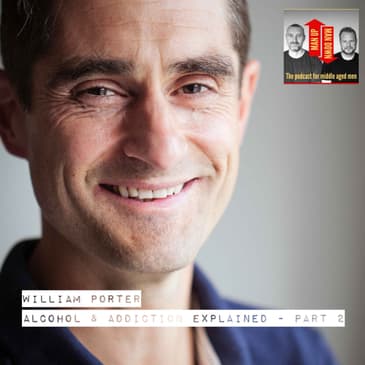
In this episode, Volker and David welcome back William Porter, author of 'Alcohol Explained', to discuss the complexities of alcohol consumption, addiction, and its effects on mental health. They explore the societal pressures surrounding drinking, the science behind addiction, and the cultural shifts towards alcohol-free lifestyles. William emphasises the importance of understanding the information about alcohol to make informed decisions about drinking. The conversation also touches on the future of alcohol consumption and the growing acceptance of alcohol-free alternatives.
Key takeaways:
•William Porter's mission is to educate about alcohol's effects.
•Socializing can be enjoyable without alcohol.
•Alcohol is a depressant that affects mental health.
•Understanding addiction is key to making informed choices.
•Cultural attitudes towards alcohol are changing.
•Alcohol consumption can lead to a cycle of dependency.
•The importance of REM sleep for mental health is crucial.
•Alcohol-free options are becoming more popular in society.
•The subconscious links alcohol consumption with socializing.
•Education about alcohol can lead to healthier choices.
You can go to William’s website, www.alcoholexplained.com, where you can read some of the chapters of his book for free.
Hosted on Acast. See acast.com/privacy for more information.
[00:00:05] Welcome to the Man Up, Man Down podcast presented by Volker Ballueder and David Pawsey.
[00:00:12] We discuss the pressures and challenges faced by men approaching middle age that we're often too embarrassed to speak about with our friends.
[00:00:20] You can find us online at www.manupdown.com. Enjoy the show and don't forget to subscribe and leave us a review.
[00:00:34] So welcome to another episode of Man Up, Man Down, another video episode.
[00:00:40] Sorry you have to put up with David.
[00:00:42] But you might recognize the voice because we have William Porter back on the podcast.
[00:00:48] We just established we recorded it almost two years ago, the episode, December 2022 and it went live in February 2023.
[00:00:57] We're now almost at Christmas again. Not quite. We're almost in October 2024.
[00:01:04] The episode goes live. Most likely you're listening to this in January.
[00:01:09] So you might just gone out and decided to stop drinking for the year or give up smoking.
[00:01:16] And if I say you're right on topic there for this podcast.
[00:01:20] So William Porter, in terms of an intro, if I say just briefly for those who haven't listened to the last episode, he wrote a book, Alcohol Explained.
[00:01:30] Also other books on addiction, which he, you know, if I say research very heavily.
[00:01:36] And, you know, he started drinking and smoking when he was 14 years old.
[00:01:41] You drank a lot during the military and your law career.
[00:01:45] So you're still practicing lawyer if I remember correctly.
[00:01:48] I am. Yeah, yeah, still doing that. Yeah.
[00:01:51] And yeah. And you have a great passion now to get people to stop drinking or to understand what alcohol can actually and addiction can do to you.
[00:01:59] I think it's a wider topic.
[00:02:01] And so if I say let let let me hand over to you, William, first of all, welcome back on the podcast.
[00:02:07] And yeah, if you want to give us an intro in terms of, you know, who you are, what you're doing and what your mission is.
[00:02:14] Yeah. No, no, no. Thank you. And thank you for inviting me back.
[00:02:16] It must have must have gone quite well last time then.
[00:02:19] Yeah.
[00:02:19] Yeah.
[00:02:20] Back in.
[00:02:22] Yeah.
[00:02:22] So I suppose. Yeah.
[00:02:24] I don't know that I would necessarily think of my mission as sort of stopping people drinking.
[00:02:29] I kind of how I like to think of it more is alcohol explained was never like it's not an autobiography or anything.
[00:02:35] It's not a story book as in this is my story about drinking.
[00:02:39] It was more my understanding of alcohol and what it does to us on a chemical, physiological, psychological level, which moves it from kind of big experimental to fun to necessity or necessary.
[00:02:55] And that's and I kind of see it as more just information.
[00:03:00] And then it's up to the individual to do with that information as they see fit.
[00:03:06] Some, you know, a lot of people obviously use it to stop drinking completely.
[00:03:09] Yeah.
[00:03:10] Some people use it to moderate.
[00:03:12] I mean, I don't personally moderate.
[00:03:14] I think there's a lot of very sound reasons why it's much, much easier to stop drinking than to moderate.
[00:03:21] And I've no doubt some people read it and carry on drinking.
[00:03:24] But that's kind of how I see it.
[00:03:26] I kind of see it that we all make decisions and we're all, you know, we've all got agency.
[00:03:31] We have absolute right to make our own decisions in our own lives.
[00:03:34] But the point is, you can only make the correct decision if you've got the right information.
[00:03:39] If the information you're feeding into the decision making process is either wrong or incomplete, you're likely to start making mistakes.
[00:03:49] So that's kind of, I suppose, what I would see my mission as is just educating people and giving them a new perspective on alcohol so that they then have, you know, the ability to make possibly different choices around their drinking.
[00:04:04] Well, welcome back from me, William.
[00:04:08] It's great to have you back.
[00:04:11] I mean, there's, there's sort of several things that I've sort of noticed quite recently.
[00:04:17] Um, and I mean, for any sort of listeners that don't know, well, say my story, but I, um, you know, I've, I've had sort of tactical breaks, perhaps a way to describe it, but I went about 15 months without drinking.
[00:04:35] And for me, it was almost, I'd really did find it difficult to socialize without alcohol.
[00:04:42] I mean, I did it, but, um, you know, and I guess the phrase like white knuckling comes to mind.
[00:04:50] Yeah.
[00:04:51] But, um, I, you know, and, and sort of, I've gone back to drinking, um, literally at the weekend that I was in Las Vegas.
[00:05:02] Right.
[00:05:03] Um.
[00:05:03] You went to Vegas?
[00:05:05] Yeah.
[00:05:06] So, um, so, you know, in some ways you could argue, well, you know, when in Rome, when in Vegas,
[00:05:15] you know, um, but you know, I, yeah, I had too much to drink in Vegas.
[00:05:22] Um, I'm now sort of like, right, I'm going to have, you know, a break from a few months, but I guess I, I sort of almost fit perfectly into that category of, uh, yeah, I'd rather not drink.
[00:05:36] Yeah.
[00:05:36] If I'm going to drink, I have a drink sort of thing.
[00:05:39] Um, and, and, you know, and I am sort of fully aware of, of that first one's easier to resist than the third or fourth one.
[00:05:48] Yeah.
[00:05:49] Yeah.
[00:05:49] Um, so, I mean, could you sort of talk about perhaps, you know, and, and I mean, obviously I find the term alcoholic or, you know, it, again, it's a scale, a spectrum.
[00:06:05] And, and I think there's, you know, there is the psychological aspect, there's a physical aspect.
[00:06:10] And, you know, a lot of us, I think, fool ourselves that if we're not feel necessarily feeling, uh, the physical effects, because I know that, you know, one thing that you'll talk about and you have spoken about is a lot of the time, you know, it's like, Oh, I drank lots of water.
[00:06:27] I feel all right.
[00:06:28] I was able to go to the gym.
[00:06:29] I've sweated it out.
[00:06:30] No problem.
[00:06:31] It's like, well, actually it has done the damage.
[00:06:35] Um, I mean, so, yeah.
[00:06:37] So could you sort of talk about perhaps what is it about alcohol that, you know, for some people it is like two pints and it's like, Oh, actually, yeah, I fancy more.
[00:06:49] And other people can go, actually, that's enough.
[00:06:52] Um, and what impact does those one or two drinks have?
[00:06:57] Yeah, absolutely.
[00:06:59] So, so, Oh, before I go onto that topic, I might just pick up on what you said about socializing and how you simply struggled with socializing.
[00:07:07] Because just very briefly on that, and it's quite an interesting one, socializing is almost about losing yourself in conversation.
[00:07:17] This is how it should be.
[00:07:18] If you're having an interesting conversation that you've really engaged in, it should be about losing yourself in that conversation.
[00:07:25] And when you do that, your brain actually releases endorphins.
[00:07:28] So an endorphine, endorphins are naturally occurring chemicals that make you feel really good.
[00:07:33] It's an interesting thing.
[00:07:35] If you look at what gives you an endorphine here, it's, I think of it almost like survival of the species.
[00:07:40] Because if you have sex, um, exercise, eat a healthy meal when you're hungry, all of those things give you an endorphin rush.
[00:07:48] And it's interesting that socializing, speaking to people gives you an endorphin rush because it kind of suggests that we're hardwired to communicate our information, our experiences and share it, which is obviously the thing humans can do over above anything.
[00:08:03] And it's not just any other animal.
[00:08:04] But the point with socializing is you've got to be relaxed and comfortable.
[00:08:10] If you're feeling uptight and not particularly good for whatever reason, you won't get that endorphin rush.
[00:08:17] And I think the problem with alcohol is we've become so conditioned at drinking at social events.
[00:08:27] The danger is you can quit drinking, turn up at a social event and kind of think, oh, you might not be craving a drink, but you just don't feel comfortable because the alcohol is not there.
[00:08:39] So you're not going to enjoy yourself.
[00:08:42] The alcohol at that point is almost a placebo because you've got this mental block saying I would be enjoying myself more if I was having a drink.
[00:08:53] It's not quite the same.
[00:08:54] So you're not fully relaxing and getting into the situation.
[00:08:57] So just thought I'd mention that very briefly.
[00:09:00] So if you are thinking of trying again, just keep that one in mind.
[00:09:04] Yeah.
[00:09:05] And I mean, sorry, I'll just finish with this final comment.
[00:09:08] I mean, the one thing that I do find quite fascinating is it is it's so environment environment based.
[00:09:18] So it's, you know, like I haven't been playing recently because of an injury, but sort of over the last couple of years, I played football on a Friday night.
[00:09:29] And, you know, there's like great camaraderie.
[00:09:33] It's, you know, good social.
[00:09:35] And because of the way that it works that, you know, you might be on the pitch while you might be off, but, you know, it's a good social environment.
[00:09:44] And, you know, alcohol doesn't really sort of factor into that.
[00:09:48] And, you know, and then it's like, oh, well, you know, oh, we should go out for a pint.
[00:09:52] It's like, well, actually, we've had a good social here, you know?
[00:09:56] Yeah. Why does it sort of require that?
[00:09:59] And also it's like, well, sort of, it's not like standing around the pitch.
[00:10:03] It's like, oh, God, I could do with a pint.
[00:10:05] Whereas if you're in the pub and people are drinking, then I might feel like, oh, yeah, or fancy a pint.
[00:10:11] And completely.
[00:10:12] Yeah.
[00:10:13] Which I think probably hopefully adds evidence to what I was saying, because, you know, if there was an actual thing in alcohol that made socializing easier,
[00:10:23] it would do so in any situation.
[00:10:25] So like you're talking about, you're standing around by the football pitch, chatting and having a laugh with people.
[00:10:30] You're not worried about alcohol in that situation.
[00:10:33] And presumably if you meet mates in the morning over a coffee, again, you're not kind of thinking about drinking.
[00:10:39] But it's when you transfer into an alcohol situation that the dripping tap starts.
[00:10:45] So you can't quite relax into it.
[00:10:47] So, yeah, no, it's absolutely true.
[00:10:49] The other point, of course, you were talking about is that sort of tripping point between a couple of pints and you just had enough or a couple of pints and it sort of opens the floodgates.
[00:10:59] It's it's that old thing of, you know, I'd rather have none than just one or two or, you know, people quite often say they have that they don't have an off switch.
[00:11:08] I for years was like that.
[00:11:09] I would, you know, if I had a choice, you know, if I could drive and maybe just have one drink, I just invariably didn't bother.
[00:11:15] I just didn't like it.
[00:11:16] If I was going to drink, I was going to drink properly.
[00:11:20] But actually, there's a fairly sound logical reason for this.
[00:11:24] I think I mentioned on the last episode, but I will run through it briefly now because obviously it was a long time ago.
[00:11:32] But so alcohol is a sedative or a depressant.
[00:11:34] And when I use the word depressant, I'm using it in its chemical sense as something that reduces or inhibits nerve activity, which is why we drink.
[00:11:42] We feel slightly relaxed and, you know, in greater quantities we get intoxicated, et cetera, et cetera.
[00:11:48] But the problem is your brain tries to counter the sedating effects of the alcohol.
[00:11:53] Your brain creates and excretes a huge array of chemicals, drugs and hormones.
[00:11:57] There's a lot we don't understand about that physiological process that the brain goes through.
[00:12:03] But what we do know is it is constantly striving to achieve something called homeostasis, which is a balance of all these chemicals, drugs and hormones.
[00:12:11] It's hugely complicated.
[00:12:13] But if you simplify it, a lot of these chemicals, drugs, hormones, whatever can fit into two baskets, one of which is stimulants, things like adrenaline, which wake you up.
[00:12:24] And on the other hand, depressants or sedatives, so things that put you to sleep and make you feel relaxed.
[00:12:30] So if you think your brain's balancing those up, when you take alcohol that's a sedative, I quite often think of, you know, those old fashioned weighing scales where you've got a bar in the middle and two baskets hanging off them.
[00:12:43] Imagine you've got one of those and you've got an equal amount of stimulants and depressants and it's just there nicely balanced.
[00:12:48] So you're feeling great.
[00:12:50] And when that when that bars level, that's you at your best.
[00:12:54] You know, you might be a confident person or less confident person, but whatever it is, when that bars equal or roughly horizontal, you feel at your best.
[00:13:02] So when you take alcohol, which is a sedative, you put in an extra lump on the sedative side of the scale.
[00:13:08] So it tips up.
[00:13:09] So your brain lumps some more onto the stimulant side to try and balance things up again.
[00:13:14] But the problem is that when the alcohol wears off, it goes the other way.
[00:13:19] So to put it simply, every action has an equal and opposite reaction.
[00:13:25] So whatever sedating or relaxing feeling you get from a drink, you get a corresponding feeling of kind of out of sorts or anxiety when it wears off.
[00:13:35] Right. And that happens with every drink that's ever been drunk.
[00:13:37] So you just just very simple concept.
[00:13:40] But you have an alcoholic drink.
[00:13:41] It gives you that sort of dulled feeling and then it wears off, leaving you feeling slightly anxious.
[00:13:47] Now, there's lots and lots of reasons in our lives why we might feel anxious.
[00:13:51] You know, you might have, I don't know, bill you can't pay or an argument with your partner or an unpleasant day at work ahead or just have a bad night's sleep or whatever it is.
[00:14:00] Most of the time when we don't feel particularly good, we just get on with things.
[00:14:04] Right. We just you just crack on.
[00:14:06] You go to work, you do whatever you try and sort things out, but you just get on with it.
[00:14:10] But when you're drinking regularly, there's a subconscious part of your brain that starts to work out that when this unpleasant feeling that kicks in after one drink wears off.
[00:14:23] The best way to get rid of it is to have another drink, because if you think about it, the reason you don't feel right is that you've had this chemical alcohol and it's worn off, leaving you feel overly stimulated.
[00:14:37] If you go back to the weighing scale analogy, you know, so you put something in the sedative side, so it's tipped up.
[00:14:42] Your brain's equaled out by putting something in the stimulant side, the additional thing in the depressant side's gone.
[00:14:50] So the quickest way to get rid of that unpleasant feeling is to put more in the sedative side.
[00:14:55] You're immediately correcting that chemical imbalance.
[00:14:58] Now, over the years of drinking, your brain starts to link that up and it starts to realise that when that unpleasant feeling kicks in, the quickest way to get rid of it is to have another drink.
[00:15:09] So when you've gone through that learning process, every drink causes the desire for the next one because it as it wears off, it creates that unpleasant feeling that makes you want to have another one.
[00:15:23] OK, so you two are intelligent people, right?
[00:15:27] Let's just assume for the moment that you've never come across the concept of maths, right?
[00:15:32] You just never entered your realm of thought.
[00:15:34] I could sit down and with a fairly short space of time teach you like basic numbering, one, two, three, four.
[00:15:41] And I could teach you two plus two is four, right?
[00:15:44] Nice and easy.
[00:15:46] But I could never un-teach you that.
[00:15:48] So when you have learnt something, if it is true, you can never get rid of it.
[00:15:54] So the difference between the people who say, oh, I don't have an off switch, what they're really saying is they've drunk enough over a long enough period that their brain has made that link between quickest way to get rid of the unpleasant feeling when one drug wears off is to take another one.
[00:16:11] If you haven't drunk enough to get to that phase, then you can take it or leave it.
[00:16:17] And it's exactly the same with smoking.
[00:16:19] So I started smoking, as you mentioned earlier in the introduction, when I was like 14 years old, but for quite a long time, I only smoked at weekends.
[00:16:26] I'd go out with my friends and we'd have a couple of cigarettes and that was it.
[00:16:30] It wasn't that I didn't have nicotine withdrawal and it's not that another cigarette would not make me feel better, but it's just my brain didn't link up that feeling with having a cigarette.
[00:16:40] But when I went through that, when I was smoking regularly, I could never go back to just smoking at weekends.
[00:16:46] I've tried lots of times because that was the, you know, I tried to cut down my smoking or to control it.
[00:16:51] It just didn't work.
[00:16:52] And that's what most people find when they start smoking.
[00:16:55] They might only smoke weekends or certain situations, but when they get to the point that they're smoking all the time, you can never easily go back to that stage.
[00:17:04] I remember the smoking bit.
[00:17:09] I mean, I used to smoke 60 a day, if you believe it or not.
[00:17:12] Wow. Okay.
[00:17:13] Geez.
[00:17:14] I don't think I ever hit 60.
[00:17:16] I think when we go out drinking all day, I might get through a couple of packets, but most days I'd only average sort of 10 or so.
[00:17:22] Yeah.
[00:17:23] So the 60 was without drinking.
[00:17:25] So when I drank, I would have had more.
[00:17:27] So it would be, but it was literally, it was more a habit in the end than anything else, which I think, I mean, I never properly analyzed it, but that's why I thought it was easy to give up eventually because it was, it was more my mind to say, okay, I now give up smoking, you know, and I give up the habit.
[00:17:44] So there was no withdrawal symptoms, symptoms from.
[00:17:48] Yeah.
[00:17:49] Nicotine's a very interesting one because although people can like, for example, smoke 80 cigarettes a day and literally for their whole waking hour for years, then all they're doing is consuming nicotine.
[00:18:00] The actual physiological withdrawal is pretty minor compared to alcohol, heroin, et cetera, et cetera.
[00:18:09] Even the most committed nicotine addicts when they quit.
[00:18:13] And as I say, I'm not talking about the psychological because that's very, very different, but the actual physiological withdrawal is very, very minor.
[00:18:22] It's even less than caffeine.
[00:18:25] Wow.
[00:18:26] That's awesome.
[00:18:27] So it's extraordinary, isn't it?
[00:18:29] So that's why if you go about quitting smoking the right way, because the actual physical withdrawal is so minor, if you can sort out the brain part, the psychological part, the part where you're sitting there thinking, God, I wish I could have a cigarette and getting all grumpy and upset because you can't have one.
[00:18:43] Yeah.
[00:18:43] If you can get that all squared away, that's when people say, I didn't even seem to have any withdrawals from it because literally they quit and it's job done almost from the go.
[00:18:53] Word go.
[00:18:54] Yeah.
[00:18:55] Because I don't remember physical withdrawal symptoms.
[00:18:58] No.
[00:18:58] However, when I gave up caffeine, which I gave up as well.
[00:19:01] Yeah.
[00:19:02] You notice that, don't you?
[00:19:03] I gave that up summer before last as an experiment and oh, dear me, it was hard.
[00:19:08] Yeah.
[00:19:09] Really tough.
[00:19:09] Hello folks.
[00:19:13] It's Volker here.
[00:19:15] I hope you enjoy this week's episode.
[00:19:17] As you know, I coach executives, whether that is for leadership skills or sales leadership skills or working as a therapist too.
[00:19:26] There are few ways I can help you to get unstuck, improve your work life balance or become a better version of yourself.
[00:19:34] So you will be more productive and have more time for your family.
[00:19:37] Whatever it is, you can join my client list of people from General Electric, Pepsi, DHL, Boots and many others.
[00:19:47] Book a free exploratory call via my website www.openart.us.
[00:19:54] That's O-B-N-A-T dot U-S.
[00:19:58] Now back to the show.
[00:20:03] Are you still off caffeine, William?
[00:20:05] No, no, I'll back on it.
[00:20:06] It was that old thing of I quit.
[00:20:09] I think we were on holiday and I was, you know, I was absolutely fine.
[00:20:13] I'd been a few months off the caffeine and it was like, you know what, it'd be nice to have a cup of coffee just on this one occasion.
[00:20:18] And then same as smoking, same as drinking.
[00:20:21] As soon as you have the one, then the next day, the thoughts in your head and then the next and the next.
[00:20:26] And sure enough, back on it all now.
[00:20:28] Yeah.
[00:20:29] I mean, I'm, I've sort of gone again, gone through like a period of, of, well, so like in the off, I'm not, I'm working from home today, but in the office where I work, it's got a really nice coffee machine.
[00:20:43] I've got a nice coffee machine downstairs and it's almost like I'll go through phases where I won't buy coffee because I know that, that yeah, you know, it is almost like you can have a day where I just have one in the morning.
[00:20:55] That's fine.
[00:20:56] And then if I have a day where I have three in the morning and it keeps me awake at night.
[00:21:01] Right. And, and I think sort of going back though, to sort of the alcohol as well, like you've said, it's like, you've, you've had a bad night's sleep. You're a bit anxious. And then, you know, it's like, well, I've got to have some coffees to get through the day.
[00:21:14] And then that just, you know, contributes to that.
[00:21:19] Hangs back.
[00:21:19] Yeah. Yeah. Yeah. Absolutely. Yeah.
[00:21:22] Yeah. Yeah. Definitely. I find coffee to be honest, um, from an anxiety point of view, worse than alcohol, um, at least for me. So when, when I had two or three cups of coffee, I would have been really anxious.
[00:21:33] Yeah.
[00:21:34] Once alcohol, I remember at university, I had a conversation with someone recently at university. I used to drink that much alcohol. I mean, like literally, you know, but I don't remember anything that yes, I woke up the next morning and I was totally anxious. I didn't know where I was, et cetera.
[00:21:48] But I don't do that anymore. So, you know, if I, if I have a bottle of wine, that's more than plenty for me these days. And I don't wake up the next morning.
[00:21:58] Usually don't feel too rough. Um, you know, detriment to my wife. She was like, you should feel a lot worse for some of the bottles.
[00:22:04] Yeah. Um, but you know, I mean, bottle is pushing it these days, but, um, you know, I don't, I don't get anxiety from, from drinking because I don't, if I say I don't drink enough to feel anxiety.
[00:22:14] But I, yeah, it's, it's all kind of relative, I suppose, because, you know, if you have one glass of wine, that feeling of anxiety that comes off the back of it is going to be pretty minor.
[00:22:23] Yeah.
[00:22:24] You probably won't notice it. So it's, obviously the more you drink, the worse things are going to get more noticeable. They are.
[00:22:30] Yeah. I think I also find, and I'm curious what, what, what do you think, but if, if you drink hard liquor, so like whiskey or vodka or, you know, not that I drink vodka to be honest, but, um, anyway, uh, big whiskey drinker. We can talk about that maybe in another podcast. Um, do, do, do, is, is, is likelihood you, you, you get anxiety. Is it higher because the alcohol content is higher or is it just an accelerator in terms of, because it is higher volume.
[00:22:58] Yeah. If you were drinking similar amounts, then absolutely would be because you'd be consuming more alcohol. But obviously we, when we drink spirits, we tend to drink smaller servings of them. So it's actually, it's more to do with, um, the alcohol you're consuming rather than whether you're consuming, you know, like a, a shot of whiskey or a half pint of lager or something where the spirits can be a bit more dangerous is, you know, you know, I was talking about the subcontractors.
[00:23:26] Yeah.
[00:23:37] Yeah.
[00:23:56] If you lived on a very flat land or something, if you suddenly put them at the top of a mountain looking over the edge, they'd be terrified. Children would sometimes be afraid of heights. It's, it's built within us. Um, you know, if, if, if you flick towards your eye, your eye blinks, and that's obviously a protective reaction to, to something going towards your eye. Babies will do that. They're not taught to do it. They, you know, it's hardwired into them, into their genes to blink when something goes towards their eye.
[00:24:23] Yeah.
[00:24:24] But there's also learned instinctive reaction. So we can learn an instinctive reaction. And the example I think I'll give in the book is driving. So if you drive and then one day you're a passenger and you're sat in the passenger seat of the car and the driver's driving either too fast or too close to the vehicle in front, you find your right leg keeps tensing as if you're trying to push the brake.
[00:24:46] Now there's no brake on the passenger side of the car. It's a completely pointless thing to do, but it's become instinct so that whenever you want to slow a vehicle down, your right leg tenses and your brains learned that through however many hundreds of hours you've been driving a vehicle.
[00:25:03] I think people call it air braking. So, you know, you're sat there sort of pushing your right foot down in the passenger seat. Nobody's born with that. You don't have, you know, a baby sat in a car tensing its right leg if the, you know, it doesn't happen. So it's learned.
[00:25:19] So the subconscious works by cause and effect. So when it perceives something happening and it wants a desired effect, it puts it into place. So for, you know, the driving example, I'm too close to the vehicle in front. I'll extend my right leg or tense my right leg to slow the vehicle down.
[00:25:39] How it works by cause and effect is with drugs. The cause is the consuming of the drug and the effect is when it hits your bloodstream. Okay. Because we feel the effects of a drug when it hits the bloodstream.
[00:25:52] There's four ways, four main ways you can consume a drug. Okay. One is to inject it. One is to smoke it. One is to snort it. And like with alcohol and caffeine, the last one is to eat it or drink it.
[00:26:09] Now in terms of how quickly it hits the bloodstream, injecting obviously puts it straight into the bloodstream immediately. So there's no delay at all.
[00:26:19] Inhaling it, so cigarettes and vape, it takes about a second or so. It goes into your lungs. The lungs then have direct access to the blood. So it goes straight into your blood via the lungs.
[00:26:31] Snorting is similar. It goes up the nose and obviously hits the nasal cavity and it's absorbed into the blood there.
[00:26:37] When you drink something or eat something, it takes up to 20 minutes to hit your bloodstream. Okay. So there's this long delay.
[00:26:46] So that's one of the reasons with drinking why it takes so long to become addicted.
[00:26:53] You know, if you've got people injecting heroin or smoking cigarettes regularly, they become addicted almost immediately.
[00:27:00] Whereas the average life scale, I think, with alcoholism is anything from two to sort of ten years.
[00:27:05] I mean, imagine smoking cigarettes for eight years and not being addicted to them. It's inconceivable.
[00:27:10] So one of the reasons for that is it takes far longer because you drink the drink and it takes up to 20 minutes to kick in.
[00:27:18] If you're drinking spirits, particularly on an empty stomach, you reduce that 20 minute period right down.
[00:27:26] So it's generally, you know, if you're drinking, like I say, spirits on an empty stomach, you would expect you ordinarily to get addicted much, much quicker because you're reducing that period down.
[00:27:39] You sort of going back to what you were saying about sort of learned behavior and, you know, the example of putting your foot down in the passenger seat.
[00:27:48] I mean, you know, and again, it's something that we spoke about before.
[00:27:54] But, you know, it's alcohol is just so entrenched in our society.
[00:28:00] And, you know, you've given the example of a baby doesn't kind of learn to put their foot down.
[00:28:05] But, you know, a baby, I mean, it's, you know, this is a bit of a glib example because they're obviously not quite conscious, but a baby learns at their christening that people are drinking to celebrate.
[00:28:21] And, you know, we sort of grow up, you know, in Western society, particularly the, you know, drinks, you know, it is sort of, it is part of our culture and it's normal.
[00:28:35] And you have to have a drink to celebrate, you know, and you have to have a drink to drown your sorrows.
[00:28:40] And, I mean, do you, and I mean, sort of one of the things that I looked at before was, well, I think, you know, there was a drug czar back in sort of relatively early days of conservative government that basically said, well, alcohol is the worst drug.
[00:29:02] And, you know, it obviously didn't fall in line with that government's policies.
[00:29:09] Obviously, we've got a situation in the States where, you know, recreational marijuana is sort of legal.
[00:29:20] And, you know, another thing that I've heard is that if alcohol was discovered now, it would be a class A drug.
[00:29:27] I mean, I just sort of wondered what, you know, your thoughts are around that.
[00:29:31] And, you know, I've thrown several things at you there.
[00:29:34] Yeah, yeah.
[00:29:34] But, you know, sort of, you know, so when I, you know, you sort of talk about, well, in real life and if you watch EastEnders or a BBC drama, sort of any evening scene, they've got a glass of wine.
[00:29:48] I mean, do you think, and then sort of on the flip side, like last summer was a festival and you can now sort of get cans of water that look like beer.
[00:30:01] So, you know, it is obviously kind of like, oh, well, you know, that's helping people feel part of the fun almost.
[00:30:11] I mean, you know, I guess sort of where do you think this is a very big philosophical question.
[00:30:17] I mean, you know, where do you think we are in society, in Western society in regards to, well, I'll say Western society, but in regards to our relationship with alcohol, you know, is it something that we're learning that it is actually very harmful?
[00:30:34] Or, you know, do you think that there is still a lot of work to do or, you know, should we just let people get on with it?
[00:30:43] And, you know.
[00:30:44] I think there's a lot more understanding that it's not good for you.
[00:30:51] There's a lot more.
[00:30:53] I've even noticed it since I stopped drinking about 10 years ago, but there's been a massive change.
[00:30:59] The whole sober circuit has grown and grown and grown.
[00:31:03] And I think what you're seeing.
[00:31:04] So when I wrote Alcohol Explained and when I stopped drinking, it was almost like if you were drinking, the only question you had to ask yourself was, am I alcoholic?
[00:31:14] And if the answer was yes, I have to stop drinking.
[00:31:17] And if the answer is no, I just need to cut down a bit and be a bit more sensible when I'm drinking.
[00:31:22] Whereas now people are approaching it completely differently and they're saying, why am I doing this?
[00:31:27] Am I getting more out of it than I'm putting in?
[00:31:29] Is it worth doing it?
[00:31:30] You know, how do I feel after a couple of glasses of wine?
[00:31:34] Is it that great that I want to spoil my night's sleep and not feel so good the next day, et cetera, et cetera?
[00:31:39] So there's definitely a big cultural change.
[00:31:41] I've read a lot of articles about how the upcoming generations are basically not drinking.
[00:31:47] They don't really want to drink alcohol and they see it as quite old fashioned and a bit peculiar.
[00:31:54] So there's definitely a sort of a cultural change around alcohol.
[00:32:00] We're still very much seeped in this society in alcohol.
[00:32:05] And you said yourself, David, it's like you feel a bit weird if you're not drinking.
[00:32:10] You know, you're going out with people, everyone's drinking and you're not doing it and you feel was a bit strange.
[00:32:15] I think if you're going to quit drinking, you do have to be a bit single minded.
[00:32:19] You know, there will be lots and lots of pressure to drink and you have to kind of to a degree right raise above it.
[00:32:27] I kind of see it as almost going where smoking went, not an identical path, but it's slowly, slowly starting.
[00:32:36] People are starting to realize actually it's not great fun and it's not harmless.
[00:32:40] And it's not only a few people who become alcohol dependent or, you know, inverted commas alcoholic.
[00:32:46] It's actually it's not the individual that's a problem.
[00:32:49] It's the drug and it is a drug and it's not particularly pleasant drug.
[00:32:52] And I think people at the moment as well, they're becoming a lot more conscious of not only physical health, but mental health.
[00:33:00] And I think they're starting to understand a lot more about how alcohol has a hugely detrimental effect on our on our mental health.
[00:33:10] So it's probably worth just mentioning this briefly, but sleep, sleep is so, so important for our mental health and alcohol completely demolishes our natural sleeping cycles.
[00:33:25] So this is a key point.
[00:33:28] There's a whole world of difference between sleep and alcohol induced unconsciousness.
[00:33:34] They're two completely different things.
[00:33:36] So there's different sleep stages.
[00:33:41] And one of them is called REM sleep.
[00:33:44] And it stands for rapid eye movement.
[00:33:47] And the reason it's called that is because when they've watched people in REM sleep, their eyelids flicker.
[00:33:52] And when they've when they've attached sensors to them and monitored them in REM sleep, their brain lights up almost as if they're fully awake.
[00:34:00] It's a really interesting.
[00:34:00] It's where we dream.
[00:34:01] We don't dream through the whole night, but we dream in REM sleep.
[00:34:04] There's a lot we don't understand about it.
[00:34:06] But in the same way that deep sleep is when your body repairs itself and revigorates itself.
[00:34:14] It's thought that REM sleep is when your mind does that.
[00:34:18] It digests all the experiences.
[00:34:19] It compartmentalizes it.
[00:34:21] It downloads memories from the short term to the long term.
[00:34:24] So it's almost like this massive housekeeping cleaning process of the brain that happens when you go through REM sleep.
[00:34:32] So when you drink alcohol, you completely demolish your ability to go into REM sleep because it's a sedative.
[00:34:39] She's taking this quite powerful sedative.
[00:34:41] So the brain can't get where it needs to go because don't forget it needs to be lit up almost as if it's fully conscious.
[00:34:47] So I heard a horrendous statistic the other day, and I might be quoting it slightly wrong, but the average person needs two and a half hours of REM sleep a night.
[00:34:58] If you have, I think, two alcoholic drinks, a very minor amount, it drops to one hour.
[00:35:03] So you've completely less than half the REM sleep you actually need.
[00:35:08] If you drink four, it drops to half an hour and anything over that, you get virtually no REM sleep at all.
[00:35:15] So it's this crucial part of our sleeping cycle that feeds directly into how good we feel day to day that you're completely missing out on,
[00:35:26] which is why one of the many reasons there's this big link between depression and heavy alcohol use.
[00:35:31] They've done tests, so voluntary tests, and it sounds awful, but you go into these sleep centers.
[00:35:38] They let you sleep as much as you like, but what they don't do is let you get REM sleep.
[00:35:42] So they attach sensors to you, and as soon as you go into REM sleep, they wake you up.
[00:35:45] So they let you get every type of sleep you need apart from REM sleep.
[00:35:49] Lots and lots of people can't finish the test because they become very depressed, very disorientated, and they just cannot do it.
[00:35:56] So it's fascinating to think if you're drinking any more than four or five drinks a night for an extended period,
[00:36:02] you're actually putting yourself through that torture, waking up feeling groggy and unpleasant and horrible.
[00:36:10] But then, of course, alcohol is a sedative.
[00:36:12] So if you do drink, it does take the edge off things.
[00:36:15] So you're constantly in that thing of actually thinking alcohol is a friend because it seems to be helping you,
[00:36:19] whereas actually it's doing the complete opposite.
[00:36:22] I need to look at my sleep app because what I noticed recently, if I have just one drum at night,
[00:36:29] you know, I actually go into deep sleep relatively quickly and longer, which is actually quite nice.
[00:36:35] But I need to now double check whether my REM sleep went down as well.
[00:36:38] My REM sleep went down as well.
[00:36:39] The back of it, yeah.
[00:36:41] The other thing, well, there's two points there if you've got a fitness tracker that's quite interesting.
[00:36:47] Measure your heart rate on days or nights where you're not drinking compared to where you are drinking.
[00:36:54] Because, like I said, it's interesting.
[00:36:56] Your heart rate goes up massively when you drink alcohol.
[00:36:58] Now, if you think about it, that's the opposite of what you'd expect because it's a sedative.
[00:37:03] It's supposed to calm things down.
[00:37:05] So you'd expect your heart rate to be lower.
[00:37:07] But what that is evidence of is how your brain's countering the sedating effects of the alcohol.
[00:37:13] It's releasing adrenaline and cortisol, which is a stress hormone.
[00:37:17] In other words, stimulants to try and counter that sedating effect of the alcohol.
[00:37:22] And that's why your heart rate and blood pressure goes up when you drink.
[00:37:25] And it's worth comparing that because two things that happen when your heart rate and blood pressure go up
[00:37:32] and forget the long term where it causes heart disease and all the rest of it.
[00:37:36] But here and now, when your heart rate and blood pressure goes up, you feel very tired and heavy and lethargic.
[00:37:42] That's an automated response by the brain to try and slow you down to bring your heart rate and blood pressure down,
[00:37:49] which is another reason why when you drink alcohol, you feel lethargic.
[00:37:53] It not only ruins your sleep, but it puts your heart rate and blood pressure up,
[00:37:57] which makes you feel, again, more tired and all the rest of it,
[00:38:01] which, again, goes back to what we were talking about before when people say,
[00:38:05] oh, you know, I went down the gym and it was fine.
[00:38:07] It's not fine.
[00:38:08] You cannot physically do the same workout because doing a workout is about getting your heart rate up.
[00:38:14] OK, so if your heart rate's already elevated by 20 beats a minute,
[00:38:20] that will impact how much you can exercise.
[00:38:24] And, I mean, I have to confess that is sort of, I'm quite neurotic about my garment data.
[00:38:31] Oh, OK.
[00:38:32] That is something that, yeah, I'm like highly aware of.
[00:38:36] You see that the resting heart rate is a lot higher when you've been drinking.
[00:38:42] I mean, at the moment, as I say, I was in Vegas.
[00:38:46] So, you know, there's the jet lag.
[00:38:49] You know, I was sort of doing about 15,000 to 20,000 steps a day because we were just walking around.
[00:38:54] Walking around, yeah.
[00:38:56] But, you know, with the alcohol on top of that, you know,
[00:38:59] Garmin sort of telling me that I've been pretty much doing endurance training, you know.
[00:39:05] But, you know, it's saying your body's not recovered yet.
[00:39:09] You shouldn't be exercising yet.
[00:39:12] And it is, you know, it's like scary that it's like, well,
[00:39:16] I could have had an intense week of going to the gym or, you know, biking, cycling, swimming.
[00:39:23] But, you know, and, you know, I've been on stag dudes where I've noticed the same thing before.
[00:39:30] Or, you know, like I kid myself.
[00:39:33] It's like, oh, well, I did loads of steps.
[00:39:35] So, you know, that's part of it.
[00:39:37] But, you know, it is, you know, this is so stark.
[00:39:42] You know, it's saying this is the impact that drinking excessively and not getting enough rest has had on your body.
[00:39:50] Yeah.
[00:39:51] It's an interesting one because obviously people think of alcohol relaxing them.
[00:39:55] And the key here is it sedates your brain, but your body goes into massive stress overload because of these, you know, cortisol and adrenaline that's getting pumped into it.
[00:40:06] So it's really interesting.
[00:40:07] That's a very good way of thinking of it is that your brain might be chemically impaired or, you know, sedated.
[00:40:15] So you feel more relaxed, but actually it's doing the opposite.
[00:40:18] Your body's gone into this massive stress zone.
[00:40:21] Heart rate, blood pressure all goes up.
[00:40:23] And obviously the sleep's out the window.
[00:40:25] But what you said earlier, and I think we said that on the last episode as well, I think it's a good trend to see that the younger generation is drinking less.
[00:40:32] And I was in Germany last week.
[00:40:35] And again, it's every time I go to Germany and I, you know, I drink alcohol free beer.
[00:40:41] Right.
[00:40:41] It's just so widely available.
[00:40:44] And as a matter of fact, because I do don't, I don't drink a lot of, you know, we discussed the last time.
[00:40:49] I'm not a beer drinker, but if I, if I like a beer, I just have an alcohol free beer.
[00:40:53] It doesn't matter to me whether, you know, it does have alcohol or not.
[00:40:57] Yeah.
[00:40:58] You know, I do like my glass of, of, of red wine.
[00:41:01] So when, when I was in Germany and I was at a trade show, you know, in the evenings, I just, you know, had, had alcohol free beer.
[00:41:09] And the next morning I felt fine.
[00:41:11] I mean, you still notice it, right?
[00:41:13] But, you know, if, if I had had five wheat beers that had alcohol in it, I would have been flat out the next morning.
[00:41:20] Absolutely.
[00:41:21] Absolutely.
[00:41:21] That, that's one of the big changes I've seen as well.
[00:41:24] So I was at a work function yesterday and they had four or five different alcohol free beers and then an entire tray of different mocktails.
[00:41:35] Right.
[00:41:36] You know, go back five or 10 years.
[00:41:37] If you, if you weren't drinking at a function like that, you'd have probably a water or a warm orange juice out of a bottle.
[00:41:44] So, so I think a lot of places have become a lot more and I can't remember the statistic I heard, but in London, something like a third of all pub purchases are now alcohol free.
[00:41:57] Quite a large number.
[00:41:58] This isn't necessarily people not drinking.
[00:42:00] There's a thing, I think they call it zebraing where people have an alcoholic beer and then a non-alcoholic beer and kind of mix it over so that you can drink and be with people and socialize without.
[00:42:11] So it's, it's, it's very interesting, but it's not just people who don't drink that are making use of the alcohol free beers.
[00:42:18] I was wondering, I don't know if there was a podcast I listened to or what it was, but in, in Ireland, I think because it's a pups are, what did you say that on a podcast?
[00:42:29] Actually, William, I'm trying to remember.
[00:42:30] So if I tell you something, you already know, apologies.
[00:42:33] I want to tell you, tell you, sorry, but in, but in Ireland, people go to the pub and it's a pure social occasion.
[00:42:39] Right.
[00:42:40] And you now find generations sitting there with the old guys drinking their normal Guinness and the young guys drinking an alcohol free Guinness.
[00:42:47] So it's not about the alcohol to get together.
[00:42:50] It's just, you know, so society lives on despite different generations drinking and not drinking.
[00:42:56] And that's, that's nice to see.
[00:42:58] That is good.
[00:42:59] I know it might sound very odd considering what I do, but I really like pubs.
[00:43:05] Yeah.
[00:43:06] They're so historic and I love going into like really old pubs and I like drinking beer.
[00:43:11] So for me, I've got, you drive around a lot these days and you see more and more pubs closing and I kind of find it very sad.
[00:43:18] So I really hope they find a way.
[00:43:20] And it sounds like they are because, you know, more and more places have alcohol free options now.
[00:43:25] But to be able to go in there and have an alcohol free evening and, you know, to drink drinks and like I say, not just, oh, we've got a bottle of warm orange juice.
[00:43:35] I mean, it's, there is a lot of sort of, I almost want to say like unintended consequences of, well, in life.
[00:43:48] But I mean, I mean, I was listening to a radio phone in and it was about pubs, but, you know, it was sort of, well, and it was, it was like a question and answer phone in.
[00:43:59] And someone phoned in and said, why'd you get so many pubs in such tiny villages?
[00:44:05] And basically it was sort of explaining the, you know, back hunt, well, back before electricity, et cetera.
[00:44:16] Essentially, you know, you'd, you'd work on the farm, you'd, you know, you'd, you'd sort of staff might, you know, have places where they could sleep.
[00:44:25] But basically you'd go to, you'd go to the public house, you know, cause that's what it was where everyone would be together and it would be community.
[00:44:34] And, you know, it's, well, and again, I guess that sort of almost brings me back to the point about, you know, not saying that you need to drink to be in those situations, but it, you know, not saying that pubs are closing because people are drinking less.
[00:44:50] But it's, yeah, it's just another one of those sort of small elements of community that seem to be eroded in, you know, this sort of, well, digital age, I guess.
[00:45:03] Yeah.
[00:45:04] Yeah.
[00:45:04] I think one of the big reasons for that was actually the supermarkets starting to sell cheap alcohol because it's so much cheaper to buy in the supermarket and sit at home and drink it to go to the pub.
[00:45:14] So I think that's been the real killer.
[00:45:17] And I think the other thing, which is a shame, and I'm not quite sure how you combat this when, so for example, when I go to the pub, I might have two, maybe three pints.
[00:45:28] I can't drink any more than that.
[00:45:30] Whereas when I was drinking alcohol, I'd be drinking all evening along because it doesn't have this drug in it that you want to keep consuming.
[00:45:37] Yeah.
[00:45:38] The desire or even ability to drink that amount of liquid is just massively curtailed, which does make it different.
[00:45:47] Yeah.
[00:45:47] Imagine you have, I mean, I used to do that, right?
[00:45:49] Eight pints a night, right?
[00:45:50] Yeah.
[00:45:51] All you do, you go to the Louvre more than you drink, right?
[00:45:54] Yeah, yeah.
[00:45:55] And again, no, it's not like you'd go, you wouldn't go to a coffee shop and say, right, let's see if we can get six coffees in, you know, in the two hours we've got.
[00:46:04] Well, you know, you'd have however amount that you're like, oh, I've had enough now.
[00:46:10] Yeah.
[00:46:11] Well, this is the interesting thing I quite often say to people, say if you go out and drink eight pints, imagine sitting down for an evening with eight pints of water and trying to drink it.
[00:46:21] It would make you feel really sick or eight pints of lemonade or Coke or anything.
[00:46:26] The only reason we can do it is because of the drug in there.
[00:46:30] And again, it goes back to what I was saying about your brain becoming conditioned.
[00:46:33] Because there's the drug in it, it turns off the natural feeling of revulsion that, hang on, I've just had two pints of this.
[00:46:41] I really don't want any more.
[00:46:43] Because it starts to associate the drink with the relieving of the unpleasant feeling.
[00:46:46] It actually turns off that fail safe mechanism, which is actually a protective mechanism to stop you wanting more of it.
[00:46:55] Because it's actually dangerous to drink quite large amounts of liquid because it washes the salt out of your system.
[00:47:02] So when you're drinking loads of liquid, it washes the salt out.
[00:47:05] Which is why when we wake up, when we've been drinking, we want, you know, fast food and pizzas and bacon and eggs and all that instead of something healthy.
[00:47:15] Because all that kind of food is riddled with salt.
[00:47:19] So when you wake up after drinking, you've got that your body's crying out for salt because you've washed it all through.
[00:47:25] So, yeah.
[00:47:29] William, again, you know, I think we said that last time.
[00:47:32] That's why we got you back.
[00:47:33] We're running out of time.
[00:47:35] It was a great episode.
[00:47:38] You know, we need to have you back.
[00:47:40] Maybe we don't wait two years to have you back.
[00:47:44] Where can people find out more about what you do and your books?
[00:47:48] And, you know, you did the calendars.
[00:47:49] Well, we didn't even talk about your calendar.
[00:47:51] Yeah, that was lucky.
[00:47:52] Yeah, forget about that one.
[00:47:54] Okay.
[00:47:55] I thought it was great.
[00:47:57] The easiest place, I think, is probably the website, which is alcohoexplained.com.
[00:48:02] And on there, there's all sorts of information.
[00:48:04] There's links to sort of the Instagram.
[00:48:06] So I've got an Instagram account and there's a Facebook group as well.
[00:48:10] In fact, there's two Facebook groups.
[00:48:12] There's the diet and fitness Facebook group and the alcohol Facebook group.
[00:48:17] Yeah, so that's usually the best place to start.
[00:48:19] And if people are interested in alcohol, the first five chapters of Alcohol Explained are on the website.
[00:48:26] So you can go on and read them if you're interested.
[00:48:29] Brilliant.
[00:48:30] I recommend anyone to read the book.
[00:48:32] I read it before our first podcast and I thought it was brilliant.
[00:48:36] Thank you.
[00:48:36] It was super useful, despite I'm still drinking.
[00:48:39] But, you know, I honestly think I'm drinking a lot less than I did two years ago and a lot less than five years ago.
[00:48:45] Well, that's good.
[00:48:45] Yeah.
[00:48:46] And like I say, I don't see my remit as stopping people drinking.
[00:48:49] It's just giving them information to, you know, take away with them and mull over and maybe make some different decisions around alcohol.
[00:48:56] Maybe not.
[00:48:57] Yeah.
[00:48:58] Brilliant.
[00:48:59] Now, thanks again.
[00:49:00] Thanks for your time.
[00:49:01] It's nice to be back.
[00:49:03] Thanks very much, William.
[00:49:04] Thank you, guys.
[00:49:04] Take care.
[00:49:05] Bye.
[00:49:10] Thanks for listening to this week's episode.
[00:49:12] Feel free to reach out to Volker or David via our website, www.manupdown.com or podcast at manupdown.com with any feedback or to let us know what topics you'd like us to cover in the future.
[00:49:25] Hear you again soon.