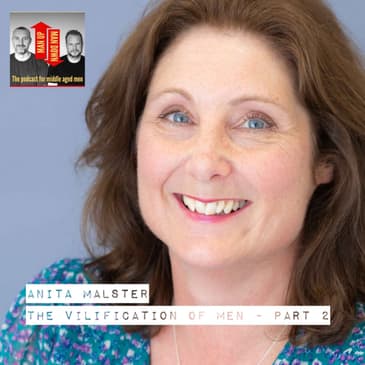
In this episode, David and Volker welcome back Anita Malster, a mental health strategist, to discuss the complexities surrounding male mental health, particularly focusing on suicide rates among men. They explore cultural norms of masculinity, the impact of emotional suppression, and the importance of peer support.
The conversation highlights the need for redefining masculinity, creating safe spaces for discussions, and the connection between physical and mental health. Anita shares insights from recent research and practical steps to improve mental wellbeing, emphasizing a holistic approach to mental health.
Key takeaways
• Cultural norms of masculinity can lead to emotional suppression.
• Men often feel pressured to conceal their emotions.
• Loneliness and isolation are significant issues for men.
• Peer support can facilitate open conversations about mental health.
• Redefining masculinity is essential for improving mental health outcomes.
• Physical health and mental health are interconnected.
• Creating safe spaces encourages men to share their feelings.
• Men often downplay their emotional struggles when seeking help.
• Holistic approaches to mental health include diet, exercise, and emotional support.
• Engaging in activities can help men connect and communicate better.
You can find out more and get in touch with Anita via: https://blossomtraining.org/
Hosted on Acast. See acast.com/privacy for more information.
[00:00:05] Welcome to the Man Up, Man Down podcast presented by Volker Ballueder and David Pawsey. We discuss the pressures and challenges faced by men approaching middle age that we're often too embarrassed to speak about with our friends. You can find us online at www.manupdown.com Enjoy the show and don't forget to subscribe and leave us a review.
[00:00:30] Welcome to another episode of Man Up, Man Down. And once again, we're delighted to have a returning guest. This week it's Anita Molster, who we had on in Series 2, was it? Yeah. Yep. See, that shows I'm getting old. My memory's starting to go. But it was a fascinating conversation, which is obviously why we got Anita back.
[00:01:01] So Anita Molster is a mental health strategist, trainer and speaker, whose mission it is to change the way we think about mental health with accessible, enlightening and inclusive strategies and training packages. Anita believes that when a plant is struggling to grow, you don't blame the plant. You change the environment to help it thrive. She believes people are no different.
[00:01:21] And I know in the previous episode, you gave Volker a quote about Desmond Tutu, which is rather than fishing people out the river, we should be going upstream to find out why they're throwing themselves in the river. Which, you know, again, a great analogy. Anita supports organisations to explore their work design, culture and environment to ensure they're creating mentally healthy workplaces where people can grow and flourish.
[00:01:49] And I think, you know, last time we talked quite a bit about construction. I mean, that is something that we have sort of talked about quite a bit on this podcast because it is construction is seen as an industry that has a particularly high suicide rate, which is obviously something we talked about. I mean, there has been some sort of new figures coming out recently.
[00:02:15] For example, I mean, I think, you know, obviously we did talk about suicide in men, but I saw recently that there has been an increase in women. So I think, you know, obviously there is a lot more that, you know, I think, you know, there are some organisations that are leading the way, doing a better job of providing wellness programmes and mental health support. There are others that could do better. So welcome back, Anita. Sorry, that was a bit of a rambling introduction.
[00:02:46] It's great to have you back. I mean, in the pre-episode chat, you mentioned that there was some new research that you'd found. Also some new work you'd been doing in the gym, which working with gyms as well as working out in gyms. I was going to say, does it look like I've been in the gym? Sorry. I have. I have actually. Yeah. Well, no, she was showing us her biceps earlier. No, she wasn't. Sorry, that was a silly joke.
[00:03:14] But anyway, yeah, thanks for coming back. And yeah, we'd love to hear sort of what the latest things are. And obviously, you know, sort of the topic of the subject was, are we vilifying men? And, you know, and perhaps that's a bit of a strong word. But, you know, it's talking about while, you know, obviously and rightfully so, we talk a lot about diversity and inclusion in today's society.
[00:03:40] But there are areas where middle aged men, I don't want to say are discriminated against, but struggle to access certain medical as easily as women. You know, and again, that was something we spoke about last time.
[00:03:58] Yeah, so I think it's interesting that you started off, David, with the Desmond Tutu quote again, just saying, you know, we need to be going upstream and finding out why people are falling in. And over the last few months, I've been really interested by some research that has come out of actually Glasgow University.
[00:04:23] So a lady called Dr. Susie Bennett has been doing a PhD for a number of years now on why men die by suicide. And she's released that research or published that research in recent months. And I was lucky enough to be on a webinar that she delivered, amazing webinar, literally 45 minutes she spoke for. But it was so impactful what she had to say.
[00:04:50] And I think maybe if I share a little bit about some of the things that she talked about, it might be really helpful for your listeners in thinking about some of those antecedents to male suicide. Because I know last time we focused in on the construction industry, didn't we? But we also talked about some of the reasons why we think that men are struggling maybe in today's society.
[00:05:15] And really what she focused in on, the research actually looked at the last 20 years of, it was like a meta study of the last 20 years worth of research. And so they boiled it down to 78 studies, insights from around just under 1700 men who had either died by suicide or people bereaved by male suicide across 18 countries.
[00:05:41] And picked out sort of like the key elements that were coming out of all of those studies as to why those men eventually went on to die by suicide. And it was really interesting that one of the key things that came out of that was around cultural norms of masculinity. And I know we talked about that quite a bit last time, didn't we? And the idea of, you know, I'll be vilifying men.
[00:06:09] And a lot of the narrative was around, you know, toxic masculinity. So for me, it was quite an interesting thing to look at when she started to talk about cultural norms of masculinity. I thought, oh, is this going against, you know, some of the conversations that we've been having recently in, you know, focusing in on that term masculinity. But what was really interesting was that the three main areas that she came out, that came out of her research were very telling.
[00:06:40] And the first one was really that there were, if you like, sort of like three. I think it's important to say when we start to talk about masculinity that it doesn't refer to fixed traits necessarily that are true for all men. And also that some men may reject those cultural norms, whereas others actually feel a really strong need to live up to them.
[00:07:10] But what she was saying is that most men socialized in masculine norms aren't suicidal. So what was it about the ones that went on to die by suicide? And the study actually found that there were certain norms that increased the risk by exposing men to psychological pain, if you like.
[00:07:34] And the first one was the cultural norm of emotional suppression and suicide risk. And I wonder whether you can relate to this, and I'm sure maybe lots of guys can relate to this, that there's this sort of cultural norm that for men to deny certain emotions and to sort of be strong and independent and to cope with their problems. And we see this very early on in the way that we sort of socialize boys.
[00:08:01] And the trouble is, if you keep socializing boys to deny their emotions, then eventually they sort of become disconnected from them. And it's more difficult then to recognize those emotions and be able to tap into those emotions and to express them. And so a lot of the men in the studies suggested that they felt the pressure to maybe to conceal their pain as well from people because that was what they'd been taught.
[00:08:32] Sorry, can I just ask a silly question? When you say boys, was there an age range of that? Or, I mean, should we just assume anyone up to the age of 17? No, I don't think that really came out of, as far as I'm aware, I mean, as I say, it's not my research. So I don't know. But I think what she was talking about was that socialization process of, you know, gradually how we socialize boys.
[00:09:02] So I don't know that there's an age sort of limit on that, really, or an age on that. Yeah. I mean, I can't remember if it's something I mentioned in the last episode or whether it's just a casual conversation I had with someone else. But, you know, my son plays football. I sort of help part-time with the coaching, but I'm pretty much there for every match.
[00:09:26] And we were at a competition, so it was lots of small games going on, you know, sort of an all-day thing. And there was a dad yelling at his child who, I don't know, wouldn't have been 11, 12 at the very oldest. And he's like, don't you dare cry. Don't you dare cry. And I was just like, wow, that, you know, that sums it all up.
[00:09:52] You know, it's, you know, it's almost like you're going to humiliate me and yourself. You know, that's the message I took if you show emotion slash, you know, inverted commas weakness on the football pitch. Wow. That sounds wrong. Well, yeah. I mean, no, no. I mean, that shouldn't happen. I mean, it's my opinion, right? Obviously, everyone is entitled to their own opinion.
[00:10:21] But that shouldn't happen anymore. I mean, I'm trying to do exactly the opposite with my boys. I mean, you know, I'm not very touchy-feely. You know, it's just something I never learned and I have to learn it. But, you know, not that I want to talk about me, but I'm trying to teach the boys to be aware of their emotion, talk about their emotion, right? To the point, right? You don't want to suppress your emotion. You don't want to bottle it up and then, you know, become at risk of suicide.
[00:10:51] I mean, did you go up to him and tell him, David? No, no. Did you man up and took a baseball bat and just... No. I mean, yeah. To be honest, it wasn't long after my dad had died. So I was quite emotionally fragile. So it was probably one of those situations where I wouldn't have been able to have a balanced discussion, shall we say.
[00:11:18] But I think it's difficult to challenge men, you know, like that, right? With that opinion. If it was a serious comment, I don't know. I mean, you know, we all make silly comments as well and go like, oh, don't cry, right? Don't be a crybaby. But, you know, if it was serious, then... Oh, you know, and I think, again, it wasn't necessarily what was said. It was the way that it was said. Yeah. But sorry, we've gone off on a bit of a tangent there, Anita. No, not at all. Because, you know, pretend. Not at all.
[00:11:48] Because actually in just under half of the studies that Susie looked at, those painful childhood events that you're talking about. So, you know, it can be things like, you know, abuse and bullying, but actually a lot of the time it is just those day-to-day narratives that we hear that give us that sense of what it means to be, you know, a man or a woman.
[00:12:17] And it gives us our sense of self as well. And sometimes those things actually impact on our emotional development. So if you actually look at, you know, brain development, it can change the way that our neurons fire together. It can change the way that we, you know, our default, if you like, ways that we deal with stress going forward and certain triggers. So it can have an impact on our emotional development.
[00:12:46] So, you know, this disconnection from pain and actually the way that we quite often disconnect from pain is to use unhelpful coping mechanisms. So we start to use things that either numb pain or distract us from pain. And those very coping mechanisms can go on to cause us all sorts of problems in the future.
[00:13:13] So that was part of the cultural norm. They also talked about, in about a third of the studies, they talked about getting help and how that's seen as a weakness. So I think we might have talked about this last time, this idea of this stoicism and feeling like we should be able to sort out our problems for ourselves and not have to rely on other people to do that.
[00:13:39] So there was this reluctance to admit to vulnerability, if you like, or weakness. And then I know we talked about this last time. Something else she discovered was the negative experiences that a lot of men found when they tried to access help. And some of that came from the professionals that actually they were seeking help with.
[00:14:01] They felt that they were either stigmatized or that their feelings weren't taken seriously. But sometimes that is the way, and Susie talked about this, that it is the way that men present and quite often downplay emotion as well. So when they were presenting at a frontline service, actually they were downplaying the emotions that they were feeling.
[00:14:31] So it wasn't being picked up that maybe the situation was as serious as it was. So that was also wrapped up in that sort of cultural norm of suppressing emotion as well. So that was one of the first things that she discovered was the suppression of emotional, the cultural norm of emotion suppression.
[00:14:58] And then she talked about cultural norms of male success and feelings of failure. And so this idea that in a lot of the studies, men seem to compare their achievements to the standard that they felt that was sort of set to what it means to be a man.
[00:15:20] And comparing themselves and actually feeling like they were failing in areas of the life where society sort of expected men to do well. So that came out really strongly. And then she also saw things like that men pretended to be OK. So it was almost like they were living this double life and that there was part of them that was presenting to the world that everything was fine and everything was OK.
[00:15:47] And then the other half of that was actually that they were really struggling. So it was almost like they disconnected. They were disconnecting from themselves. If we go back to what you were just saying about childhood and that instance that you just described there, she also has discovered that in a lot of the studies, there was a sense of low self-esteem from some of the things that people, those men were experiencing in childhood.
[00:16:16] So it could have been things like being bullied or made to feel different as a child, which gave them a sense of low self-esteem, which impacted on their adult lives. And in some of the studies, it was about actually sort of trying to gain control. And in a way, death felt like the ultimate way of taking control.
[00:16:41] And in a lot of cases where maybe men started to see themselves as a burden and what they were experiencing or the fact that they couldn't, they didn't feel like they were meeting this standard of masculinity, that actually it was almost like, you know, everybody would be better off if I wasn't here. So that came out really strongly.
[00:17:04] And then the last finding was around cultural norms that suppress men's relationship needs. And we talked about, I think we might have talked about loneliness and isolation last time, but that came out really strongly that men described profound loneliness and isolation, that there's, we've just said this cultural expectation, if you like, for men to be self-reliant and independent,
[00:17:33] but that somehow impacted on a lot of these men's ability to form close relationships. Also, what came out in about a third of the studies was leading up to suicide, there were relationship problems. And they were a real source of stress. So again, you know, made men feel isolated, made them feel a failure.
[00:18:00] And, and again, that disconnection from them, from themselves. So suicide really was, was a release from that sort of unbearable sense of isolation and disconnection from, from others. And as I said, and then in some of those studies, it was very much about feeling like a burden. And, you know, the other, other people would, everybody else would be better off without them. I mean, it's, it's interesting.
[00:18:28] And I can't remember whether this was sort of a point that we picked up on before, but, you know, there, you sort of talk about the fact that men will perhaps downplay things, won't communicate, or if they are sort of trying to communicate, it won't be that clear. And then, you know, it's like, well, actually, I guess the natural result of that will be loneliness, because you're not sort of reaching out.
[00:18:55] And it's that frustration of, I don't want to be really open, but I do need help. And, and again, you know, that can cause sort of friction in the mind. And there was something else, which I've forgotten, but I don't know if there was anything else in there that you picked up on Volker. Yeah, it's a, it's a downward spiral, isn't it? You know, you, you, you feel lonely, you know, you, you, you might contact that with, I don't know, alcohol, right?
[00:19:24] Which is a depressant, right? And you, you feel worse and worse. And, and the only way, I say the only way, the most obvious way to get out of it, as we, as we always say, right, is to start talking to each other, right? Which is why we, we started this podcast as well, right? To, to start talking about the issues you have and the problems, because, you know, we had, um, uh, Rose Rokens on the podcast. I don't know, Anita, if you, if you know her.
[00:19:54] Yeah, yeah, yeah. Um, and, and she talked about, you know, even, even if you feel silly, if you're worried about a mate, just, just talk about it, you know? And I mean, men, you know, and they're generalized here, but men don't talk about emotions, right? We don't go down to the pub and say, you know, oh, you know, how, how, how are you feeling today, right? Are you feeling okay? You know, we go down to the pub and go like, oh, can, can you fit in a third and a fourth pint, right? Can you, can you show me how man, you know, how much of a man you are because he can drink more pints than I can.
[00:20:25] And, and I don't know, how, how do we change that, right? I mean, the, the, I mean, the pressures, I just, I just wrote that down. There's a pressure to be a man, right? This, this, this redefinition. I mean, I guess this is what we're talking about, right? How do we redefine what it means to be a man, right? Those are role models we talked about, right? How, how do we, you know, I'm not saying, and that might, might sound really bad. So I don't know, maybe we have to cut that out, but, you know, I'm not saying men need to go out and wear dresses and,
[00:20:54] and wear pink and go to the pub and go be, you know, all different, but we, we need to literally man up to talk about our emotions, right? And, and, and be a little bit, you know, I always say, if, who do I say, I said it to someone this week, when, when you, when, when you talk to a female, a female by, I think by nature, by, you know, or by, by nurture, it just has more empathy, right? It's more connected to her feelings, you know, but, you know, and again, I generalize and,
[00:21:23] and I don't know how we get that into men's heads. I don't know. I mean, that, that, and that sort of reminded me of what I was going to say, you know, and you sort of talked about not, not sort of matching the societal norms of masculinity. And I mean, there was something that, that Volker sort of mentioned on, on, on an interview we did about the competitiveness of men. And I thought, oh, I don't, I don't really think like that.
[00:21:53] You know, I'm not about, I want to do better than that guy. I'm a bit more, well, I, you know, I don't get frustrated if someone has done something better than me. I guess I get more frustrated with the fact that I've not done that. But also sort of, yeah, you know, if we, if we want to sort of boil it down and something I was reading the other day, and it was about a footballer's worth. And I was like, wow,
[00:22:22] it's incredible that we put someone's worth, you know, in financial. And I'm like, well, it would be interesting if there was an index of somebody's worth on how they've contributed to society and made people happier. You know, and it's like, and I'm like, well, cause they're the goals that I strive for rather, you know, rather than I've got to land that contract to earn this amount of money. Um, so,
[00:22:52] you know, for me, I guess there's, there's often a bit of frustration of like, well, I'm, I'm competing in a different race that everyone else seems to be. Um, and sorry, my last point was, excuse me. I've recently been listening to, um, Darren Brown's book, happy. Um, and it's a few, it's been out a while, but, um, in the last sort of five years, I think, um,
[00:23:20] but he sort of makes a really interesting point about how, when, you know, there was a feudal system, peasants wouldn't ever think, oh, I could be doing the Lord's job. You know, it was, well, I know what my, what my role is in life and I stick to it. And whereas now, and also he sort of talks about, it's sort of a, how you compare yourself to your terms,
[00:23:49] term of reference is what it's called. So, someone, I mean, and the analogy that Darren Brown used was, you're more likely to compare yourself and be jealous of your neighbours than a million, a billionaire who's got a fleet of jets. And I was sort of thinking, well, actually that it's almost like the rules have changed, not only from, you know, you'd be like, well, a peasant and you wouldn't think, oh, so-and-so got a bigger fire going than me next door.
[00:24:19] Um, whereas now, you know, it is kind of like, you know, and it is, we're almost in a society where, well, the more you hustle, the more you post on Instagram, the more successful you're going to be. And, you know, and it's almost like our sort of terms of reference and therefore our frustration at the gap between our lives and someone on Instagram, who may be posing against a Porsche that they've just seen in the street,
[00:24:49] it might not be theirs. But, you know, it's almost like we're, we're, we've got to the point of, oh, well, actually, yeah, I could live as a Lord would live, even though I'm a peasant. It's, yeah, you know, it's almost like there's, there's just been so much change, um, you know, through capitalism, which again, and democracy, which again has, you know, sort of wonderful connotations.
[00:25:16] But I guess I just find it fascinating that how, I guess our mindset and ambitions as the human race and society is constantly changing, largely based on technology. Um, and again, sorry, I've got a bit of a ramble there, but yeah, you know, I just thought that tied in to, you know, a few of the things that you were talking about in that study. Because you bring it down to, um, um, what you, what you're talking about there, is really important actually,
[00:25:45] because if you bring it back, if you bring it down to the science, what we know is that, um, let's talk about testosterone for a moment, because we know that low levels of testosterone, um, have a significant, significant impact, not only on men's physical wellbeing, but also on their, uh, mental wellbeing. There's been lots of studies to show that. Um, but what we also know is, is that when you have a sense of status, so this is maybe what you're talking about, David,
[00:26:14] and it's not about necessarily about status within society, but there is, um, there's definitely an element of that, but it's also about how I see myself. So meaning and purpose. And what these studies have shown is that when, um, men feel like they have meaning and purpose, when they feel like they're, um, they're, they have the status that they want, then actually their testosterone levels rise.
[00:26:44] Um, and, you know, you could look at this from a, um, you know, even in sort of like monkey populations, when you think about the alpha, uh, male sort of within a, within a population, um, the alphas tend to have higher levels of testosterone and it's not because of aggression. So a lot of people think about testosterone as, you know, aggression and strength and violence. Um, it doesn't really come down to that. It's about status. And so as the man's status increases,
[00:27:12] his testosterone levels increase. So one of the ways that, um, that you can work with men, um, around increasing their mental wellbeing, increasing their physical wellbeing is not only, um, through the actual physical health, uh, stuff that we know, um, has also has an impact on that. So things like diet and exercise and sleep, but meaning and purpose is a really big part of that. Um, and so if we can give, uh, a man, um, a goal and,
[00:27:42] um, actually, you know, he's working towards a goal and he achieves that goal and he gets, he feels a sense of meaning in life and a sense of purpose and, um, his own internal status goes up. Actually, his testosterone levels will rise. It's fascinating stuff. Hello folks. It's Volker here. I hope you enjoy this week's episode. As you know, I coach executives,
[00:28:09] whether that is for leadership skills or sales leadership skills, or working as a therapist too, there are few ways I can help you to get unstuck, improve your work life balance or become a better version of yourself. So you will be more productive and have more time for your family. Whatever it is, you can join my client list of people from general electric, Pepsi, DHL, boots, and many others.
[00:28:36] Book a free exploratory call via my website, www.opnat.us. That's O-B-N-A-T dot U-S. Now back to the show. So how do we give men more meaning and purpose? Give him a lawnmower. We discussed that last time. Give him a broken lawnmower. Give him a, give him a drill at a shelf. It's,
[00:29:05] it's interesting, isn't it? That you, you talked about, um, I think, um, Volker, you asked the question, didn't you? How do we encourage men, um, to seek help? How do we encourage men to talk? And you've had so many guests on your podcast. So far. I mean, I was listening to, um, the lion collective, um, the barbers, uh, and, um, and, you know, talking about what Mace are doing, what Mace have been doing in, um, the construction company, um, and how they brought in the, um,
[00:29:35] Barbers collective, uh, and how successful that was. Um, and actually, you know, trying to creating these scenarios where, um, men are having natural conversations and, you know, going to the barber and it doesn't feel like a mental health conversation. And I think, um, uh, I can't remember the gentleman's name. Was it, uh, that you had on the podcast? Was it Stuart? Stuart, yes. Stuart Wallace. Stuart. Um, he was talking about, um, how, if he'd just set it up as a, you know,
[00:30:04] come and talk about your mental health for half an hour, that nobody would have come, but actually this was, you know, come and have a haircut. And, um, and actually, because these guys have been trained to have those supportive conversations while these guys were having their haircut, they were able to ask them how they were doing and talk a little bit about their lives. And what is really interesting when you start to look at how men engage with mental health, um,
[00:30:29] support is that quite often men don't see their distress as a mental health issue. And you start talking about mental health, that term mental health, and it is a real turnoff. So actually, if we frame it as, um, well-being, you know, yeah, well, not even that actually, it's just like, it's just talking about life, isn't it? Actually, come and have your haircut and let's, let's just chew the cut, you know, about, about life and what's going on for you at the moment. That is a mental health conversation,
[00:30:59] but we don't know we're having that mental health conversation. So it feels easier. And a lot of the other people that you've had on your podcast, like you're, you've had people from men's shed, uh, movement. And, and again, it's that, you know, men tend to talk shoulder to shoulder rather than face to face. Um, you know, I've heard that said a few times that, you know, doing something, getting engaged in an activity. I think I talked last time about, um, uh, Steve Kerslake and, uh, his, um,
[00:31:27] charity construction sport and how he gets guys involved in, you know, sporting activities and, you know, walking marathons and those sorts of things. And again, it's a similar sort of thing, isn't it? That we're not saying, come and have a conversation about your mental health guys. We're saying, let's get together as guys. And, you know, and, uh, through that we start to talk about life and, um, it's that peer, peer support. And interestingly, um, going back to Susie's research,
[00:31:55] when she was talking about recovery, um, and talking about what builds, um, recovery, what she found was that, um, recognizing, re, uh, reconnecting with and regulating emotions was one of the first things. Um, but peer support was really, really important. So peer support and expanding those ideas about what it means to be a man and having those discussions amongst men about, you know, what does it mean to be a man,
[00:32:24] but actually being able to have those conversations with men that had experienced, um, similar difficulties and, you know, how they'd overcome those difficulties. And this is something else that I've, I've noticed, um, a lot just recently that it seems to me that particularly in the male space,
[00:32:45] that it's almost like when one guy is able to let their guard down and be a little bit vulnerable and share a little bit about what's been going on for them and their own vulnerabilities. It sort of almost gives other guys permission to do the same. Um, and Stephen Bartlett was talking about this actually, a diary of a CEO. I was listening to the other day and Stephen Bartlett was talking about this, about when, um, he goes out and does talks and he said, invariably, and I don't know if you've ever listened to any of, uh,
[00:33:15] Stephen Bartlett's podcasts, but he gets very vulnerable on his podcast about himself and his own life. He shares a lot about his own life. Um, and, um, he said, invariably guys will come up to him at the end of a talk and start to share because they know they can, because he has been so open and so vulnerable, um, about his own experiences. They know that they are going to be met with a nonjudgmental ear and it's a safe space to be able to have those conversations.
[00:33:43] So it sort of takes somebody to start, doesn't it? And somebody to, you know, to be a little bit vulnerable, to give the other guys permission to do the same. And I'm hearing that a lot, everywhere I go, I'm hearing that, that, you know, one guy has been, you know, stood up and said, actually, you know, this, this is, this is what's been going on with me. And then other guys will then like me too. Um, so that was part of it,
[00:34:13] that peer support and, and actually listening and hearing what other guys are going through and then being able to, together to pick that apart and think about, you know, what does it mean to be a man? And actually, how can we support each other? I have to say that I love that phrase that men, men talk to each other, shoulder to shoulder rather than face to face. That's, that's going to stick in my mind because, yeah, you know, it's just sort of, yeah, it's so right that it is almost,
[00:34:43] again, is that a confrontation thing almost? But yeah, and I know it's almost a metaphorical phrase, but the more I think about it, the more I think that it is sort of physically true as well. Yeah. I wonder where that's coming from because, I mean, we, and again, I don't know whether we talked about that or where I talked about it, but, you know, there's a lot of men groups that also then go for walks, right? Because it's easier to walk and talk.
[00:35:13] That this is shoulder to shoulder, right? I mean, we're standing shoulder to shoulder in war, right? Men go to war together, right? I guess it must be coming from, from that, that aspect somewhere. But you'll know this for yourself. Excuse me. When I, when I deliver, um, mental health training and we talk about, uh, we do quite a lot of work around, um, active listening and, um, creating safe spaces for people to feel that they can be a bit vulnerable and let their guard down.
[00:35:41] And I always ask this question. If you think about a time when you have had to share something that has been really difficult for you, and maybe it's been a little bit embarrassing or you felt really uncomfortable, how easy is it to maintain eye contact with the person that you're talking to? You know, not just talking about men here. I'm talking about women as well. I know for myself that when I'm sharing something that I feel uncomfortable about, I will be fiddling with something. I'll be looking at the floor. I'll be,
[00:36:11] you know, my eyes will be all over the place. So, so what is that? And I think it's a safety thing actually, because when we, when somebody is looking at us directly, not only do we feel, um, almost like scrutinized, don't we? But there's also something about, I'm going to share this really uncomfortable thing and I'm going to see how that's going to land with you. And, you know, the judgment that potentially is going to come back from that. And I don't want to see that. So it's,
[00:36:40] it's a lot easier actually to share when, when we're not looking at somebody. So creating a safe space quite often is that walking shoulder to shoulder, driving somewhere, you know, when you're in a car and you're, you know, you're having a really, I mean, if you ever had a really deep conversation with somebody, when you've been driving, you know, you're on a road trip, you know, what is it about that? It's about the fact that you are in a safe space,
[00:37:10] that it is intimate. There's maybe just the two of you. It feels informal, but you're not looking at each other. Are you? And there's also natural breaks in the conversation. The conversation doesn't go the way you want it to. Well, I always, I always say I have the best conversations with my kids when I'm in the car, but that's because they can't get out. They're older now. There is an element of that. But I think it's more that actually, and there's natural breaks in the conversation as well, isn't there? Because if you think about when you're driving,
[00:37:40] you will come to a junction, you'll come to a roundabout, there'll be traffic lights, whatever, you'll be concentrating on something. So the conversation stops. It enables the person that is, you're talking to, to reflect on what you've been talking about. And then you pick up the conversation again. I'm sorry you were saying, and, you know, it enables that space for somebody to process what you've just said, to pick up, you know, on the things that you were talking about. And, and then have the, you know,
[00:38:09] have the, the momentum to go forward. So, so there is definitely something about that, isn't there? That, that creating, and I think this is where Steve Kerslake was coming from, is that you get guys involved in activity together. Actually, it breaks down some of those barriers. Whereas if you pull somebody into a room and sit across a desk from them and sort of like, right, okay, what's going on with you? That's a hugely uncomfortable situation for anybody, isn't it? You almost feel like you're,
[00:38:39] you're being interviewed in a way, don't you? Steve Jobs always went for walks, right? Well, it's not thinking about it. Yeah. It's not just Steve Jobs. Charles Darwin apparently used to have three 45 minute walks a day. Einstein used to walk. With other people, so. No, no, just, oh, well, yeah, yeah. Plato, Plato, I think it was,
[00:39:07] and Aristotle used to do walking lectures. But, so, so that's actually something else. And again, neuroscience around that is really interesting. How exercise and walking actually frees up the brain. It fires up, you know, different parts of the brain and enables you to, to connect ideas. Actually, it's the best thing that you can do for productivity. If you're sitting at a desk and you're trying to work through something and you're really struggling with something, go for a walk.
[00:39:36] Because if you go for a walk, what it does is it enables the brain to pull all of those strands together and to process in a way that you wouldn't be able to do if you just sat at your desk and powered through. So, that's why I should go for more walks. well, I mean, it is, it is something that I've, you know, for want of a better phrase, I've been religious about in the, you know, I, I know that if I don't get out for a walk,
[00:40:05] I won't be as productive. And if there's a problem that I'm struggling with, yeah, I mean, there's, I've seen a few like Facebook ads recently and it is like aimed at men that want to lose weight, but it is like walking is the best like medicine or something like that. And, yeah, I mean, I've, I've, I can't recall any of it right now, but I have done quite a bit of reading around the mental and physical effects of walking and why,
[00:40:35] it is. And I know that sort of walking in nature in green spaces is, is particularly good as well. I think the Japanese, I can't remember the Japanese phrase for it, but they call it forest bathing. Yeah. Yeah. Absolutely. What's a Japanese phrase for it, David? Sorry. What's a Japanese phrase for it? Forest bathing. Give me a minute. You two carry on the conversation. I'll do a quick Google.
[00:41:05] Interesting phenomenon, right? Because if you think about it, what you just mentioned is actually, you know, an interesting connection, right? You, you walk shoulders to shoulder. You, you can have literally any conversation and your brain is more creative. So if you have a business problem, for instance, right? And that's why I mentioned Steve Jobs, you know, you, you bring both of those together, right? You, you increase your creativity and, and you're able to talk about any kind of problems. Um, but yeah, we don't do it enough. It's especially in a hybrid world, right?
[00:41:34] You don't go on a video call together. We could do a walking podcast. I mean, we have talked about it. I think Tim Ferriss did one recently. Um, so, I mean, sorry, David, I was going to say, like, would you have to get the cameraman to like walk backwards the whole time? He's still old school. He sticks to audio, but, uh, you know, he's not a visionary like us. No, exactly. Visionary or visually? Visionary.
[00:42:04] Okay. But, um, for everyone that's been on tender hooks, it's Shinrin Yoku. It's, okay. I don't know if that's the correct pronunciation. I'm pretty sure it isn't, but, uh, my angler size. Don't ask me to repeat that. No. We put it in the show notes. The time always flies. What,
[00:42:32] how can we wrap things up? What is the, what are the next steps almost? I feel like, I feel like we almost talked about a movement here. We should, we should do. I mean, you do, do a lot of talks and, and, and things. Is that something you come across? Is that something you teach? About, you know, if I say changing the perception of how men should see themselves, and that men should open up more. I think, um, when you start to talk about male mental health, um,
[00:43:00] I think what we are starting to see is the complexity of what we are dealing with. Um, so you've got the psychological complexity that we just talked about of, of cultural male norms and, um, you know, how some of those, uh, norms can be really destructive. Um, particularly when men are dealing with life challenges. Um, but then you have, you can't look at the psychology in isolation. You have to look at the, the physical side of, of,
[00:43:30] uh, that as well. And I know we touched on this last time about male health outcomes, um, and how they're not great. Um, and so actually if you, if you're looking, um, at holistic, at men's health, holistically, you have to tackle both. We have to be looking at the emotional, um, sides of this and how we can help men to, uh, reconnect with emotion and have those conversations and, you know, think about, um, how we set up, uh, mental health care to,
[00:44:00] um, take men seriously. First of all, when they, when they come, you know, for, for help and then think about what that, that, uh, care looks like. But then you also have to look at the physical stuff as well, because you can't isolate that. And so if you were, if you were going to put a program together, you would also be focusing on things like, as I've just said very briefly on, on diet. We know that diet has a huge impact, um, on our mental health. Um,
[00:44:28] if you're interested in the science behind this, look at the Zoe study, um, or things like the glucose goddess or, you know, the microbiome and, um, how the, um, environment that we have within our gut has a huge impact on, you know, how we produce things like, um, the building blocks for serotonin, which is our, you know, mood chemical. Um, so physically what we eat nutrition wise is really important. Sleep. I could do a whole podcast on sleep and how important, uh,
[00:44:58] that is. Um, and, um, exercise, you know, a huge amount of, uh, research and evidence around, uh, the importance of, um, exercise, but then this whole goal setting and meaning and purpose in life. Um, so it is, that it is a, um, it is a holistic thing. And interestingly, if I, if I just share something with you, it's, um, we, we were laughing at the start about going to the gym.
[00:45:27] So I joined, um, a few months ago, I joined a six week challenge, um, at my gym. Um, and every week we were given a physical challenge. So it would be something like, uh, first week would be walking 10, make sure you get your 10,000 steps in a day. Um, and then there would be various things around, um, increasing protein intake and all, all sorts of things. So a different challenge every week. It was about the time when the first podcast that we did came out.
[00:45:57] Um, and I have was in a little WhatsApp group with the other people on the challenge. And so I posted it and I just sort of said, Oh, you might be interested in this. This is what I've done. And off the back of that, I actually had a couple of guys in the group approach me privately to talk about their mental health. So this is what we were saying earlier on about, you know, you, you, um, show that you can create a safe space. People quite often will come and they'll talk to you. Um, so we had a couple of guys that,
[00:46:26] that reached out and, um, which made me think about whether the next six week challenge that they did at my local health club should actually involve a mental health element to it. So this time round, and these guys are on week five of their six week challenge this time round, we have introduced a mental health challenge every week alongside their physical health challenge. So not only are they doing the 10,000 steps a day, but I gave them a challenge around connection the first time.
[00:46:55] So it was reach out to somebody you've not, um, uh, seen for a while, or maybe invite one of the other challenges, you know, to go for a coffee or something. Let's build rich connections with, with people. And then we did one around, uh, learning. Cause we know that when you do something you've never done before, it fires up new and new pathways in the brain and it keeps your brain healthy. Um, so I challenged them to go and, um, learn a new skill or try something that they've not done before. And then we've done other challenges around giving.
[00:47:24] So we know that when you do things for other people, it increases oxytocin in, in your, your blood, which is good for all sorts of things. Um, so we gave them a challenge around random acts of kindness. Um, and this week's is around rest. So giving your brain a rest. So trying to bring, build in times in the day when you're actually just sitting and being, or using sort of mindfulness or journaling or whatever it is just to, to create some space within the brain.
[00:47:54] And next week, the final week is going to be sleep. So we're going to look at sleep hygiene. So, um, really excited about that, you know, and that came, as I say, that came off the back of your podcast and, uh, giving a couple of guys an opportunity just to come and talk to me. And it was just this little idea that sparked us like, we need to be looking after these people's mental health, um, as well as their, as well as their physical health. So, um, so yeah, it's, it's, um,
[00:48:24] it's a holistic thing. And we have recorded an episode. Um, but I think, is that the one that I've lost? But it was talking about, um, well, the role that, that fitness centers and gyms can play. That was the one you lost. Yeah. So, uh, we've got to rerecord that one. Uh, yeah. I'm actually going to, I'm actually going to train our, um, our PTs, um, in mental health first aid, uh, in a few weeks time. Um,
[00:48:54] for the very same reason as the, the barbers basically, is that if you think about it, PTs in particular are in a very similar situation. I mean, I know my own personal PT is like a counselor. I go in and I go, bleh. Oh yeah, yeah, of course. And he gets everything. So, um, you know, they, they're in an ideal situation, aren't they? To have those conversations. Hairdressers, PTs, massage therapists, right? They, anyone who,
[00:49:22] where you spend an hour where you can talk. So not the dentist, right? Um, you know, whilst we, we said last time, right? GPs are not necessarily trained properly, right? Or they could be trained better. And, um, anyway, I need, we, we need to come to an end. Unfortunately, we, we, we always run out of time. We have to have you back for a third. We were worried. We didn't know what to talk about. I mean, there's, there's so much to talk about. Um, so, so again, thank you so much for,
[00:49:53] you know, shedding some more light on it and, and making her think. And, uh, we, we, we're curious what else comes out of it. Um, so, you know, maybe some more ideas on, on how we can, you know, improve men's mental health or, you know, putting something more practical, you know, like, like the gym stuff into, into practice. Before we close, where, where can people find out more about you? What's, what's the best way to get in touch? Yep. So website is, uh, blossom training.org.
[00:50:22] Um, but I'm also on LinkedIn. Um, so yeah, hit me up Anita Molster on LinkedIn. Brilliant. Then thank you so much. Thank you. Thanks again. Thanks for listening to this week's episode. Feel free to reach out to Volker or David via our website, www.manupdown.com or podcast at manupdown.com
[00:50:50] with any feedback or to let us know what topics you'd like us to cover in the future. Hear you again soon.