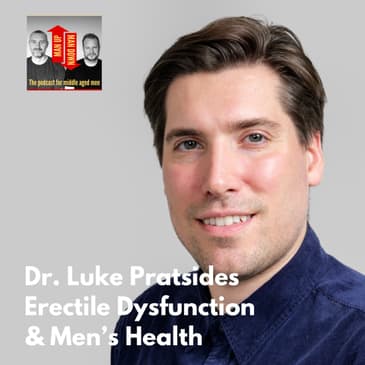
In the latest episode of "Man Up / Man Down", we welcome Dr. Luke Pratsides, a prominent NHS GP from East London and head of medical at Numan, the UK's leading men's health brand. Dr. Pratsides is an expert in men's health, particularly in areas like sexual dysfunction, hormones, and weight management, and has a broad experience in hospital medicine, including trauma, orthopaedics, ophthalmology, obstetrics, gynaecology, psychiatry, general medicine, and stroke medicine.
Dr. Pratsides begins by explaining his journey into medicine and how his interest in digital health started in 2016. He was particularly interested in how digital technology could enhance patient care by considering not just the clinical needs but also the emotional and practical needs of patients. He emphasises the importance of understanding what a health issue means to a patient emotionally and practically, which is often overlooked in traditional healthcare.
We discuss how the NHS excels in clinical care but often falls short in addressing the emotional and practical needs of patients due to resource constraints. Dr. Pratsides notes that traditional NHS services are not designed to handle the personal and emotional aspects of healthcare efficiently, leading to feelings of neglect among patients.
The conversation then shifts to the specific challenges men face in seeking healthcare. Men, due to societal norms and work pressures, often delay seeking medical help until a serious problem arises. Dr. Pratsides highlights that men are less familiar with navigating the healthcare system compared to women, who have more frequent interactions with healthcare services due to screenings and reproductive health needs.
Dr. Pratsides introduces Numan’s approach to men's health, which leverages digital technology to provide accessible and personalised care. Newman focuses on conditions like erectile dysfunction, weight management, and hormone therapy. The goal is to engage men early, address underlying health issues, and prevent serious conditions like heart attacks and strokes.
Volker and David share their personal experiences and questions, delving into the ripple effect of health issues on family and relationships. Dr. Pratsides explains how Numan’s digital platform allows for continuous and convenient communication with healthcare professionals, addressing both clinical and emotional needs effectively.
The discussion also touches on the potential of private digital health services to complement the NHS by alleviating some of its burdens. Dr. Pratsides argues that affordable private services like Numan can take pressure off the NHS by providing timely and accessible care, thus preventing more serious health issues that require intensive NHS resources.
Overall, the episode underscores the importance of a holistic approach to men's health, combining digital technology with a deep understanding of patient needs. Dr. Pratsides insights offer a promising vision of how healthcare can evolve to better serve men's health and well-being.
You can find out more on www.numan.com or contact Dr. Pratsides via LinkedIn
Hosted on Acast. See acast.com/privacy for more information.
[00:00:00] Welcome to the Man Up Man Down podcast presented by Volker Ballueder and David Pawsey. We discuss the pressures and challenges faced by men approaching middle age that we're often too embarrassed to speak about with our friends. You can find us online at www.manupdown.com.
[00:00:25] Enjoy the show and don't forget to subscribe and leave us a review. Welcome to another episode of Man Up Man Down. I say it's one of my most favorite topics today, that's at least what David thinks.
[00:00:41] But anyway, so we welcome Dr. Luke Prasidis who is an NHS GP in East London and the head of medical Newman, the UK's leading men's health branch. So he's an expert in men's health, including sexual dysfunction, hormones and weight management.
[00:00:58] But he also has a broad experience in hospital medicine, including trauma, orthopedics, no I can't pronounce this, of ophthalmology. I'm sure he corrects me in a minute, of testic, gynecology, psychiatry, general and stroke medicine.
[00:01:13] So there are a few words in there, I didn't know what they mean, nor did I know how to pronounce them. But first of all, Luke, welcome to the podcast. Thanks very much Volker, great to be here, thanks for having me.
[00:01:24] Yeah, I should have asked you about these words before. So, orthopedics I get right, this is feed. Ophthalmology and ophthalmology? So all the meaning is all bone surgery, every bone. Ophthalmology is eyes, obstetrics and gynecology is women's health, obstetrics, mainly women's health around pre-dose in birth.
[00:01:47] Yeah, so gynecology I understand. Interesting actually, my son has a time of recording, so once this goes live hopefully he's through the worst.
[00:01:56] But he has some bone surgery, so he gets part of his pelvis inserted into his heel to form an arch because he has really flat feet. Things I didn't even know you could do. So yeah, the modern world of medicine, so let's talk about that.
[00:02:14] Do you want to start with giving us a bit of background about yourselves, what you're up to and how you ended up working for new ones as well?
[00:02:21] Yeah, for sure. So I'm a general practitioner or GP by clinical training and I was following that traditional path of doing some hospital training
[00:02:30] and then going into the community working in GP practices, completed my training and always felt that we could be doing more in terms of how we interact with patients, using things like digital technology to facilitate healthcare and hopefully deliver better outcomes.
[00:02:48] And I got very interested in digital health around 2016, I was doing a postgraduate degree with a group of healthcare professionals brought together with a group of designers.
[00:02:59] So product designers, digital designers, even a furniture and fashion designer, trying to come up with new ways of approaching healthcare challenges, design thinking way, where you really explore the problem because I think too much in medicine and medical experts are very focused on the solution.
[00:03:15] This is the treatment, you take this and then all the problems are solved, but the human factors are not ever considered. And so we were trying to think about human factors and digital really works with those human factors.
[00:03:28] I talk a lot about every person, I'll call them a patient, but they're a person, has three needs. They've got clinical need, which is what is the diagnosis and what is the treatment? I'd argue that's the easy part for people and for healthcare practitioners.
[00:03:42] But the difficult part is around their emotional need and their practical need. Emotional being what does the issue or illness somebody is experiencing, what does that mean for them? How does it make them feel and how does it make their loved ones feel?
[00:03:57] How is it? How was that ripple effect around their loved ones? And do they feel listened to and cared for by their healthcare professional?
[00:04:05] And then you've got the practical need is how logistically do you do all the things you need to do to get through your healthcare journey and come out on the other side with a good health outcome?
[00:04:14] How do you book an appointment? How do you book a test? How do you see the results? How do you understand those results? And how do you get your questions answered? And I'd argue in traditional NHS care, the clinical need is often excellent and sometimes world leading
[00:04:28] in terms of the treatment and diagnosis. But almost every time, I think we've all had some experience in the NHS, that emotional and practical need falls down. And that's where health can really help because, you know, conditions are rushed in the NHS.
[00:04:42] No one really feels listened to and cared for. You know, when I'm an NHS doctor, I try to give people the time they need. It means I run two and a half hours late to my clinic.
[00:04:50] So if you're at the end of the day, you'll be waiting two and a half hours for me. And that's not good for people's practical need. They need to be somewhere. They need to pick up kids. They need to be at work.
[00:04:58] And so it falls down often in the NHS. It's very hard to book an outpatient appointment, change appointments. You have to phone up every third Tuesday in a blue moon between the hours of one and two in the afternoon or something like that.
[00:05:11] But, you know, we use digital to schedule everything else in our lives, you know, in our holidays, our meals out, booking tables, booking everything, tickets. Why can't we do the same, you know, in health care?
[00:05:23] So I got really into how we could use digital to facilitate that emotional practical need and try to work in the NHS National Digital Strategy Body, NHS England, NHSX, working with outside innovators and big corporates that had digital health solutions,
[00:05:37] trying to link them in with the right people in the NHS. But we were talking about big technology at that time, this was sort of 2019, 2018. And, you know, we're talking about AI and predictive analytics for medical notes
[00:05:50] that could predict which people that come in with an undifferentiated stomach pain just have a tummy ache and which ones go on to bowel cancer. Such wonderful things that we've done with technology. But the reality on the ground was that the people working in the NHS
[00:06:04] were running in some cases Windows XP, took 45 minutes to switch on their computer, had one guy that record I think was something like 65 passwords to get onto various different systems to do his daily job. So if you think, you know, we talk about the technology of the arts,
[00:06:19] the possible, but the reality was far, far away from that. And so then COVID hit and all of this sort of digital outward facing stuff closed down for a while. So I went looking into the private sector thinking maybe we could build something quicker
[00:06:34] than we could do in the NHS. And I came across Newman and I was really excited by what they were doing in Newman. So Newman's a digital men's health clinic, initially serves the only men, but now as we've got condition areas like weight loss and blood tests
[00:06:48] that is not gender specific or sex specific, actually biological sex, then we've opened down to men and women. But the whole idea around Newman is that men do not seek health care until they have a serious problem, a heart attack, a stroke or a cancer.
[00:07:03] Could we engage men sooner to try and prevent those things and guide them towards a more healthy way of living? And we chose a rectal dysfunction because if you're getting a rectal dysfunction all the time, most men will at least Google what's going on there
[00:07:20] or have a chat to a friend even if they don't see a clinician. So could we, we initially were sending out a rectal dysfunction treatment, so things like Tadalafil, Svendelafil in the post to people. We used our digital platform, our digital marketing, our brand
[00:07:35] to engage people around, okay, so you've got a rectal dysfunction, we can fix that symptom. But what's the cause? And there's so many potential underlying causes in terms of physical health and mental health. So we think about a rectal dysfunction, if you're getting it on a regular basis
[00:07:50] and you're sort of above the age of 40, 45, that's a three to five year predictor, the evidence shows, of a heart attack or a stroke before it happens. So could we jump in there before that happens and help somebody that has a rectal dysfunction because of a physical cause,
[00:08:05] like high blood pressure, cardiovascular, diabetes or blockages in the blood vessels to the penis for cholesterol? Because that's what causes heart attacks and strokes, blockages in blood vessels, interruption of blood supply. They're the big vessels in the brain and the heart.
[00:08:19] They need a bit of effort to block them. Smaller vessels in the penis need less of an effort. So you need a good blood flow, you have an erection. And if you've got blockages there, that can prevent that.
[00:08:30] The other big physical cause that I'm very passionate about is hormonal deficiency. So testosterone deficiency for men. You need good levels of testosterone to get a good erection. And this is one of the few areas, I think, where men are far behind women in this world.
[00:08:46] Women have easy access to hormone replacement therapy. There's been amazing work done in the mainstream media, people like championing it, like Taveena McCall, in terms of access to HRT, hormone replacement therapy for women in the menopause. Men never get a true pause, a complete cessation of their hormones.
[00:09:05] But all men lose 1% to 2% of their testosterone year on year after around 30. And some men develop a deficiency. So the majority have enough reserve that it never causes them a problem. But the evidence says up to 40% of men at some point in their life
[00:09:24] will become testosterone deficient and get very similar symptoms to the menopause. Stuff like reduced libido, general tiredness, lacking energy, difficulty sleeping. But specifically for men erectile dysfunction is one of the symptoms of this. And so we should be engaging men around their hormonal health.
[00:09:42] And I'd argue that anybody that presents with erectile dysfunction to any setting should be testing their testosterone and thinking about how we can replace that hormone. The medical community is not very well keyed up on this unless you've got a specialist interest in men's health.
[00:09:55] So what actually happens is men don't get their testosterone checked. They think, oh, the reason you've got erectile dysfunction is the mental health side. You're depressed, you're anxious, you're stressed. All of these things can cause erectile dysfunction.
[00:10:06] But many men end up on antidepressants that aren't really working for them very well. And they might end up going on two or three across a period of years. And then at some point down the line, someone checks their testosterone
[00:10:17] and actually it was a physical cause the whole time and with unnecessarily had been on mental health medications. Well, I'm very passionate about erectile dysfunction, how it can be a sign of other things and how we can support men
[00:10:32] using digital tools, so asynchronous communication outside of a clinical environment that can cause anxiety, more convenient to men, where they don't have to necessarily book an appointment with us. You can email us at any time. We'll get back to you the next day.
[00:10:46] So nothing we're dealing with is super acute. So we're not like an emergency service that needs to run 24 hours. But we have this great access to medical advice that I think doesn't exist in traditional healthcare settings. Yeah. Hi everyone, this is David. I hope you're enjoying the episode.
[00:11:03] It's just a quick heads up that we're in the process of organizing a couple of events in London. The first of those will be a walk and talk where we meet up in a London park and have a stroll and a chat and a coffee together.
[00:11:16] And the other one will be our next live recording which will also be in London and we're aiming to do that September-October time. As you can tell, details are a bit vague. So what I suggest is if you head over to our website, manupdown.com
[00:11:34] or one word, manupdown.com and sign up to our email newsletter or a WhatsApp group and that way you'll never miss out on important Man Up Man Down news. Now back to the episode. There's so much to unpack, Luke. Thanks for that, first of all.
[00:11:53] David, you were laughing earlier about the compassionate NHS. Do you want to go first? Well, I've had quite a few dealings with the NHS over the years. But yeah, I broke my ankle quite badly in February. And yeah, getting like, and it happened,
[00:12:14] sort of not where I live, so getting kind of trance, well, getting a referral to the orthopedic. Anyway, yeah, so that's why I was laughing. And yeah, I fell out with my GP's receptionist and they wrote a letter about my behaviour. I wrote one back.
[00:12:35] So yeah, anyway, that's why I was laughing. But yeah, I mean, as you say, there's so much to unpack there. I mean, I'll let you go first, Volker, because I just find it, as I say, I know it's your favourite subject. It is my favourite subject.
[00:12:52] So if I say in full disclosure, I haven't had many problems with erectile dysfunction, but I think it's something, having spoken to lots of friends, it's something that happens to all of us eventually, right? I think it starts quite, and obviously I'm happy to talk about that, right?
[00:13:08] You're a bit stressed, right? And it doesn't function as well as it functioned when you were 25 or 30, right? I mean, I'm now 10 to the age of 47. And I can see how it gets worse as you get older. So what I found really interesting is actually,
[00:13:23] if I say talking to friends, and again, I've put my hands up, I've done it. We all bought these little blue pills just in case, right? Just so if it doesn't work, we have them in the cupboard. So it's a little bit like you're a teenager
[00:13:38] and you buy your first condom, and you go like, you know, just in case, so we have them there. As you said, look, I think it's important to start talking about these things because most people, when you go to the pub, let's say,
[00:13:51] you don't talk to your friends and go like, by the way, guys, don't get it up anymore. It's just not working out anymore because as men, most of us are brought up, we're a strong character, right? We get it up all the time,
[00:14:06] and we can do it 10 times a night. And that's what we have to do kind of thing. And then when you just mentioned in terms of, erectile dysfunction could be an indicator that you might have a heart attack later on, could be cholesterol level, et cetera, et cetera.
[00:14:23] I'm like, this is really interesting because if we don't start talking about it, if I say, if the almost erectile dysfunction can kill us, right, I mean, not directly as a cause, maybe as well, but you know, I find it fascinating.
[00:14:39] I don't even know where I'm going with this, right? You know, we need to talk about that topic, right? It shouldn't be something which you just, if I say hide in your bedroom and go like, yeah, I'm not talking to anyone about it
[00:14:50] because I'm sure some people will, right? They just then lose the appetite for sex. You know, they might not be as close to their partner. You know, they might even lead to a divorce. Who knows if they don't want to do anything about it.
[00:15:05] And as you said, men don't go to the doctors unless either their wife tells them to go or their partner tells them to go, or because something is seriously wrong and they go like, oh shit, I mean, I now need to go. The thing is falling off.
[00:15:20] I need to go and see a doctor. And I had a deep look in the evidence around why men's outcomes of engagement with health is so poor. And it's exactly as you described a few things that have gone around, you know,
[00:15:32] the traditional masculine image that people try to uphold. That is one thing for sure. The other thing, you know, although it's changed, it's changing a lot in the world of work, but again traditionally men being the ones that are out at work and the breadwinner
[00:15:46] when they're being at home, simply means that men don't feel they have the time to interact with healthcare because again, traditional GP surgeries close at five, six o'clock, but really want to interact with healthcare probably up until nine o'clock really
[00:16:01] to try and fit around busy work lives, both men and women. The thing I found most interesting, I was looking at this, I never thought about it before, I think it's a big issue, is that women are reached out
[00:16:13] to by the health service at multiple points in their lives, which means automatically they know how to navigate a health situation. How do you book an outpatient appointment? They get reached out to for breast cancer screening, they get reached out to for cervical cancer screening.
[00:16:28] If they have a baby, they'll have antenatal care in the outpatient hospital and will spend some time in the hospital. Again, in that more traditional model of course changing now, they might take their children to the GP more than the man would. So automatically, because the health service
[00:16:43] is reaching out for them for all this screening, they know how to navigate a health system and that's something that many men shy away from. Men may never see a doctor until they get that bowel cancer screening in the post in their 50s.
[00:16:59] That's what made them think about that. The health service isn't proactive with men. Despite us having, I think we get a free health check when we have 40 plus, right? Under the NHS. There's an NHS service around a general health check looking at cardiovascular check at 40.
[00:17:20] But many, many men don't bother going into that and it's one letter and that's it. They're not very good followed up if they're not going. Plus there's this free test one of our guests mentioned for prostate as well, prostate cancer, right? There is a test called PSA,
[00:17:38] specific answer and there's a marker that if very elevated can be a sign of prostate cancer. The issue with it is not on a national screening program because many other things elevate. So things that are not prostate cancer at all.
[00:17:53] So stuff like a long cycle will elevate it. Ejaculation can elevate it. Anal sex can elevate it or anal penetration of any kind or a urinary infection. And so what ends up happening is you might get a mildly elevated PSA blood test.
[00:18:08] Somebody goes through the investigations for cancer, which is quite invasive. There are multiple samples of the prostate. So it's a physical and invasive procedure and it may be that it was one of those other much less serious causes that the man didn't have to go through
[00:18:26] that invasive procedure for. So yes, there is a test. I would say if somebody has family history, certainly if somebody has family history and they're Afro-Caribbean descent, Afro-Caribbean males are more likely to get prostate cancer. Or if they're getting symptoms, particularly stuff like weight loss
[00:18:46] or urinary symptoms, blood in the urine, blood in the semen or frequency passing urine, then they should always get checked. But yeah, I think the jury's out a bit as to whether an asymptomatic man with no symptoms at all, no family history, so low risk,
[00:19:02] should be getting a PSA test because it could bring back these false positives. Hi folks, it's Volker here. I hope you enjoy this week's episode. As you know, I coach executives, whether that is for leadership skills or for sales coaching or working as a therapist.
[00:19:18] There are a few ways I can help you to get unstuck, improve your work-life balance and become a better version of yourself so you will be more productive and have more time for your family. Whatever it is you want to achieve, you can join my client list
[00:19:34] or people from General Electric, DHL or Pepsi. Book a free exploratory call via my website www.obnat.us That's O-B-N-A-T dot U-S Now back to the show. I just want to circle back to what Volker said, what you were saying about it being a potential symptom
[00:20:05] of heart problem. I have to say that's the first time that I've heard that. I think it is that thing of, well, if I'm having erection problems, that is either because I'm overstressed or something's not working down there as opposed to, oh, this could be something serious.
[00:20:29] Yeah, so that's sort of quite mind-blowing to me. I think that is why people probably, well, sorry, men are reluctant to go to the doctor about that. We had another guest on that pointed out about those touch points that women have throughout their lives.
[00:20:50] I'm not really asking a question. I'm just sort of going on a stream of consciousness here. The other thing is that, well, going back to what I was saying about getting a referral, I got discharged after being in hospital for three days, then had to phone my GP,
[00:21:13] and I couldn't get through. As you say, it's like, well, yeah, there's been times where I'm like, I think I should get that checked out, but I'm just too busy or I've got too many morning meetings this week.
[00:21:28] Before you know it, a couple of weeks have gone past before you can make that appointment. Yeah, and that's that practical need falling down completely, isn't it? You just can't navigate the system that's acceptable to your daily life. That is a shame, but that is where I think
[00:21:48] digital health really has a lot of power. For example, if you've got a reckless function, there's loads of content where you can read up on the things that we've discussed, the causes, what to check, what to look out for.
[00:22:03] Then you could fill out a questionnaire that is online. You can do it anytime, you can come back to it, you can go whenever you want, day or night, comfort of your home. That helps us decide, are you safe or unsafe to have a treatment?
[00:22:15] Then we can send that treatment to you within a day or two. So you get that practical need met so quickly and we can also send out, if you want to, some blood tests to look for those physical causes, cholesterol, diabetes, test cell strength.
[00:22:28] And on top of that, we've got this open email address that you email it to my clinical team, the team that I lead, and we get back to people within 24 hours with a message. If they feel they need to have a phone call
[00:22:43] or we feel that they need to have a phone call, we can do that in a more traditional setting of booking an appointment. The idea is there's a flowing conversation. I mean, this is an existential question. I mean, to what extent do you think this is almost
[00:23:00] creating a sort of a privatised, almost like a two-tier sort of system in that obviously people are, I'm guessing a lot of your services may not be affordable to a lot of people. And that's obviously the nature of business and capitalism.
[00:23:25] I mean, do you think that we're almost moving into, obviously not the same sort of system as the US or privatised healthcare, but the fact that there are these services becoming more prominent and the technology allows that?
[00:23:45] So I mean, do you think that will eventually filter down to the NHS? Or, you know, and I mean, there's lots of questions in that. Thanks for asking this question. This is an important question about, first of all,
[00:24:01] about the two-tier health system and how will the NHS catch up. So yes, we're a private service, and of course you have to pay. And therefore automatically, there are some people that will be excluded from that. I would argue that we're a very affordable private service.
[00:24:16] So it's not like going to Harley Street where you have an appointment with a doctor, that's 300, 400 pounds. You have some blood tests, that's another 400 pounds. You have some treatment, you know, you pay whatever the cost of the treatment is, right? So I'm just making this up.
[00:24:29] So that's like another 50 quid. So then if I don't actually know the price. But that's already getting into the hundreds of pounds easily cross over into the thousands of pounds. We will offer a subscription-based service and a rectal dysfunction.
[00:24:41] I think it's around, you know, it can be around 15 pounds if you're getting a discount on that, we run off regularly. And that is it. That is the cost, right? So no matter how much you contact us, we're not charging you by interaction.
[00:24:57] If you want to do a blood test, we can get a blood test sorted for you for around 100 pounds. And so I'd argue that it's a very affordable service because of the way that we're able to do it at scale digitally.
[00:25:09] Compared to a traditional bricks and mortar private service. But going further than that, I would say, as we all know, the NHS can't cope with the workload that it has. Nobody can get through to their GP. So could private services and digital enabled ones like Newman,
[00:25:27] I would argue that we're taking some strain away from the NHS because the people that are able to access us, they can access us and then they don't go to the NHS and cause extra weight. Then I want to talk about things like obesity and weight loss programs.
[00:25:44] So we offer a weight loss service that is these new medications that are called GLP-1 receptor agonists if you want to get technical, but they're these injectables that everyone's talking about revolutionizing weight loss. They are fantastic. We offer it together with a lifestyle intervention service,
[00:26:00] a personal coach that guides you through diet, exercise, sleep and mindset. Key pillars, we think. And maintaining weight loss after you stop these drugs. But that's a whole other conversation about those drugs and what they're all about.
[00:26:13] What I'm trying to say here is we offer a weight loss service that is extremely effective. And we all know that people that are obese end up with things like heart attacks, strokes and cancers that put a huge weight on the National Health Service.
[00:26:29] If someone's going through heart surgery, cancer surgery, chemotherapy, that cost to the service is huge. And so if somebody interacted with Newman and ended up on the weight loss program and prevented them from having a heart attack or stroke
[00:26:42] or cancer, again, we're taking that weight off the system. So yes, two different systems, but I would argue they complement each other and the people that are able to access service like Newman, you know, we don't expect them to go back
[00:26:55] to the NHS for the conditions that we offer. Well, for transparency's sake, I did actually always having a look at the weight loss programs when I heard you were coming on. I started looking at the Newman website. I was like, oh, that looks interesting.
[00:27:08] I'd have to dig a bit deeper into that. So yeah, you might have a new customer soon, Luke. You're most welcome. And I'm always available outside of this podcast if you want to talk. I had a look on your website as well because you offer
[00:27:21] the same as Hugh does as well, right? You have meal replacement, you have nutrition. I mean, it's a one-stop shop, right? So I need to look more at your nutrition and whether I can, you know, maybe swap some of my Amazon orders over to
[00:27:36] to your right in terms of my omega-3 oil and stuff. Well, we're just thinking because on these weight loss drugs, you know, you do a plastic amount of weight and, you know, the worry at the moment is you don't only lose fat,
[00:27:49] you end up losing lean muscle if you're on it for a significant period of time. And muscle is one of the most key indicators for your longevity and your quality of life going forward into old age because you need that muscle mass when you're old, particularly.
[00:28:04] If you get hit, you know, like you get a pneumonia or you break a bone and you end up, you know, immobile for a while. As you're older, naturally anyway you lose muscle mass, but if you're ill and recovering, you lose a significant amount more.
[00:28:16] So you need a bit of reserve because you don't want to be in a situation where you've been ill, you've been immobile, you've lost muscle mass and all of a sudden you can't walk anymore because you're too weak.
[00:28:25] And it ends up leading to a gradual decline and, you know, unfortunately for many old people they need to die. And so we're keen to optimize people's nutrition on our program. We focus particularly on how you can maintain lean muscle mass because we know that's so important.
[00:28:43] So that's why we've got things like our shakes and our coaches that interact with patients on our app. It's a bit like a WhatsApp messaging type situation. They can also do phone calls if they need to, to try and encourage people.
[00:28:57] You're going to be eating a lot less on these medications, but you need to be eating good quality nutritious food and particularly high protein and ideally doing some kind of resistance training to keep the muscle mass. Just sort of something that I wanted to come back to
[00:29:09] that you mentioned in your sort of opening introduction. I mean, you talked about the ripple effect and the effects that, you know, illness can have on family members. I mean, could you talk a bit more about that? Because again, I think that's sort of something that doesn't,
[00:29:26] you know, get discussed as much as it could do. And, you know, that can sort of vary from someone having, you know, a short-term illness or, you know, something chronic. But yeah, if you could talk a bit more about that, please.
[00:29:39] I mean, it can be so wide and varied. So somebody could have, you know, an injury, for example, that just means they're not as mobile. So maybe they can't do the sport activity that they do with their friends every week.
[00:29:51] That is actually something that is really valuable to them, that keeps their mental health going, that is, you know, they really, they hold it in high regard. And so, you know, it can affect the people that they do that activity with,
[00:30:02] you know, not able to socially interact with. It can go closer to home if somebody is very unwell and, you know, is no longer able to lift their children, play with their children, you know, or interact with their partners as they normally would.
[00:30:16] And so, you know, it can cause impacts on relationships and difficulties there. So it's about understanding that factor for people. You know, particularly when someone is sick, often they can get low in mood. And so we tell people this is the treatment for an illness, right?
[00:30:31] Take this medicine or do this exercise. But if you're feeling terrible because you're feeling unwell, you know, you're just feeling down in the dumps about it, likelihood of you doing some physio for a musculoskeletal injury is going to be low because you're just feeling rubbish.
[00:30:44] You'll probably end up eating things like lots of sugar, lots of fat and, you know, end up worse off at the end of it in terms of putting on weight and things. So it's important to understand people's emotional needs
[00:30:56] and how it affects, you know, the others, other people around. And I would say, you know, when I've been a loved one of, you know, a sick family member, you know, like my mother or father if they're going through an issue,
[00:31:09] I worry that, you know, I have the burden of helping them navigate the system. So that's how it affects me emotionally. It causes me a lot of anxiety about how can I get them to the right place, the right person. But if you have a service that's digital,
[00:31:23] that has an open line of communication, hopefully family members can be reassured that actually the person is able to interact with the service as they wish to in the channel that is most appropriate for them, that works best for them, whether it's asynchronous messaging, phone calls,
[00:31:39] then you can have that extra security that your loved one has been looked after, cared for and listened to. Man Up Man Down is sponsored by Well Doing. As someone who has seen a counsellor for a number of years, I think their approach is great.
[00:31:52] They want you to find the mental health professional who is right for you. You can filter your search to highlight therapists with expertise where you need it or you can pay to use their personalised matching service. The people who run Well Doing are experts in mental wellbeing
[00:32:05] and they also have loads of posts and interviews to keep your mental health in good shape. Take a look at WellDoing.org I mean that, yeah, that is so bang on. I mean with my dad, you know, he was hard of hearing.
[00:32:20] So, you know, if neither me or my sister were there and we didn't live near him, to take him to an appointment, you know, we couldn't un- it's like, well, we don't know a lot of the time what that appointment was for,
[00:32:35] but also what the result of that was. And as you say, sort of, you know, if you've got an app where you've got access to, you know, bullets even of what was discussed, then yeah, it just takes away so much worry and stress.
[00:32:51] And well, yeah, like, you know, it alleviates a logistical problem as well. Exactly, in fact, practical need as well. So, if someone's interested, wants to see your results, you know, for example, our blood tests, you get the results, you know, with a range,
[00:33:07] you're outside the range, you're not- you're within the range, but you also get detailed written piece- a written report that you can download, you can share it with anybody. You know, if you want to, we wouldn't recommend this,
[00:33:19] but, you know, you could give your account details to a loved one, but ideally download it and share it. And yeah, then you have more people on your team looking out for you that way. If you have, oh, I had a blood test, I haven't had the result.
[00:33:31] Oh, it's been two weeks now, okay, I'll try and phone the GB surgery. Oh, I'm number 50 in the queue. I've actually got to go to work now, so I'll just hang up, I'll come back a couple of days later,
[00:33:40] I might actually end up turning up to the front desk where I'll wait for 20 minutes, and then I will ask for, you know, the results. And some surgeries print out stuff, some don't. If you're lucky, you'll get it printed out, and okay, you've got this piece of paper
[00:33:54] that's presented in quite a difficult-to-read format that basically has normal, abnormal, or sometimes says GP to call. And you look at that and you think, GP hasn't phoned me, what's going on? Like, do I need to speak the GP? And it's like, music.
[00:34:07] Well, I'll just ask one more question then, Ola, for current. No, no, go ahead. Get a word in. I mean, sort of a lot of what you talked about is, you know, the sort of, well, holistic approach to health,
[00:34:20] and you know, you sort of, on the weight loss, you talked about, wow, you know, these different pillars, including mindset and, you know, exercise, nutrition. I mean, you know, we get, obviously the five a day is probably, you know, a classic example, but, you know,
[00:34:35] we get these sort of messages from the government slash NHS, but it's never sort of explained why, you know, oh, like Apple a day keeps a doctor away, but, you know, it's sort of, you know, it's almost like, well, we get told that
[00:34:52] we should be doing 20 minutes of exercise, we should be doing this, we should be doing that, rather than if you want to feel great, these are the ingredients. I mean, again, do you think the NHS has got some sort of
[00:35:05] catching up to do in terms of that holistic approach? I mean, as you say, a lot of the time it is like, well, here's a tablet or, you know, here's this form of treatment and it's managing the symptoms rather than addressing the cause.
[00:35:20] Yeah, so the NHS, as much as it talks about prevention, is very reactive. It waits until the disease has happened to treat it, and it's got the right treatment and hopefully people get better. But it's not very good at preventing that disease
[00:35:34] or issue illness, whatever it is, ever happening. And the reason for that simply, I believe, in my personal opinion, nobody else's, is resource-based because the NHS does not have the time resource to engage people in the way that we engage,
[00:35:50] you know, we talked about like a flowing conversation. It doesn't have the time resource or the staffing to be able to do that, or the technological know-how to build something like an AI, you know, a general AI that can have a conversation with somebody.
[00:36:03] And, you know, the NHS is trying to serve a huge population with every illness possible, and every treatment possible. And Newman has a handful of conditions that we treat, and that's why we're able to deliver this service that we deliver. And the NHS is a real tough job,
[00:36:24] and that is why I think they, you know, because of resources at the moment, it's not able to deliver those on their emotional and practical needs of people, or the preventative side of medicine. So we talk about the weight loss drugs.
[00:36:37] Of course, you can get these on the NHS, you might have heard of. But to get them on the NHS, it's a very high bar. So you have to be significantly obese. So it's a BMI of 35 or more, which is significantly obese. And...
[00:36:51] You're not there yet, David, are you? I don't know. I don't know if I'm up for it. But it's not just the BMI, so it's not just the weight. You have to have a pre-existing condition, which is high blood pressure, diabetes, previous heart attacks, and something like that.
[00:37:04] And surely the whole idea is that we can get people to lose weight before they ever get this condition. And, you know, the NHS is not able to do that because these drugs are expensive. So they target towards the people that are most at need,
[00:37:18] as it were, people that have had one of these issues. But again, in our service, we try to be more preventative and offer access to this kind of treatment for a large number of people. So I'm looking up now how much I have to weigh
[00:37:32] to get a BMI of 35. So I think... You're very tall. I'm not even on the scale to get a BMI of 35, which is... I don't know if that's good or bad, but I have to be over 132 kilos, which I'm not. And let's talk about BMI,
[00:37:51] because BMI of course is not the most accurate measure for weight, but it's just the most universal. So if you have a lot of muscle mass, your BMI is going to be high, but it's not going to be causing anything health problems.
[00:38:01] We need to think about central fat, so the fat around the belly, but also the fat around the organs. So you get some people that are... Well, I'm trying to find a better term here, but I don't have one. Slim fat people. So they're slim.
[00:38:16] They live a very unhealthy lifestyle, sedentary, lots of sugar, lots of fat, and actually they've got a lot of this fat around their organs inside their body. And this belly fat and fat around the organs is very metabolically active, and what that means is
[00:38:32] it increases your blood pressure, it increases your cholesterol, and makes you resistant to insulin. So all of this increases your risk of heart attack, but also diabetes. And what a lot of men don't know is this fat converts your natural testosterone into estrogens, into female hormones.
[00:38:51] That's why you might see erectile dysfunction in men that are obese or overweight. So it's a whole picture that again leads us back to erectile dysfunction. Quite interesting. Erectile dysfunction could be caused by the things we spoke about, but it could be simply as well
[00:39:10] issues with carom at excess central weight. That's interesting because so I did what was called there's a national call to give blood and give your health measurements for some statistics. I'm trying to think what it's called. I donated some blood the other day and got tested.
[00:39:31] And it said actually for my race circumference, so it's our future health, which I'm sure you've heard of. And they say for a healthy low risk waist measurement is below 94 centimeters or less for men. And I can tell you, I am about 10 centimeters over to that. Right.
[00:39:49] But because I'm so tall, if I do my ratio, you know, height to waist, I'm just over the 50% mark, which I think I believe is another indicator. Right. In terms of, yeah, so the higher ratio is an indicator. Yeah. Risk of cardiovascular. So when would I,
[00:40:08] or if I say I'm asking on behalf of the listeners, but obviously, you know, self-interest here, when as a man should I start going to a doctor, you know, see you guys, see my GP, you know, obviously, when I start having erectile dysfunction,
[00:40:23] because I'm afraid it might be another underlying cause, is it the 94 centimeters? Is it the 25, you know, BMI? What values, or what is a good indicator for me to go like, oh, you know, I should as a man be proactive, you know, and not, you know, when,
[00:40:41] you know, I had palpitations a few years ago because, you know, running and everything else. And then of course people go to the doctors. I went to the doctors, but is there anything where you go like, go and see your GP now if...
[00:40:54] Because what's an amber flag rather than a red flag? So I'm going to say let's not wait for those. I would say every man, you know, I'm going to be very arbitrary with an age cut off, but there doesn't really need to be an age cut off.
[00:41:07] If you're interested in your health, if you're interested in a long active life, you should monitor things like a general health set of blood tests, you know, maybe every two to five years, if there's nothing wrong, you know, maybe every two to five years.
[00:41:20] And then after you pick up something, you should be doing it more regularly. So, you know, if you pick up, then you've actually got high cholesterol. You need to be making some lifestyle changes initially, or if very bad, maybe you need to go on some medicine,
[00:41:31] then you should probably check that again every six months for a while. And, you know, it's now a lot easier to access blood testing because, you know, you can do things like what we offer at Newman,
[00:41:38] which is a finger prick capillary test that you just do at home. You don't need to go anywhere to have it taken. Or you can go to a clinic and have a venous draw, but yeah, blood work is I think a key to understand your health,
[00:41:52] understand where you are as an individual and what you need to do. And, you know, it can change at any time. And of course, age is something we can't fight against. So I'd recommend that people do on a regular basis and don't wait for some sinus symptom.
[00:42:07] What about MRI scans? Should I have regular MRI scans and know exactly that there's no tumor growing inside me? Or is that worth doing? Because I know some of my friends do that on a regular basis, I think yearly every three years.
[00:42:22] Is that something you guys offer maybe as well? I don't know. No, so we don't offer any sort of face-to-face investigation. Okay. And it's a big debate in the medical community about whether asymptomatic testing of any kind, so probably light touch is something like a blood test,
[00:42:36] but, you know, sort of on the more complex end is something like an full body MRI scan is actually, you know, causes more problems than good. It causes anxiety or you find what we call normal abnormals. So where you find something that is normal,
[00:42:53] so a blood test out of range or a strange looking lump on an MRI scan. But actually then you look into it in more detail and actually that is just normal for that person. So it could be an anatomical barrier, or it could be something that is non-cancerous
[00:43:05] if you pick up on an MRI. Or it could be, for example, a kidney function that is a tiny bit out of range, but actually that's what that person's been their whole life and that's what their person will always be and it's not a kidney issue.
[00:43:18] Yeah, it's a big debate in the medical community and I often get challenged by colleagues that are in the other camp that we should only be people who are symptomatic. I am very much on the side that if, that people should own their healthcare
[00:43:32] and if you want to know and you want that knowledge, you should have access to it, to whatever testing you need. It shouldn't be paternalistic where a doctor is saying, no, no, you're a young man, you've got no family history, you've had no health issues.
[00:43:44] Don't be silly, you don't need to be looking at looking at a full body scan or a general health set of blood tests. If that's something that's going to engage you to a healthier lifestyle and interest in your health, then that's something that everybody should be doing.
[00:43:56] That's what they want. I'm probably on your side being totally unbiased here, because I had a heart scan last year and the doctor who did the heart scan went very detailed and he goes like, you have a hole somewhere and I'm like panicking.
[00:44:13] He says, don't worry about it. If we didn't have this machine, we wouldn't even know. It doesn't impact me whatsoever. So there's something which isn't, to your point, it's there, it has been there since birth and it doesn't impact me whatsoever.
[00:44:28] Whether I know about it or not doesn't really matter, but we have the technology now that we can actually find out and it can cause potentially more anxiety than anything else. So if you get an MRI scan and you see a dark spot on your lungs,
[00:44:43] and you start totally panic and it costs you more days in your life worrying about it than it might actually be. Yeah, that is the difficult balance there. But I argue that as long as somebody is well informed about that kind of thing
[00:45:00] and they make an informed decision, we've got to leave it to the power of the individual to make that decision and not tell them as healthcare professionals, no, you shouldn't be doing this. We talked about erectile dysfunction. We talked about erectile dysfunction different
[00:45:13] than we talked to our previous guest, Andy Barnham, who was a bit more explicit about his implant and everything else. But I found this super interesting. So I certainly learned a lot here and that took lots of notes as well. David, anything?
[00:45:29] I mean, I think it's going to be the classic. We're going to have to get you back on because we've got some other questions. Yeah, so I'm going to shut up and say, you know, if people want to find out more about your work, Luke, Dr. Luke
[00:45:45] and the work that Newman does, how do we find you? Yeah, so the best place to find Newman is on the website, Newman.com and myself, I'm on LinkedIn if you want to get in touch. Thank you so much for those insights.
[00:46:01] Fingers crossed we won't need your help from a doctor's perspective, but I definitely have a look at your website as well. So I'm a bit sucker for these things. It's all about the optimisation. Exactly, thank you. Thank you guys, I've really enjoyed the conversation. Thanks so much.
[00:46:24] Thanks for listening to this week's episode. Feel free to reach out to Folker or David via our website, www.manupdown.com or podcast at manupdown.com with any feedback or to let us know what topics you'd like us to cover in the future. Hear you again soon.