
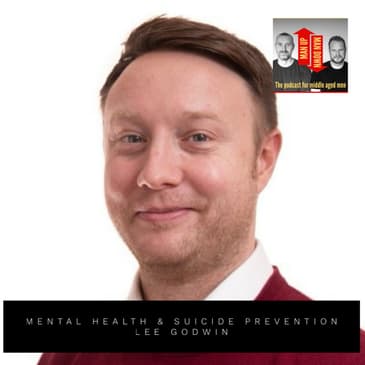
In this episode of "Man Up / Man Down," Lee Godwin, co-founder and COO of Emplomind, and a champion for mental health and suicide prevention, shares his personal and professional journey in the mental health space. Lee's involvement in mental health advocacy was profoundly shaped by a personal tragedy when his sister attempted suicide in 2019. This event prompted him to reflect on his family's communication and led him to become more actively involved in suicide prevention, eventually partnering with organisations like Papyrus and Ripple Suicide Prevention.
A leading mental health organisation and platform which Lee co-founded, focuses on providing mental health support in the workplace. Their platform uses technology to connect employees with therapists, counsellors, and coaches, offering immediate, anonymous support for various issues, from anxiety and stress to career development. This approach aims to remove traditional barriers to mental health support, such as long waiting times for therapy.
The conversation also touches on the broader societal challenges of mental health, particularly how digital technology influences young people. Lee discusses the balance parents must strike in managing their children's exposure to technology while encouraging outdoor activities and face-to-face interactions. He notes the significant differences he observes in his daughters' behaviours when they disconnect from digital devices and engage in physical play.
Moreover, the discussion explores the role of technology in suicide prevention, highlighting Ripple Suicide Prevention's innovative approach. Ripple uses simple yet effective technology to intercept harmful online searches, offering users an opportunity to redirect from harmful content towards hopeful resources. This intervention provides a moment of calm and a chance to reconsider harmful actions, demonstrating how technology can be leveraged positively in mental health.
The episode underscores the importance of awareness, open communication, and proactive support in mental health. Lee emphasises that while there is more recognition of mental health issues today, driven partly by the overwhelming flow of information in the digital age, challenges remain in ensuring that people receive the help they need promptly and effectively.
Lee’s message is clear: while technology has its pitfalls, it also holds tremendous potential to support mental health, provided it is used thoughtfully and with a human-centric approach.
https://emplomind.co.uk/
https://www.ripplesuicideprevention.com/
https://www.papyrus-uk.org/
LinkedIn: https://www.linkedin.com/in/lee-godwin-4553a819/
Hosted on Acast. See acast.com/privacy for more information.
[00:00:05] Welcome to the Man Up, Man Down podcast, presented by Volker Ballueder and David Pawsey.
[00:00:12] We discuss the pressures and challenges faced by men approaching middle age that we're often too embarrassed to speak about with our friends.
[00:00:20] You can find us online at www.manupdown.com.
[00:00:26] Enjoy the show and don't forget to subscribe and leave us a review.
[00:00:30] Welcome to another episode of Man Up, Man Down.
[00:00:37] We already had a good laugh, so it's going to be a fun episode, I hope.
[00:00:41] So we welcome Lee Godwin.
[00:00:44] So Lee and I met because we got connected through another connection of mine,
[00:00:48] because he's co-founder and chief operating officer for Emplomind,
[00:00:53] advisory board member for Ripple Suicide Prevention and Papyrus Suicide Prevention Champion.
[00:00:59] So he will fill us in what that all means.
[00:01:01] So we got connected through Emplomind, where I just got accepted as a coach and therapist this week.
[00:01:08] So thank you for that, Lee.
[00:01:09] Very exciting.
[00:01:11] Yeah, I'm very excited as well.
[00:01:13] So thank you, David.
[00:01:15] So driven through personal circumstances, Lee is each day through his various roles,
[00:01:21] playing a small part in ensuring that mental health support is available and accessible for all.
[00:01:27] I would probably argue it's a bigger part than you think it is.
[00:01:31] But first of all, Lee, welcome to the podcast.
[00:01:33] Well, thank you very much.
[00:01:35] Nice to see you again, Volker.
[00:01:37] We were kind of communicating earlier this week as well about the good news you joined in the team,
[00:01:42] which we're really excited for.
[00:01:44] David, nice to meet you for the first time as well.
[00:01:48] So thanks for having me on, chaps.
[00:01:50] Really appreciate it.
[00:01:51] And really excited about this conversation.
[00:01:54] I'm now also, based on your comment at the moment, we've had a little bit of fun already.
[00:01:59] I've got to try and keep that up.
[00:02:01] But also at the same time, I think what I'll share today on this really relevant podcast is,
[00:02:07] we'll probably have a look at some bits and pieces as well, which can be quite challenging as well.
[00:02:11] Right.
[00:02:11] So I'm looking forward to kind of digging into some of that with you both today.
[00:02:16] Yeah.
[00:02:16] No, thank you.
[00:02:17] And I mean, yeah, it's a tough topic.
[00:02:20] Obviously, suicide is a tough, tough topic, hard topic to talk about.
[00:02:24] But I mean, as we always say, right, if we can prevent one suicide, right,
[00:02:29] by sharing stories, by sharing, you know, things that people can do, you know, and get people to talk, right,
[00:02:35] then our job is done.
[00:02:37] And we like to do that, if I say, in a lighthearted manner, as I always like to say.
[00:02:41] But, you know, that doesn't mean we're laughing at things.
[00:02:45] You know, we just try.
[00:02:46] I don't want to say we make it entertaining.
[00:02:48] It's probably a better word for it.
[00:02:50] David is a wordsmith.
[00:02:51] Well, you know, I think, A, that's the way that men communicate is, you know, through banter and humour.
[00:02:58] So, you know, it's like, well, it could be seen as disrespectful.
[00:03:02] But I guess, you know, the point is, actually, if we're engaging, you know, even, you know, discussing something serious in a lighthearted way,
[00:03:12] then, you know, yeah, we just hopefully keep the conversation going.
[00:03:17] All about awareness, isn't it?
[00:03:19] Right?
[00:03:19] There's a lot of work on awareness here.
[00:03:23] Right?
[00:03:23] And, yeah, we're dealing with a topic, not just suicide, because I don't want to just, you know, sit here and focus on that.
[00:03:29] But when it comes to, like, well-being in general and our mental health, there's still a lot of – there's great work going on.
[00:03:36] Right?
[00:03:36] And Volker, thank you.
[00:03:38] You know, we're playing a part in that.
[00:03:40] I'm playing a part in that.
[00:03:41] Volker, through the work you do, right?
[00:03:44] You're playing a part in that.
[00:03:44] This podcast today is playing a part in that.
[00:03:48] But there's still a lot of work to be done, right?
[00:03:51] There's so many challenges, not only just in our society and communities here in the UK, but then when we think globally around some of the stigmas around mental health, suicide,
[00:04:05] there's still some real cultural barriers, you know, and deep-rooted in religion in some instances around somehow our mental health, suicide is perceived both in religion and also legally in some instances.
[00:04:20] Right?
[00:04:20] So, yeah, just these awareness sessions are a really good way.
[00:04:24] These conversations are a good way to just start opening up those conversations and also learning at the same time as well.
[00:04:31] Yeah.
[00:04:33] So, Lee, do you want to start by filling us in with your story, what you do and what your background is and how you got to it?
[00:04:40] Wow.
[00:04:41] So, yeah, let's start there then.
[00:04:42] Let's start there.
[00:04:44] So, I'm just trying to think about how much time we've got and how far to take you back.
[00:04:47] Because although you're probably seeing someone that looks in their kind of mid-20s, early 30s here, I knew you were going to say that, guys.
[00:04:57] I've been in the world of work now for over kind of 20 years, right?
[00:05:05] Much of that time, much of my time has been spent in HR and recruitment technology, kind of specifically the last 15 years.
[00:05:15] It's not where I started my career.
[00:05:17] I started as an estate agent.
[00:05:18] So, you know, I think sometimes when you think about roles, et cetera, estate agents get a bit of bad rep, don't they?
[00:05:27] I was perhaps considered the worst breed of human at some stage in my life, right?
[00:05:32] Yeah.
[00:05:33] So, I went on a bit of a transition from building up some core kind of commercial and sales skills into the HR and tech world.
[00:05:39] So, that's kind of high-level work capacity.
[00:05:45] Me, myself, I'm a dad, a husband.
[00:05:50] I've got two beautiful young girls, four and eight.
[00:05:54] We were speaking offline a moment ago about different generations, weren't we?
[00:06:00] And specifically around mental health and impact, the society, digital, all these bits play in our world.
[00:06:06] So, I'm super passionate about the well-being of our young people as well.
[00:06:14] So, I'm also a brother and that plays a big part in my story.
[00:06:17] So, I guess why we're talking today in reality and why I'm doing the work I do in the space through Emplo Mind,
[00:06:25] the kind of charity work that I do as well, is, and I'll share this but put a little bit of a warning out.
[00:06:32] On the 13th of November 2019, my sister actually looked to take her life.
[00:06:37] So, that for me was a moment of reflection, right?
[00:06:45] Reflecting on how myself, us as a family, were communicating with my sister.
[00:06:54] And the reality is we weren't doing very well with that.
[00:06:58] You know, head buried in the sand kind of approach, I guess, in many ways.
[00:07:08] And actually, it wasn't the first time.
[00:07:10] It probably won't be the last time, it pains me to say.
[00:07:12] But what was unique about that moment in time, chaps, was that after the event,
[00:07:18] she approached me and shared her intent around her actions.
[00:07:22] So, that for me was deeply impactful, deeply impactful, and really started to make me think about,
[00:07:29] you know, the emotions I'd experienced and felt over the years,
[00:07:33] and will continue to do so moving forward when it comes to, you know, supporting my sister, I guess.
[00:07:40] Yeah.
[00:07:40] And the role I can play in that.
[00:07:44] So, that's a little bit about me.
[00:07:46] And that's really what sparked this journey into the world of well-being and mental health.
[00:07:50] So, I then just, it really started at that moment.
[00:07:54] I reached out to Papyrus.
[00:07:56] And by way of reference, Papyrus are a suicide prevention charity
[00:08:00] that specialize in suicide prevention in young adults.
[00:08:03] And that's anyone between the age of kind of 8 and 25, right?
[00:08:09] So, I went in to Papyrus's offices in London.
[00:08:14] I met with a lovely young lady there called Imo, who at the time was working there and done various roles.
[00:08:22] She was the first person I'd spoken to outside my wife, sister herself, and my mum about the situation.
[00:08:29] And I broke down in front of her.
[00:08:33] Absolutely broke down.
[00:08:34] And again, that was that next kind of transformational moment for me.
[00:08:38] They also done a really good job at that moment in time because two weeks later,
[00:08:41] they'd signed me up as a champion to go out talking about the impact of the work they do in this topic in community.
[00:08:48] Right?
[00:08:48] I mean, yeah.
[00:08:50] So, one thing just started to lead to another.
[00:08:52] And I thought, I really need to get involved in this a bit more full-time and make this my focus.
[00:08:56] So, that's where I really kind of got on board with the team at Emplo Mind.
[00:09:02] And what we do is we go into the workplaces, different shapes and sizes,
[00:09:07] and we connect their people with our therapists, counselors, and coaches on demand to deliver that.
[00:09:14] Really important, both proactive and, in some instances, reactive support for people that want to work on certain topics,
[00:09:22] whether that be they're struggling with anxiety, stress, or even communication in the workplace or career development.
[00:09:28] Right?
[00:09:29] We've got individuals that can help with all those bits.
[00:09:33] So, yeah.
[00:09:33] That's kind of how I really went on this journey and why we're talking here today.
[00:09:36] I also sit, as Volker said, on the advisory board for Ripple Suicide Prevention.
[00:09:41] And they do amazing – they're a charity that have developed some really amazing technology that means if I do a harmful search across Google,
[00:09:49] for example, if their technology is deployed, rather than, you know, going and immediately accessing that harmful content,
[00:09:58] I can be signposted towards hope instead in the first instance.
[00:10:02] Right?
[00:10:03] So, same very, very simple but really powerful in that moment of crisis for an individual.
[00:10:11] That's a lot there.
[00:10:12] Yeah.
[00:10:13] A lot to unpack, I know.
[00:10:14] And hopefully I'm trying to condense that as much as I can for you because, obviously, yeah, awful lot there.
[00:10:19] But, you know, I think a journey that I've been on and continue to go on.
[00:10:26] Right?
[00:10:27] It's, yeah, a continuous learning for me.
[00:10:32] Where do we want to start unpacking that?
[00:10:34] I mean, I'm a tech person.
[00:10:38] So, if we start at Ripple, it's actually – because I, you know, once you were talking, I, you know, I always use the wrong word on how to, say, you know, attempt suicide.
[00:10:49] Yeah.
[00:10:50] And we had to discuss some previous podcasts, so I need to get my wording right.
[00:10:53] So, I typed in suicide into Google.
[00:10:56] And actually, the first thing that comes up, Samaritans, do you need help?
[00:10:59] Yeah.
[00:10:59] Which is great.
[00:11:02] And if we look at technology and we started talking about that, and maybe that – I don't know if that's the best way of kicking off the conversation.
[00:11:09] But we're both reading the same book at the moment, which is – I shouldn't know what it's called, but it's called The Anxious Generation by Jonathan Haid.
[00:11:18] Yeah.
[00:11:21] I mean, obviously, I don't know if you want to or you don't have to talk about why, you know, why your sister went through what she went through.
[00:11:31] But I think a lot of suicides these days.
[00:11:36] And, you know, I think that's where the stats are pointing to and what the book is suggesting, right?
[00:11:41] It's because we can constantly compare ourselves to others these days, right?
[00:11:46] Let it be Instagram, Facebook, social media in general.
[00:11:49] I interviewed a coach many years ago, and unfortunately, I couldn't find the reference.
[00:11:54] But there is a correlation between the launch of this first smartphone and suicides, right?
[00:12:02] Because we have this FOMO, right?
[00:12:04] This fear of missing out.
[00:12:05] We're constantly online.
[00:12:07] We're constantly, if I say, under attack of people, if I say, wanting something from us or could want something from us.
[00:12:17] So there's a lot of pressure, particularly for younger kids, younger generation.
[00:12:24] You know, I mean, I'm still old school, I always say, right?
[00:12:27] I'm middle aged.
[00:12:28] You know, we are middle aged.
[00:12:30] I mean, you're not, obviously, but David and I are.
[00:12:34] And maybe we have learned things differently.
[00:12:37] But even if I look at my, you know, whilst listening to the book or reading the book, looking at my two children.
[00:12:44] So they're 13 and 15.
[00:12:46] My 15-year-old still goes out and goes to the mud ramps and cycles and plays with his mates outside, whilst also playing on the Xbox.
[00:12:56] You know, I think you can't stop that.
[00:12:59] Whilst my youngest doesn't.
[00:13:01] And if I say, there's certain histories why he can't from a physical point of view or not as much.
[00:13:08] And he wants to.
[00:13:10] But also, I think, you know, although they're only two years apart or just under two years apart, it's a different generation.
[00:13:16] They live and breathe online, which, according to Heights research and I think common sense, it's not the same as going out and playing the mud with your mates, right?
[00:13:27] Yeah.
[00:13:30] What can we do?
[00:13:31] Is that just how society is going to be and we have to live with it?
[00:13:35] Or are we going to stop buying our children smartphones and keeping it away from them and stop them from being on Instagram and TikTok?
[00:13:44] I think this is a really great question.
[00:13:46] Really great question.
[00:13:48] And I think, you know, it's about balance.
[00:13:51] And that's what us as parents, we've got kind of a responsibility bringing young people into the world, whether it's our own mentoring, whatever it is, even in the workplace.
[00:14:04] How do we, you know, help and support young people to grow?
[00:14:08] And we've done a session on this the other week, actually, with one of our neuroscientists that we know and Chloe Wesley, who coaches and mentors young people.
[00:14:20] And, you know, we've got a responsibility to kind of help out a little bit here, I guess.
[00:14:26] Because I look at my young girls, I look at my young girls and I see very clearly that digital is going to be huge.
[00:14:35] You know, technology is going to be a really valuable part of their lives in a really positive way.
[00:14:39] It's going to open up so many opportunities for them.
[00:14:42] Right.
[00:14:43] It really is.
[00:14:44] But I also see that pressure from a very young age.
[00:14:49] I see the immediacy of results they expect because of, I don't want to call out some, but, you know, the immediacy of which we're served information is probably the best way to put it.
[00:15:05] Of course, yeah.
[00:15:05] Right.
[00:15:06] So, but then what I see is when I'm in an outdoor setting with them, right, when we get away from digital and we put some boundaries in place and we switch off for a period of time,
[00:15:17] I see a completely different child in many respects.
[00:15:22] Right.
[00:15:22] I see huge creativity.
[00:15:24] I see a different energy.
[00:15:26] I see a focus.
[00:15:28] Right.
[00:15:29] I see a real difference in focus and attention span.
[00:15:33] When I say focus, I guess that's an attention span to doing something and nurturing something and playing with something for a more prolonged period of time.
[00:15:41] Right.
[00:15:42] So I think the book we're reading, as you rightly say, really calls this out.
[00:15:47] In terms of the generations we have now are going from really in a phone-based childhood.
[00:15:56] Yeah.
[00:15:58] Whereas before, previous generations were play-based.
[00:16:02] Right.
[00:16:02] We had play-based childhoods.
[00:16:04] I remember when I was younger, before the mobile phone, I think the first machine I got was a NES.
[00:16:14] A Nintendo entered the very first one, right?
[00:16:16] So again, we only had one of them in the household.
[00:16:20] We had limited time on it, all those kind of bits.
[00:16:23] Yeah.
[00:16:24] My days used to consist of getting up, going to school.
[00:16:29] After school, I'd be out playing football.
[00:16:31] Right.
[00:16:32] At the weekends, I'd be out of the house early.
[00:16:35] I'd walk down the road to knock on my friend's door.
[00:16:39] Yeah.
[00:16:39] And communicate in a certain way with their parents to see if they could come out to play today.
[00:16:44] Yeah.
[00:16:45] Right?
[00:16:46] So we had a very different way of interacting and building social connection and developing some skills at a young age.
[00:16:55] Part of the challenge is, as well, not just digital, but because of media and news outlets, I think as parents, we're petrified.
[00:17:05] Yeah.
[00:17:05] We're petrified of what can happen to our young people.
[00:17:08] So not only has digital played a part, but as parents, we've put our hands probably around our children in some ways a little bit too much and not given them the opportunity to go out and learn and experience and build some of those skills and resilience as well.
[00:17:25] So we've got to try and find that balance somehow.
[00:17:27] So it's not just digital.
[00:17:28] There's other aspects of us as parents that we need to work on to give back some of that opportunity for our young people.
[00:17:36] Yeah.
[00:17:36] And I don't know if you got there yet with your girls, but I remember very vividly when I let my oldest, you know, walk the last 400 meters amongst thousands of other students, right?
[00:17:50] And lots of moms and dads there anyway, can't let him go early, you know, get him the last 400 meters by himself or pick him up, you know, halfway down the road.
[00:18:01] Yeah.
[00:18:01] That was a scary moment for me.
[00:18:03] You know, I was almost crying.
[00:18:05] I was very close to tears.
[00:18:06] I'm like, this is crazy.
[00:18:08] And now he goes off to Brighton and he asked the other day, can I go to London?
[00:18:11] And I'm like, yes and no.
[00:18:15] You know, he's 15.
[00:18:18] It's like he's going to go to London sooner or later.
[00:18:21] Right.
[00:18:22] I'd rather have him go to London, me knowing than him saying, oh, I'm off to Brighton.
[00:18:26] And then he turns up, you know, somewhere in London.
[00:18:28] But where is he going and what is he doing?
[00:18:31] Right.
[00:18:32] And you're absolutely right.
[00:18:33] I think the information we have on demand.
[00:18:38] Some things are great.
[00:18:39] Right.
[00:18:39] In terms of.
[00:18:41] If I say Google, Google in general.
[00:18:43] Right.
[00:18:44] You know, I used to have a lexicon, you know, you remember these paper books.
[00:18:48] Right.
[00:18:48] Like, and every two years you bought a new one because not so much changed, you know, in
[00:18:53] a year.
[00:18:53] So you saved the money, didn't buy a new one every year.
[00:18:56] Those companies must have gone out of business, I suppose.
[00:18:59] But it's like phone books.
[00:19:00] Right.
[00:19:00] We all remember phone books and looking things up.
[00:19:03] But everything is on demand now.
[00:19:05] Right.
[00:19:05] I mean, coming back to the book as a reference.
[00:19:08] Right.
[00:19:08] Porn.
[00:19:09] Right.
[00:19:10] If kids know what porn is, they can find it anytime easily.
[00:19:18] You know, I remember getting magazines from older kids, you know, hand down and sticky and
[00:19:24] all that.
[00:19:25] Right.
[00:19:25] But awful.
[00:19:28] Different experience.
[00:19:29] Right.
[00:19:30] And now.
[00:19:30] Very much.
[00:19:31] Everything.
[00:19:31] I mean, you know, I mean, if you compare a Playboy, as I remember when I was, you know,
[00:19:39] 18, of course, to what you get on Pornhub or YouPorn or who knows what other sites are
[00:19:46] out there.
[00:19:46] Not that I know any of those.
[00:19:48] But it's out there.
[00:19:50] It's in your face.
[00:19:51] And I'm sure there are other sites which I don't know about and I don't need to know
[00:19:57] about.
[00:19:57] And I think that's a scary bit.
[00:19:59] And what Height said in this book as well, it seems to be worse for girls.
[00:20:07] Right.
[00:20:07] In terms of, you know, in terms of, you know, there's a comparison in particular.
[00:20:15] The comparison of the developmental processes we're going through as individuals as well.
[00:20:19] Right.
[00:20:20] And those heightened emotions and senses as we go through puberty, et cetera, impacts
[00:20:24] males and females in different ways.
[00:20:26] Right.
[00:20:27] Exactly.
[00:20:28] And I think you're right.
[00:20:29] I think what we've put, without spending too much time on Jonathan's book, but it is
[00:20:35] great.
[00:20:35] So I recommend anyone goes and gets it.
[00:20:37] Right.
[00:20:37] So it's really great.
[00:20:39] But I think what we've done, where we've gone a little bit perhaps over the top is how
[00:20:44] protective we are of our young people in, for want of a better phrase, real life in society,
[00:20:50] out and about, on the streets, going to see friends.
[00:20:54] Right.
[00:20:54] So we've become very overprotective there.
[00:20:57] But we've really kind of dropped our guard when it comes on to online and digital.
[00:21:04] Right.
[00:21:04] Right.
[00:21:04] So your example of that Playboy book, right?
[00:21:07] If you went into the shops, maybe you had to say, I've never done this, by the way.
[00:21:12] I'll put a caveat out here.
[00:21:13] But maybe you had to send in an older friend or a friend that's older, right?
[00:21:16] Who looked older.
[00:21:17] Or that maybe had a certain ID to get that magazine off the top shelf.
[00:21:20] Right.
[00:21:21] Yeah.
[00:21:21] So we kind of put the guardrails in place in physical, the real world, when it comes
[00:21:27] to things like that, when it comes to gambling, alcohol, whatever it might be.
[00:21:32] But actually, we've not put many of those guardrails in place online.
[00:21:38] Right.
[00:21:39] We've not got those.
[00:21:40] We might ask for an age verification.
[00:21:42] Yes, I'm 18.
[00:21:43] Yeah.
[00:21:44] But there's no real verification going on there.
[00:21:46] Right.
[00:21:46] So, yeah, I think there's a lot for us to think about.
[00:21:51] And there's no kind of, again, silver bullet here or answer.
[00:21:54] But this is a challenge.
[00:21:56] We've got a society that is impacting our young people.
[00:22:03] Hello, folks.
[00:22:04] It's Volker here.
[00:22:05] I hope you enjoy this week's episode.
[00:22:08] As you know, I coach executives, whether that is for leadership skills or sales leadership
[00:22:13] skills or working as a therapist, too.
[00:22:16] There are a few ways I can help you to get unstuck, improve your work-life balance or become
[00:22:22] a better version of yourself.
[00:22:24] So you will be more productive and have more time for your family.
[00:22:28] Whatever it is, you can join my client list of people from General Electric, Pepsi, DHL,
[00:22:35] Boots and many others.
[00:22:37] Book a free exploratory call via my website, www.opnat.us.
[00:22:44] That's O-B-N-A-T dot U-S.
[00:22:48] Now back to the show.
[00:22:55] I mean, my sort of take on it is every generation has had something like, you know, sort of growing
[00:23:08] up, it was always like, oh, video nasties, you know, influencing our youth.
[00:23:13] Then it was, you know, computer games.
[00:23:15] And I mean, yeah, I mean, I guess, yeah, it is a lot easier to access all this stuff.
[00:23:25] I mean, yeah, I mean, I guess coming back to the sort of instant gratification and, you
[00:23:35] know, you're sort of increasingly seeing adverts on Facebook about sort of dopamine, having a
[00:23:42] dopamine purge or, you know, dopamine fasting.
[00:23:46] And, you know, one of those pops up and I'm like, oh, what a load of rubbish.
[00:23:49] Then I think actually, yeah, that is, you know, and if I sort of think, you know, Friday night,
[00:23:55] it's like, oh, it's Friday night.
[00:23:56] We're going to watch a movie tonight.
[00:23:58] So that would involve going down to Blockbuster.
[00:24:02] You know, it's like, well, I know what I want to see.
[00:24:04] Hopefully they've got it in stock.
[00:24:06] But, you know, if it's a new release and, you know, they've only got X amount of copies,
[00:24:09] then it's like we have got to find something else.
[00:24:12] And, you know, if we're talking videos, well, you basically sort of once you've watched it,
[00:24:18] you have to rewind it and stuff.
[00:24:20] And, you know, it's, you know, perhaps a ridiculous example, but that all took effort.
[00:24:27] Whereas now, you know, we just literally press a button and we've got the latest, you know,
[00:24:33] often, you know, it could be something that's on at the cinema.
[00:24:36] Yeah.
[00:24:37] You know, and you'd have to wait months.
[00:24:39] And, you know, it does seem that we've sort of, and it's something we've talked about before.
[00:24:44] It seems that we're just so kind of obsessed with simplicity and, you know, making life easier for ourselves.
[00:24:53] But, you know, we miss sight of whether actually that is the best way of living.
[00:24:58] Yeah.
[00:24:59] You know, I mean, and I was just sort of thinking about, you know,
[00:25:03] and we just have this expectation that everything is simple and, you know, smooth and seamless.
[00:25:12] So then if we're on our way to work and we get a flat tire, it's like the worst thing in the world.
[00:25:18] And yeah, you know, it just seems that there's so much in, you know, the modern age where, yeah,
[00:25:25] we're not sort of conditioned to expect hiccups and effort, I guess.
[00:25:32] A hundred percent.
[00:25:33] And again, you know, I think that extends now into, I think we've probably seen it a little bit in the workplace
[00:25:37] and even ourselves, right?
[00:25:40] Where, you know, let's be honest as well.
[00:25:42] It's fantastic now that we can do this, right?
[00:25:44] Look how quickly we've been able to set up this session to jump on here together, do a podcast.
[00:25:49] And again, for that awareness piece, get that out there to a number of people.
[00:25:53] So this is a real positive use of technology.
[00:25:56] So we have to bear in mind there's lots of great advantages.
[00:25:59] But with that speed and ease of doing things, as you rightly say, there's also,
[00:26:05] and Volker, you said this earlier, pressure and expectations that get set, right?
[00:26:10] And I think it's those pressures and expectations that are weighing down on people, right?
[00:26:15] And not just our younger generations, but across the board, right?
[00:26:20] I think if you think about the workplace, you know, running a business, business owners,
[00:26:27] again, you feel that pressure.
[00:26:28] You see something on social media, LinkedIn, you think, oh my goodness, the Joneses,
[00:26:32] they're doing really well and they're in the same space.
[00:26:34] But again, we don't know really what's going on behind the scenes, right?
[00:26:38] But we see that and we see that expectation and pressure.
[00:26:41] We also see because we actually, we've got this should be easy.
[00:26:46] I can do this, that really, really quickly.
[00:26:49] Why isn't this easy?
[00:26:50] Why am I not getting those instant results?
[00:26:54] And actually, when we think about it, we know because we've kind of straddled some different worlds almost in terms of technology.
[00:27:01] We know that actually anything worthwhile doing does require some continued efforts and energy and work that is going to go through those ups and downs.
[00:27:14] But I just fear that for a lot of our young people in particular that are going into the world of work for the first time,
[00:27:23] or have they perhaps not experienced some of those ups and downs because everything's been so easy for them?
[00:27:31] Easy, maybe not the right word, but immediate.
[00:27:33] Yeah.
[00:27:34] I think, you know, sort of going back to the whole social media thing, it's, you know, I guess sort of, you know, in our day, it was, you know, rock stars.
[00:27:45] We really sound like old boys now, don't we?
[00:27:48] In our day.
[00:27:49] Yeah.
[00:27:50] But, you know, it's sort of like.
[00:27:52] Yeah, we are.
[00:27:52] Let's face it.
[00:27:53] Given the digital technology, we are.
[00:27:58] Yeah.
[00:27:58] What does this button do?
[00:28:00] I'm sorry.
[00:28:01] But yeah, it was like rock stars, musicians, footballers that were like our idols, whereas now it's like influencers.
[00:28:10] And I think there's, you know, there's two aspects to that.
[00:28:14] One, you know, it is that perception of, oh, well, all you need to do is take a few photos, get a few followers and you're made for life.
[00:28:30] Yeah.
[00:28:39] Mm-hmm.
[00:28:41] Mm-hmm.
[00:29:04] Because we are sort of, it is, you know, a brave new world.
[00:29:08] And, you know, we've sort of made light of it.
[00:29:11] But it's sort of, that is the first generation that's grown up with this tech.
[00:29:16] So there is going to be teething problems.
[00:29:19] And I think, you know, you can't lose sight of the fact that, you know, it is that to every yin, there's a yang.
[00:29:25] And, you know, as you say, on one hand, it's like, you know, yeah, there's that pressure.
[00:29:32] But as you say, you know, we wouldn't be having this conversation.
[00:29:36] There's lots of groups, you know, men's groups and stuff that I've interviewed that wouldn't exist without the online community.
[00:29:45] And, yeah, you know, it's, at the end of the day, it's a new technology that, as society, we're still, you know, getting to grips with and, you know, figuring it out as we go along.
[00:29:56] A hundred percent.
[00:29:57] And I think this comes back to what we said earlier.
[00:29:59] I think our kind of role here is, especially when we think about our young people, you spoke a moment ago about role models, right?
[00:30:08] It's our opportunity and where we probably need to work a little bit harder is to really be those role models, right?
[00:30:16] Help people find that balance, right?
[00:30:19] Not just our young people, but also sometimes ourselves.
[00:30:22] We need to demonstrate those behaviors.
[00:30:24] So something I implemented at home because I was becoming conscious of this as well, right?
[00:30:28] I was conscious that, you know, running a business, you're looking at your emails in the evenings, over dinner, before you go to bed, right?
[00:30:36] What kind of behaviors was I modeling for my young people by doing that, right?
[00:30:43] Again, I was demonstrating that we're always on, always available, right?
[00:30:47] And, you know, maybe communication at the dinner table was less important than my work email.
[00:30:52] So I started to implement things like at dinner time, we have a no device policy now.
[00:30:57] So it's only like 30 minutes or whatever.
[00:30:59] But again, it's that opportunity for us to be a family, communicate, talk, talk about each other's days, which is hugely valuable parts, especially as a parent.
[00:31:08] Because if I'm not doing that, I might miss something really, really significant that I need to, again, you know, help with, work on, you know, give kudos for, whatever it might be.
[00:31:18] Again, when we wake up in the morning, I'd be sitting there.
[00:31:21] First thing I do as I get out of bed, roll over, look at the mobile device.
[00:31:26] I'm trying to stop doing that as well.
[00:31:28] Not only does it not set, it doesn't set us up in the right way in terms of that instant hit of information going into our brain and then us reacting in a certain way and being on alert straight away almost.
[00:31:39] I give myself some time to come around with a drink and just staring out the window now for half an hour, right?
[00:31:45] So there's all these little bits that actually can help with us demonstrating some of those behaviours that are really valuable as well.
[00:31:55] I mean, obviously, well, you know, we've sort of, you know, trash talk the smartphone and, you know, social media.
[00:32:02] I mean, so where is technology actually helping, you know, tackle suicide?
[00:32:08] Well, yeah, how is technology being used in suicide prevention?
[00:32:11] So let me share because, yeah, we've looked at some of the bits we need to work on, but there's all the great stuff like we spoke about earlier today as well.
[00:32:18] So I'll touch on maybe two or three areas here, right, as well.
[00:32:24] So, for example, the amazing work that Alice Hendy and the team at Ripple Suicide Prevention do, right, which is through very, very simple technology enabled as like a Chrome extension or across a network.
[00:32:40] That technology can intercept like a harmful search, someone in the moment performing a harmful search that might have veered off down that route, right, and started to look into that, started making plans, whatever it may be.
[00:32:56] So, you know, this can give that moment of hope by saying, and Volcan, you mentioned about Samaritans, this goes a step further, right, where it gives the opportunity to do some breathing exercises.
[00:33:05] It gives the opportunity to kind of reset and try to calm your state down.
[00:33:11] But then also saying, actually, these are some resources and things you should look at that can provide hope.
[00:33:19] So it could be that they're also signposting Samaritans, Papyrus, for example.
[00:33:24] Maybe they're struggling.
[00:33:25] This individual's done some searches on some other bits that means Alcoholics Anonymous could be saying to signpost towards whatever it might be.
[00:33:32] It can then take them away from that harm to hope.
[00:33:37] So that's a really great and very simple, very simple use case, right, for technology, right, really simple one.
[00:33:47] What we do at EmployMind in the workplace, right, technology is the facilitator.
[00:33:53] What we see technology for ourselves is how can technology actually enable better human connection engagement.
[00:34:01] And like this session here today, this technology that we're using here today has enabled some great human-to-human engagement, right?
[00:34:09] So that's a fantastic use case.
[00:34:11] Our technology does the same.
[00:34:13] Our technology allows someone in the workplace that might want to work on anxiety, stress, whatever it might be,
[00:34:20] to come onto our platform anonymously, share what they're struggling with, but then be matched with the best-placed person on demand, a human,
[00:34:31] to support them with what they're looking to work on.
[00:34:34] And it can get them into that support very, very quickly, right, and remove some of the traditional barriers.
[00:34:41] So if we think about, like, our – and we'll see what happens.
[00:34:46] We won't go into politics today, but we've got a lot of change coming, right, and when we think about the NHS,
[00:34:50] but we know, you know, our NHS is overloaded, right?
[00:34:54] We know there's some real challenges there.
[00:34:56] So if I think about the scenario with my sister being able to get support,
[00:35:02] there's lots of barriers for individuals to go and get support.
[00:35:04] And sometimes confidence and knowing where to go can be the first challenging step, right?
[00:35:12] So we, by delivering anonymous support for our technology and ease of access,
[00:35:17] i.e. have not got to call up the GP, book an appointment, wait two or three weeks to get an appointment,
[00:35:23] then be referred to a counselor and wait up to 12 weeks, right?
[00:35:27] All that time I'm not getting any better as an individual.
[00:35:31] The reality is I'm probably getting worse, right, because I'm in that process of waiting.
[00:35:37] We can remove those timelines.
[00:35:39] So technology can speed up speed to support, but also personalized support as well,
[00:35:46] making sure we get you into the right relationship really quickly as well for that human connection.
[00:35:50] So those are just a couple of, like, really great use cases of how technology can help.
[00:35:56] But I always think it should be, we need to really think about, like, the human-centric approach to it.
[00:36:02] How can we make sure that what we're doing is adding value to the human
[00:36:06] and hopefully when it comes to therapy, counseling, coaching, connecting them with a human as well,
[00:36:11] because that's really important.
[00:36:18] David, do you want to go next?
[00:36:20] Didn't I ask the last question?
[00:36:22] I don't know.
[00:36:23] Don't you two get in a fight over who's going to ask me the question, right?
[00:36:26] Well, Volk is always complaining that I'm twittering on.
[00:36:30] No, no.
[00:36:31] There's so much to unpack, right?
[00:36:37] I mean, just if you look at the workplace, right, I think that's a whole podcast in itself.
[00:36:43] Because if you, I mean, I always look at salespeople because that's my background, right?
[00:36:52] Salespeople have always been, you know, ups and downs, right?
[00:36:55] It's pressure, anxiety, you know, we lived the dream, right?
[00:37:01] From a mental health perspective.
[00:37:02] And we never had any support.
[00:37:04] That's why we're so resilient.
[00:37:05] That's why we're so great, right?
[00:37:06] But no, so many salespeople are suffering in the workplace.
[00:37:14] And, you know, Emplomind will do something about that, right?
[00:37:19] And I know there are organizations that do something about it.
[00:37:22] But I still don't think enough companies are doing anything about it, right?
[00:37:29] And, you know, just this morning I had a coaching client who says he also has therapy because of, and that's a sales coaching client.
[00:37:38] Because, you know, there's anxiety, there's depression.
[00:37:42] And luckily their employer through their insurance as well actually has the support.
[00:37:52] And within like, if I say no time, you know, he got some counseling.
[00:37:58] But that's the exception, right?
[00:38:01] This is not the rule.
[00:38:03] And I sometimes wonder if that was always the case in terms of us having problems in the workplace or if that has actually accelerated.
[00:38:15] E.g., is there more awareness now of mental, ill mental health?
[00:38:20] And that's why we start talking about it and that's why we say we need more help in the workplace.
[00:38:27] Or has it always been there?
[00:38:28] We just never acknowledged it, you know, and we just never talked about it.
[00:38:32] Or has it got worse because we are constantly, you know, online, you know, because we're constantly checking our phones at the dinner table.
[00:38:41] You know, it's a crackberry, right?
[00:38:43] It's a dopamine hit when the red light came on, right?
[00:38:45] Oh, look, I have a message.
[00:38:47] Look, I got a blackberry.
[00:38:48] Look here, right?
[00:38:50] No one's saying that now.
[00:38:51] Look, I got about 200 notifications on my iPhone.
[00:38:54] Isn't that great?
[00:38:55] You know, no one's saying that.
[00:38:56] But 20 years ago, we did.
[00:38:58] Yeah.
[00:38:59] I remember my first blackberry.
[00:39:00] I was proud as anyone, right?
[00:39:03] Yeah.
[00:39:03] And saying to my wife or, you know, fiancé or even girlfriend at the time, like, look, I can look up your Hotmail email address on here.
[00:39:11] And it never worked because, you know, the connection wasn't stable enough, you know.
[00:39:15] Yeah, yeah.
[00:39:16] You know, I could have, right?
[00:39:17] I could have a theory from a technical point of view.
[00:39:20] Oh, man.
[00:39:20] We're learning all your best chat-up lines now, aren't we, Folker?
[00:39:23] I know, yeah.
[00:39:25] Want to see my Hotmail?
[00:39:26] I can't.
[00:39:29] Yeah.
[00:39:31] Oh, my goodness.
[00:39:33] Yeah.
[00:39:33] So I don't know where I'm going with that, but there's so much work to be done.
[00:39:39] I took a note as well saying, because you talked about attention span, right?
[00:39:42] I mean, we always say we have an attention span of a goldfish, which I think, or less than a goldfish, which is nine seconds.
[00:39:48] So allegedly, I think I read somewhere that isn't true.
[00:39:51] We're actually much better than goldfish still.
[00:39:53] But for how long?
[00:39:54] We've got one positive to come out of today's session.
[00:39:57] Yeah, exactly.
[00:39:58] We're smarter than goldfish.
[00:40:00] Yeah.
[00:40:01] But, you know, we're probably not far off.
[00:40:04] You know?
[00:40:04] I mean, if I look at my dog, you know, how much he can focus when it's food, right?
[00:40:09] He's like, he's sitting there for literally minutes and focusing on my food, right?
[00:40:15] I don't think my children could do that anymore, right?
[00:40:17] Well, I think also, though, it's that, you know, like, so if you've taken your child to, like, a practice session or, and you're like, right, well, I've got to sit here for the next hour.
[00:40:31] Oh, I haven't got my phone.
[00:40:33] You know, it is almost like how well can you handle that situation?
[00:40:37] And it shows, you know, a lot of the time you're just like, oh, God, what am I going to do now?
[00:40:41] I'm going to be bored.
[00:40:43] Oh, my God.
[00:40:44] You know, is there anything worse than being bored?
[00:40:47] But again, it's so funny you're saying that because I remember getting my first Palm Pilot.
[00:40:51] I don't know if you guys had a Palm Pilot.
[00:40:53] I didn't have a Palm Pilot, no.
[00:40:54] Oh, you didn't?
[00:40:55] Oh, you missed out on the Palm Pilot generation, you know?
[00:40:58] So there were a few of us.
[00:41:01] I remember my brother had one, so I had to get one.
[00:41:04] Yeah.
[00:41:04] And actually, my brother, no, I think he did have one.
[00:41:07] Anyway, so a Palm Pilot was like a phone, like a smartphone without, if I say the phone, and without the internet connection.
[00:41:16] Yeah.
[00:41:16] So essentially, you could take notes.
[00:41:19] It was like an electronic note.
[00:41:20] Oh, yeah.
[00:41:22] A bit like Remarkable, right?
[00:41:25] You can take notes, you know, but it's not really connected.
[00:41:28] And I remember saying, oh, great.
[00:41:30] I'm never going to be bored again.
[00:41:32] You know, I can do the laundry in the laundry room at uni, right?
[00:41:37] And I can sit there, and I don't have to be bored.
[00:41:40] Because obviously, I didn't have any books to read, right?
[00:41:43] And anything else, right?
[00:41:44] But it was like that thing, you know, to your point, David, I was like, oh, yeah, great.
[00:41:48] You know, I'm never going to have to be bored again.
[00:41:50] And I went into London, I think last week it was.
[00:41:53] And I'm like, you know what?
[00:41:54] I just leave my phone in my pocket and look out of the window.
[00:41:57] This is nice.
[00:41:58] I don't have to do something.
[00:42:01] And it was a new old experience, right?
[00:42:04] Something I love doing still today is, isn't it great when you get a coffee, especially if the weather's nice, and you just people watch?
[00:42:13] Yeah.
[00:42:13] Right?
[00:42:14] I absolutely love that.
[00:42:15] I think maybe we're not doing enough of it in some kind of strange, unstalkerish kind of way, by the way.
[00:42:21] I'll just put that out there.
[00:42:23] Yeah.
[00:42:24] But back to your question where you started this around the workplace in particular, because that's a really interesting kind of question and point, actually.
[00:42:34] I think it's a combination of all those factors, right?
[00:42:37] I think it's a combination of, you know, more, again, if we just think about what's going on in the world at the moment, we've got to say the change happening today in terms of our government.
[00:42:48] That's something else for us to navigate, understand that any change comes with a fear, right?
[00:42:55] So you've got that going on.
[00:42:56] We've had the war over in Ukraine, right?
[00:43:00] Yeah.
[00:43:00] And again, we hear about that all the time.
[00:43:03] We see it.
[00:43:04] We had in my daughter's school, we had a young girl and her family come over from Ukraine.
[00:43:08] So when people think it doesn't impact us, actually, that's not true.
[00:43:11] You know, we do feel and see it, right?
[00:43:13] Even here.
[00:43:15] Yeah.
[00:43:16] COVID, financial crisis.
[00:43:18] It just kind of AI coming to take our jobs, right?
[00:43:22] There's always something.
[00:43:25] So I think, but with that, again, that speed and volume of which that information is delivered to us is quite overwhelming.
[00:43:34] It's quite overwhelming.
[00:43:36] So I think we're always on high alert for change and danger, maybe more so than we used to be.
[00:43:42] So that's one thing that's contributing.
[00:43:45] I think then, again, yeah, there's more awareness because of that information.
[00:43:49] So people are also becoming more, which is a good thing in some ways, you know, open to share.
[00:43:56] Oh, my goodness, I am struggling with this.
[00:43:58] But then there's some of us that aren't used to having those conversations that are from certain demographics that still aren't quite at that point.
[00:44:06] So perhaps struggle with those conversations in the workplace.
[00:44:10] And there's still many of us with our heads buried in the sand, right?
[00:44:14] There's still many of us that have worked, done things in a certain way, grown teams in a certain way and expect those old behaviours to still deliver.
[00:44:29] And I don't think that's the case.
[00:44:31] So I think that's the combination of the bits we're seeing in the workplace.
[00:44:37] I mean, sadly, we've, you know, and I feel there's so much more that we could discuss.
[00:44:42] We could discuss.
[00:44:43] But, yeah, we've run out of time.
[00:44:47] I mean, if people want to find out more about the work you do, Lee, how can they find out?
[00:44:54] And obviously the different organisations that you have worked with.
[00:44:58] Yeah, so they can visit Lee Godwin on LinkedIn.
[00:45:01] And we'll perhaps get my link to that out there because that's probably the best way to cover off the various organisations that I support.
[00:45:08] Yeah, we'll put that in the show notes.
[00:45:10] Thank you.
[00:45:10] And then from an Employee Minds perspective to hear more about the kind of work we're doing in the workplace, www.employeeminds.co.uk.
[00:45:20] And they can come and find out about what we're doing.
[00:45:22] Or moving forward, they can also reach out to our Employee of the Month, Volker.
[00:45:28] Oh, dear.
[00:45:29] So, you know, a few ways they can find out about that work.
[00:45:31] Thank you.
[00:45:32] Yeah.
[00:45:33] Yeah, reach out to me anytime.
[00:45:36] So, no, and I really appreciate you guys having me on today.
[00:45:40] And you're right.
[00:45:41] I think we could continue this conversation for some time.
[00:45:45] So lots that we've discussed today.
[00:45:47] So thank you.
[00:45:48] No, thanks.
[00:45:49] Thank you for sharing your story.
[00:45:50] Yeah, sorry.
[00:45:51] I've got to ask, how's your sister doing at the moment?
[00:45:53] She's okay today.
[00:45:55] Yeah.
[00:45:56] Yeah.
[00:45:56] And that's probably the simplest way that I answer that question.
[00:45:59] Yeah.
[00:46:00] Okay.
[00:46:00] All right.
[00:46:01] Well, I hope, yeah, I hope, you know, she has better days going forward.
[00:46:06] And, you know, I know it is always up and down.
[00:46:08] Indeed.
[00:46:09] Thanks very much, Lee.
[00:46:10] Take care.
[00:46:11] Thanks, guys.
[00:46:12] Thank you.
[00:46:17] Thanks for listening to this week's episode.
[00:46:20] Feel free to reach out to Fulker or David via our website, www.manupdown.com or podcast
[00:46:27] at manupdown.com with any feedback or to let us know what topics you'd like us to cover
[00:46:32] in the future.
[00:46:32] Hear you again soon.
[00:46:34] Send like a few questions.
[00:46:34] Click.