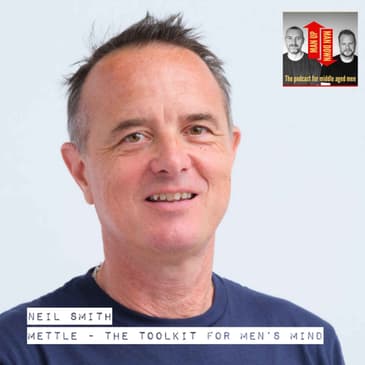
Neil Smith, co-founder of Mettle, discusses his journey from being a successful TV executive to starting a tech company focused on men's mental health. He shares his personal experiences with meditation, breath-work, and hypnosis, and how these practices have transformed his life. Neil explains the mission of Mettle to provide men with a toolkit for mental fitness and break down the barriers that prevent men from seeking help. The app offers short meditations, breath-work exercises, and mind hacking techniques to help men improve their confidence, resilience, and overall well-being.
In this conversation, Neil Smith discusses the benefits of meditation and breath-work, as well as his experiences with ayahuasca. He explains how meditation and breath-work can help reduce stress and improve mental well-being. Neil also shares his personal journey with ADHD and how meditation helped him. He emphasises the importance of finding the right environment and trained professionals when considering ayahuasca.
Neil introduces his app, Mettle, which offers guided meditations and breath-work exercises for men.
Key takeaways:
•Neil Smith left his successful career as a TV executive to start Mettle, a mental fitness app focused on men's mental health.
•The app offers tools such as meditation, breath-work, and hypnosis to help men improve their mental well-being.
•Mettle aims to break down the barriers that prevent men from seeking help by providing a toolkit that is accessible, science-based, and straight-talking.
•The app is subscription-based and costs about £50 per year, making it affordable and encouraging users to invest in their mental fitness. Meditation and breathwork can be effective tools for reducing stress and improving mental well-being.
•Ayahuasca, a powerful hallucinogen, can be used as a tool for exploring the subconscious and healing trauma, but it should be approached with caution and in a safe environment.
•Finding the right environment and trained professionals is crucial when considering ayahuasca.
•Mettle app offers guided meditations and breath-work exercises specifically designed for men.
Find out more at https://bemettle.com/ or download the app from the app store.
Hosted on Acast. See acast.com/privacy for more information.
[00:00:05] Welcome to the Man Up, Man Down podcast presented by Volker Ballueder and David Pawsey. We discuss the pressures and challenges faced by men approaching middle age that we're often too embarrassed to speak about with our friends. You can find us online at www.manupdown.com Enjoy the show and don't forget to subscribe and leave us a review.
[00:00:35] Welcome to another episode of Man Up, Man Down. I mean, I know that I say this a lot, but this is a guest that I've been very excited about having on. We met Neil Smith at the Newman event that we were kindly invited to on Men's Health. So who is Neil Smith? Well, Neil was formerly one of Britain's most successful TV executives running companies that made shows such as The Apprentice, Grand Designs and The Undateables.
[00:01:03] But Neil then changed his life to follow his passion and build metal. Metal is a mental fitness app co-founded with Aventurer Bear Grylls and Dr Alex George, who's the UK Government's Mental Health Ambassador. And at this time of crisis, you know, metal is revolutionising men's mental health by giving them the permission and tools they need to be happier, healthier and more successful for the good of all.
[00:01:26] And I have to say, Neil, I love that last sentence, you know, and I think that that hits it on the head that, you know, we have gone through, well, crisis. But I mean, sort of, you know, to start on a really cheerful note, sort of at the time of recording and the latest suicide figures have been released and extremely high. And the category of men 45 to 64, you know, saw the biggest increase.
[00:01:56] So, yeah, you know, I think, as you said, yeah, there's there is a men's mental health crisis going on. And so, I mean, yeah, how how did you I mean, you've sort of talked about it being your passion. Yeah. And sorry, just, you know, something else we've we've often talked about on the podcast is, you know, being an incredibly successful career. Yeah. But then, you know, you think, actually, is this what I want to be doing? So, yeah, if you could tell us about that journey.
[00:02:26] Yeah, sure. I mean, like, you know, yeah. Well, it's a lot to unpack there. So, yeah, my I did have an incredibly successful career. And now I don't know I'm a tech entrepreneur, which is quite funny. So I used to be a wealthy, comfortable TV producer. Now I'm an impoverished tech entrepreneur. I said, like, my midlife crisis is funnily enough.
[00:02:48] I was in a position to have a proper midlife crisis whereby I put a I put a deposit down on a Porsche 911 from the year of my birth. And luckily couldn't find a garage for it in London, where I live in London. And so it's taken me a bit longer to kind of complete on the payment. And then I realized, no, actually, I've got to I've got to take this money and put it into this to this business and build this this app metal METTLE.
[00:03:17] So it's metal as in, you know, a person's ability to kind of be resilient and to kind of overcome obstacles. And so actually, my midlife crisis sort of paid for this, paid for the app or a little bit anyway. But yes, basically. Sorry. Yeah. You didn't sell the Porsche, did you? I didn't buy it. Well, you didn't buy it. I didn't. Yeah, I had to get it back. So one day I'll get it back. It was a beautiful one. Yeah.
[00:03:46] 9-11 E, 1972, beautiful dark blue. It was amazing. Fully restored. It was my gift to myself for all those years of hard work. And then I just, you know, that's a midlife crisis, not buying it. Do you know that? Yeah. See, I bought the sports car. I mean, I only kept it for a year. I went British, obviously, you know, I understand, you know, as a British you go German, but I went for the Jack. Oh, did you? Okay. Which one? The XK9. Great.
[00:04:16] I mean, I must say, I do actually have a BMW M3 as well. Okay, there we go. The 46, which is not like I'm, you know, I've still got something to drive. Fair enough. I still have a Skoda, so that's all right as well. Oh, I've got a Skoda. Family cars and Skoda. I mean, cars, I'm obsessed by cars. I always think that if tech doesn't work out, you know, I'd love to be a classic car trader. You know, that would be my dream. That would be my dream job. But yeah. So what job was I doing?
[00:04:44] Well, I kind of, you know, more by luck than default, than design rather, you know, worked my way up the slippery slope of television. I'm a creative by trade. I kind of produce, create shows and ended up kind of running the companies that I made the shows for. And in the end, I kind of ended up, you know, pretty senior running one of the biggest TV production companies in the world, I guess. Or yeah, one of the biggest labels in the world.
[00:05:13] Like top three, Factor Entertainment producer in the UK. And, and it was great, but existentially, you know, I was kind of, you know, bored. I think I got what was called, which second mountain syndrome is that have you come across that on the podcast before? Not on the podcast, but I think I've sort of heard of it.
[00:05:34] It's this idea as men, we, we can, we think we've got an empire built, you know, I came from a family with, I would say kind of quite severe money insecurity. I think that's what they call it, you know, not having a lot of money. And then my dad was unemployed for a lot of time and my stepdad. And, and I really felt and still do feel the need to kind of protect myself from that.
[00:06:00] And so I kind of did that classic thing of building my empire and, you know, what is it car marriage, mortgage, et cetera, et cetera. And ended up, you know, as I say, more by luck and design, running quite a large company and being very comfortable. And it didn't fulfill me at all. Yeah. And I realized that I got to the top of this mountain. I'd done all this, you know, empire building, if you like. And then I got to the top of the mountain and realized, oh, there's that other mountain over there, which I've got to climb.
[00:06:30] And that's the mountain of meaning, if you like, you know, for want of a less cheesy kind of term, you know, which is purpose giving something using my skills to do good in the world. Now, luckily for me, I'd already done a bit of that because a lot of the shows that I produced and I was very passionate about were shows that kind of took kind of important subject matters and brought them to mainstream areas. So they're kind of taboo busting shows, if you like.
[00:06:53] So shows, you know, Betty, the company I first ran, we made the undatables, for example, which is people with disabilities go on dates. If you make a documentary about people with disabilities, only people who are interested in people with disabilities watch it. It doesn't really kind of change the dial. We made a dating show, biggest genre in the world, runs for 20 seasons, gets remade all over the world, made £10 for the company.
[00:07:16] But doing so, you know, changes perceptions of how people with disabilities still want to fall in love, which people didn't know very widely before. You know, it's kind of so it really helps kind of raise awareness how about how we're all the same underneath. More recently, I did one with Ed Stafford, who's a survival guy. He does a show called Maroon on Discovery and he spent 60 days and 60 nights on a desert island with nothing but a camera.
[00:07:41] I said, Ed, you're like ex-military, adopted, suffered mental health problems, male, all risk factors for ending up on the streets. Why don't we do your 60 days and nights, but rather than on a desert island, we'll do it on the streets of London, Manchester and Glasgow over a British winter. And so he kind of lived homeless. And so we did it like a survival show that by doing that kind of adrenalized form of kind of documentary, if you like that.
[00:08:06] I think that was Channel 4's biggest new commission for five years. And it brought big audience to a homeless problem. And then so here I am, I'm sitting at the top of my mountain thinking, I can't carry on. I'm not I'm not fulfilled anymore. And what I really want to do is kind of crack the male mental health space, because like for me, it's really personal thing. I started meditating at the age of 11 because I had a condition of the nervous system called benign intention tremor, which makes me shake.
[00:08:35] I don't shake visibly anymore. It's chronic conditions, incurable. But I was prescribed meditation. And actually, for me, it completely transformed my life. I got really into breath work as well, which is a quick way to transform your physiological state. In my 20s, I had depression and like a lot of men, I didn't tell anybody about it. And suffered in silence for the best part of a decade. I was high functioning, but, you know, on the outside.
[00:09:03] And, you know, I got through that through clinical hypnotism. So those three things, which are the things we include in metal, breath work, hypnosis and meditation are all things that I use on a daily basis. But I saw that my mates didn't want to talk about mental health, even though their mental health was often poor, didn't want to talk about the things that I was using for my mental fitness. And there was that vulnerability, you know, that worry about stigma and stuff. And I saw, as you said, David, that on a mass scale, we've got like a mental health crisis in men.
[00:09:31] Yeah. And it really is a crisis. I knew those results were going to come out and they're going to be worse than even before. And, you know, like already the UK government say that the suicide is the biggest killer of men under 50. And that when you think about it, it's just like a completely unacceptable statistic. You know, it's a terrible, horrible statistic.
[00:09:54] And a lot of the reason for men taking their own lives and, you know, obviously I've been in a similar position myself is because they don't want to talk. Yeah. I was that guy to talk. Yeah. Sadly, most of us know people, you know, will know of somebody that's taken their own lives. You know, normally usually a man and. People were surprised. Yeah. Because the communication isn't there.
[00:10:21] And so I thought, OK, well, if that communication is not there, so if men don't want to talk and rightly, I think men should talk and we want to work on that. But is there something I can do, you know, using those TV tricks that can meet them where they're at? So rather than kind of forcing them into a place they don't want to be, can we meet them where they're at? And I thought, well, OK, well, let's give them something that doesn't require them to talk in the first instance. So we give them a toolkit of things they can use, which can help them with a mental fitness on a daily basis,
[00:10:48] and then signpost them to places for resources and stuff if they need them and meet them where they are while they're on the phone. So it's like, let's build an app. So that's kind of how, you know, and then I left my job and started a tech company, which was quite, you know, it's been a steep learning curve, put it that way, because I've never done anything before. It's like it before. I mean, it's still content, you know, still building a content business. But yeah, so that was kind of my big midlife crisis, basically. Yeah.
[00:11:17] But hopefully people will benefit from it. I mean, what, what was the, that trigger point where, I mean, I'm guessing that might have been an idea that was bubbling along. Oh, yeah. And, you know, and as I say, it's like the number of times you think, well, yeah, it would be great. It would be great to ditch my job and, and yeah, start a tech startup. Yeah.
[00:11:39] But, you know, there's obviously going to be, well, you know, family, all these reasons that we tell ourselves why we can't sort of, you know, make that, that leap. So, you know, was there a particular trigger? You're right. So I think that on my own part, there probably wasn't that much courage to it, you know, because I totally agree with you.
[00:12:04] Like, so what happened with me was, you know, I left my big job, set up my own company, you know, which was just focused on creating, because I didn't want to work in a big corporation anymore. Yeah. So I set up my own company. It was about time. That's not particularly risky move. You know, I could get funding for it, et cetera, et cetera.
[00:12:28] And just one of the, and I wanted to kind of create, you know, shows that changed the world in some way, you know, did good, but was still commercial. And one of the ideas on my slate was male mental health. Yeah. And having a digital solution or part of the solution for male mental health. And I just became obsessed by it because that's what I'm obsessed with outside of work. Yeah. I've always been into these things. Yeah.
[00:12:56] And I just, and it just felt like, well, you know, a lot of people say, well, you know, in tech, they want to know that you're really kind of into the idea. And, you know, it's like, for me, this idea started when I was 11, effectively. You know what I mean? So I've got, I've got a good track record in terms of, you know, being involved in this area. And what happened was I love this idea and I really wanted to kind of nurture it, but didn't know. And it was just chance. So I started, I played tennis badly.
[00:13:26] And if I may indulge in a little tennis story, I basically, I took up tennis during lockdown and I played what was called, amongst the old ladies, old lady tennis. Yeah. Which is kind of like, I learned to play tennis with septuagenarian women who play in a kind of social group. They're like, don't move around much on the court, but they're really good. Because they've been playing for years. It's a great way to learn tennis. Yeah. And they played on Monday morning at 1030.
[00:13:54] So I'd set up this new business and before I set the tech business. And basically, you know, I was the only sort of guy playing of, you know, under 70. Yeah. And then one day this other guy turns up and he's like similar age to me, a bit younger. I'm like, oh, you know, if you think about it, Monday, 1030 a.m. is the least probable time for anybody with any type of job to be playing tennis.
[00:14:21] And so this other guy turned up and I'm like, how come you can play old lady tennis on a Monday morning at 1030? And he's like, oh, just tell the tech exit. And I'm like, oh, okay. Because I've got this tech idea. And he basically introduced me to an accelerator kind of thing, a start-up accelerator, which I joined. And then my mentor there said, I really love this idea and came in as my first investor and putting cash into equity and helped me build out that tech side of the business.
[00:14:49] At a similar time, I just got a big commission from Channel 4 to make a really big TV series, which was great. But then that fell down. And actually, I was disappointed, but I thought, no, actually, I feel okay about it because I really want to do this tech thing. And so it sort of started organically and Bear Grylls came on board around that time. He loved the idea and he's written a couple of books on mental fitness and he's like, yeah, I love it. Let's do it. And it's kind of like, so it wasn't that brave a decision.
[00:15:18] I'm afraid it sort of happened organically. And old lady tennis kept paying off because that's how I met my COO who turned up and he was kind of semi-retired from kind of like, I used to run Sony television as a CFO, group CFO and, you know, knocking him on, you know, and then it's like another guy turns up. I'm like, how come you can play tennis on a Monday morning? It's like, well, I used to be head of product design at Facebook and Google maps. I've just come back from 15 years in Silicon Valley. I'm like, oh, great. So I've got this idea.
[00:15:47] And he's now a product design consultant. And, you know, it's just like, it's the, you know, what you're saying is old ladies tennis is, is the Silicon Valley of the UK. It basically is. I mean, it changed my life. I just love the fact though, that it's like, you know, you sort of think, well, you know, you hear about people that set up a business and it's all, when I exit, you know, I'm going to buy a yacht or I'm going to do this. But it's like, I'm going to go to old ladies tennis. It's exactly.
[00:16:16] And for me, it was the other way around. Of course, I started the business and, and, and had to sell everything and remortgage my house and all the rest of it. Now I'm going to have to walk around here to get the lights back on, you see. And this is the sort of thing that we wouldn't have been able to experience before we started with video. Yeah, exactly. But it's quite funny. You're bringing such a life, right? Um, yeah, it's quite funny. Cause it's like, you know, I was very spoiled at my old job and our office is just over there.
[00:16:44] And as I, and as I say, like the office that for our entire team now is smaller than my old assistant's office at my last job. Do you know what I mean? It's kind of quite a, quite a change, but I love it. It's great. It's really, really, really good fun. Hard work, but good fun. Sorry, David, do you, I might as well. So, so essentially you got, got, got a band of, you know, very experienced people together there to, to launch the product. Yeah.
[00:17:12] So basically I wanted everybody who's doing it to care about it. Yeah. And, you know, but sadly, but fortunately for me, this male mental health crisis has affected pretty much everybody's life. Who is of the, you know, who's got some lived experience. Yeah. Because, and that's men and women because obviously all men, you know, have women in their lives.
[00:17:41] So I, that's why, you know, when I talk about the app, I say, let's, we build it for men because, you know, we want to help men be better. So, because we believe if men are better, the world are better. Yeah. So it's for the good of all, as you mentioned. Yeah. Yeah. Because, you know, what man isn't a son or a father or brother or a friend or a colleague or a woman, you know, it's, it's, it's, it's, it's, it's, it's for everyone. But, you know, everybody's experienced the sharp end of this.
[00:18:10] And so, you know, our team consists of people who've gone through their own life experiences, you know, I'll see it, you know, we've all been through those difficult times. Like our CFO, who had a kind of really difficult time. And that's why he kind of left his work and, you know, our CEO, sorry, our head of, you know, brand strategy, you know, was one of the top advertising guys in the country and had a breakdown and was diagnosed with bipolar disorder.
[00:18:34] And, you know, it's, it's, you know, our co-founder, Dr. Alex George, sadly lost his brother to suicide and, and, and dedicated his life to raising awareness. And that's how he became the UK government mental health ambassador. And so you can build a very strong team when you've got people passionate about subject, you know, they will, they will come down a level if, if you know what I mean, to kind of.
[00:19:04] To start something. And, you know, it's an important area. Nobody is doing anything either. Like all the charities are doing their thing, but nobody would, but there's nothing in the app space. There's no, you know, there's 20,000 wellness apps out there in the market, not single one built for men. And it's like, well, wait a minute, they're the ones who need it most. But up until recently, it's been very unfashionable or unnecessary, arguably to do things for men. Yeah. Because we've had the patriarchy, we have me too and stuff. And only recently we've become aware of the male mental health crisis.
[00:19:34] So, you know, a few years ago, if you suggested doing something for men, men have got everything. They're not a minority group. Why would you single out men? You know, can't. And then, you know, that narrative has moved on. You know, you've got people like Kathleen Moran writing books about what should we do about men. You know, women, you know, arguably the UK's most prominent feminist. And, you know, the, the, the, the dialogue is starting to change. But when we first looked at it, there was nobody doing anything in this space.
[00:20:02] So we thought, well, or I thought I'm going to do it. You know. Hello folks. It's Volker here. I hope you enjoy this week's episode. As you know, I coach executives, whether that is for leadership skills or sales leadership skills, or working as a therapist too. There are few ways I can help you to get unstuck, improve your work-life balance, or become a better version of yourself.
[00:20:30] So you will be more productive and have more time for your family. Whatever it is, you can join my client list of people from General Electric, Pepsi, DHL, Boots, and many others. Book a free exploratory call via my website, www.opnat.us. That's O-B-N-A-T dot U-S. Now back to the show.
[00:21:00] So are you able, I mean, you've obviously talked about sort of meditations and breath work, which I assume are tools on the app. I mean, can you talk through what, yeah, what is included in the app? And sorry, is it, I know I should know this, but is it a paid for one or is it? Yeah. So basically, it's a subscription app. It's about 50 quid a year. So what's that? It's like, yeah, about a pound a week. To feel a lot better about yourself.
[00:21:30] Yeah, yeah. And actually, you know, we'd love to give it away free, but we would go bankrupt. You know, we have to, we don't make any money anyway, you know, not many tech companies do, but you have to really show some effort towards that. You know, it costs way more to make it out than it does to run it. And then you get back, you know, I think that's true, even for people like Carmen and Space and stuff.
[00:21:57] But also there's a kind of, you know, if you pay for something, you invest in yourself, then you're more likely to use it. There's actually a good reason to charge for something like this. And basically, you know, it's, it's, you know, we built this just for men from the ground up. So you've got people like Paul McKenna, who's another co-founder, who's the world's most successful hypnotist. He provides all the kind of hypnosis section or mind hacking, as we call it, which is kind of blend of NLP and hypnosis.
[00:22:24] And we kind of make it really kind of functional. So it's about, you know, getting more confidence, more energy, you know, having more resilience, but also helping reduce stress and anxiety and to sleep better. So it's kind of a mixture of kind of, you know, need states that we kind of cater for. We got meditation. We got a guy called Chibs Akereke, who is just the best person in the world. I did steal him off Calm actually, but yeah, I was going to say, I've listened to some of his.
[00:22:49] Oh, sorry. I, I, I, I once used Calm before I decided to subscribe to metal. Exactly. But he's just amazing. You know, he's like the best. I think he's the best person in the world to communicate with men about meditation. And I love the way, you know, when you start our 28 day challenge, he's like, and he's the meditation coach. He's like, look, you know, I'm going to talk to you about meditation. Don't worry. I'm not going to ask you to give up deodorant and grow a man bun.
[00:23:18] I'm just going to ask you to sit with me for a couple of minutes and I'll tell you about all the benefits that it's gone. You know, he just manages to kind of make it really, really simple and sort of impossible not to meditate rather than the other way around. And Jamie Clements, again, Jamie, he's our breathwork coach. He's had his own life experience. He was a FinTech guy who started suffering from anxiety and had to leave his work and, and just go with breathwork and it changed his life. So we just give him men really kind of solid tools or based in science.
[00:23:47] We work with Imperial College to, to, to create this. We've been working with the NHS in the form of the Morsley Mental Health Institution behind the scenes, you know, with the founders of Movember. It's all kind of very science based, no nonsense. Because, you know, when we were doing the research, it was kind of like there's three objections to men from even going into the wellness space. Yeah. So that vulnerability that I was seeing in my mates and that vulnerability, that means that men don't want to talk about their mental health.
[00:24:14] If, um, it's because of stigma and men don't like feeling vulnerable yet, then they don't enter the space. And the reason they often don't enter the wellness space, which is in itself a great word, is because they feel that the wellness space is too female, it's too hippie ish, and there's nothing wrong with it. Yeah. So it's really important at metal that we broke down those barriers, because if they feel vulnerable, then they don't enter the, don't come to the space, don't use the tools.
[00:24:39] So too female, well, just for men, but all the evidence shows that gender specific mental health interventions work better for men. Too hippie ish, well, we're completely straight talking and science facts are mentioned, and there's nothing wrong with me. You know, this is this, you know, this is a tool that can help help you go from bad to good, but also from good to great. Mm-hmm . That's all you use every day and you just get better and better and better. You get more confidence and energy, but equally helps you reduce anxiety and stress. And that's what we found from the guys who are using it.
[00:25:05] You know, that this just helping them in their day to day lives have better relationships or cope with really difficult situations, you know, sleep better. So yeah, well, then the great thing is that it's working for a lot of men and that's kind of, that's brilliant news. And it's about making things accessible. Right. I mean, yeah. Admittingly, I don't know chips. Um, thought sounds to be a great guy. Right. Uh, yeah, so I just subscribed to his newsletter just in case. Um, but as you say, right.
[00:25:32] I mean, when, when I teach meditation, right, it's not, you know, you, you, you don't have to change, you know, who you are. Right. And, and, and differently. And if I say selling, selling meditation is really difficult. Right. It's, um, you know, it's, it's this, you know, touchy feely, you know, what, is it, you know, and, you know, but I, I came to meditation because I'm like, you know, all the CEOs are doing it. Right. They all have a 5am routine. Let me try it out. Let me try meditation. Let me see what it is.
[00:26:00] And I see it, you know, as a tool, you know, you got a new toolbox and other things. That's right. Um, and you know, I think that works more, you know, that relates more to, you know, high achievers, man that want to go out and get there. Um, and once of a sudden this is cool. Right. You know, I, I meditate too. Right. Um, yeah, we just label it differently. Well, you know, that's why we call it, you know, we call metal a toolkit for men's minds because it is a better end at all. You know, Chibs, just mentioning Chibs says it brilliantly.
[00:26:30] I love the fact that he says, look, don't meditate to get better at meditation. So that's why I'd say we're not a meditation app. Yeah. We're a mental fitness app. Yeah. But don't meditate to get better at meditation, meditate to get better at life. You know, it's, it's, it's a tool in your armory and you're right straight after saying, don't worry, I won't get you to grow a man. But he lists all the people, you know, all the amazing men who, you know, credit, you know, meditation as part of their success.
[00:26:58] So it's kind of like, yeah, we need to kind of reef, reframe it. I mean, also for me, you know, we kept the meditation very, we keep it short on the app. You know, you can do longer meditations, but only kind of 10 minutes, I think is our longest one. We keep them three to five minutes because all the research shows we've got a lot of people actually, a couple of people from calm working with us now. And the research shows that men respond better to kind of shorter things, you know.
[00:27:23] And so, you know, just doing a couple of minutes every morning is enough to just reframe your mind. Yeah. You know, and start building a habit where you can, you know, so for me, I wake up every morning and I'm immediately stressed because I run a tech business. Yeah. So, you know, and then I just get on my metal app, you know, I built an app for myself.
[00:27:48] So it's quite selfish, but hey, you know, and I do my meditation and I do my breath work. And then I'm in, then I'm grounded again. Yeah. I've cleared my mind and I'm ready to start the day in a healthy way, not an unhealthy way. Yeah. I think it doesn't require a huge amount. You know, I think another one of our kind of phrases is change your life in a few minutes a day. And I really think that is possible. Yeah.
[00:28:10] I mean, I am, I'm sort of a very much, I wouldn't say fair, well, bad weather, bad weather meditator. Yeah. I, you know, it's almost like, well, this week, I'm now on my fifth day of breathing, doing breath work and meditating. Yeah. And that's because I've just been, yeah, of my anxiety has been through the roof this week. Hmm.
[00:28:35] But I know that if, you know, if I keep it up, then, you know, I'm the anxiety thought, oh, well, it's all the things that make me anxious. I'm a lot able to deal with a lot better. Yeah. I mean, I think I sort of fall into the, and I guess I've sort of got into the habit of just doing the breathing exercises because, yeah, I can be an all or nothing. And it's like, well, if I'm not doing the 20 minute one, then, you know, what's the point?
[00:29:03] And so it's, well, I guess it's quite refreshed, refreshing and reassuring to hear that. Well, I guess it is. And with anything in life, you know, it is all small steps, isn't it? Yeah. I just think you can change your physiological state quite quickly with the right guide and the right tools. You know, the breath work is a very quick and effective way of doing that. Obviously, you know, that's kind of, you know, just, you know, it's like people say, take a deep breath.
[00:29:33] You know, it's like, just take a breath. Yeah. So you take a breath. Yeah. And you can just change your state that quickly. Yeah. And that's kind of, you know, we can do that anytime in our lives. Yeah. And so funnily enough, I, I gave that very advice. I, I helped coach like my son's football team last season.
[00:29:57] And you can see that some of them get really frustrated and wound up, you know, and I said to them, I'm like, you know, you'll hear me saying, take deep breaths. I'm not saying it just because, well, you know, it's, well, I said, the reason I do it is because it affects your decision making. It's like the more stressed you get, the less you get to be able to play on the football field. And, you know, and I said, the science shows that if you take deep breaths, it calms, you know, the nervous system. Yeah.
[00:30:26] And then, and you can react to what's going on on the pitch a lot better. Absolutely. Look at people taking in penalty kicks. Yeah. You know, yeah, there's a stopping, they're slowing down, they're slowing everything down, they're slowing their breath down, and they're just cutting all the stress out just by those things. So breath work is incredibly effective. And I think actually our meditation tends to lean towards breath work because you know, a lot of meditation is about focusing on the breath. So that breath is just so powerful.
[00:30:53] And also, you know, one of the things we say is that, you know, it's not hippie ish, it's not girly for want of a better kind of, you know, word. Yeah. You know, like one of the main techniques we use on their box breathing is well known as being I think, I think they developed it, but certainly used by the Navy SEALs. Yeah. You know, and it's kind of like just, of course, you know, but actually the SAS use Paul McKenna's brain training stuff, so as we've got, you know, it's kind of like,
[00:31:22] I think it's kind of like, are you allowed to say that? Are you allowed to say that? You're not going to get assassinated for revealing an SAS secret, are you? I hope not. Yeah, I hope not. Who knows? Maybe. If you don't see me on the next one. Yeah. So if the lights go out again. Yeah, that's probably what's happening. They're gone for good, yeah. Actually, our offices are in the old Iranian embassy. Oh, they're gone. There you go. There you go. They've come back on, luckily. Yeah.
[00:31:53] Because someone is moving in the corridor, Neil. Someone's moving in the corridor. Exactly. So go on, go Volker. Yeah. I think what you, what you're saying is, is so true. It's this vulnerability, right? Being vulnerable and, and not, you know, not thinking, oh, it's girly to meditate or to do yoga, you know, or breastwork. Right. And, and realizing it's a tool to, to help yourself.
[00:32:20] I mean, I, I would, to a certain extent, I like to challenge that, you know, because we had these discussions with various people. Should you get up in the morning and the first thing you do, you, you grab your phone and you go on an app to meditate. Right. Well, yeah. Or, or should you go up and leave your phone to the side? Because as soon as you grab your phone, you might go into, I mean, and I'm guilty as charged, right? I'm going on my emails in the morning, you know, going on Slack, et cetera.
[00:32:47] And, and if I say I shouldn't, you know, of course I shouldn't. But when I meditate, you know, I, I don't need an app for it. But if it helps people to get better, this is important bit, right? And yes. Yeah. Well, the fact is that most people do get up and just grab their phone. So if they're going to grab their phone, you can use technology for battle, you can use it for good.
[00:33:07] And our whole idea is to use it for good, you know, and it's kind of like, it's for most people doing meditation unguided is also very difficult, you know? And so, you know, we're trying to be an app for every man, you know, we often say we're more blokes than woke, you know, so the wokes already kind of like, we'll be into the kind of meditation stuff.
[00:33:32] And most of the blokes that's like me, and we're trying to convince that, that audience that it is for you, you know? And as I say, people are on their phones. So give them something on their phones that is useful. So, I mean, technology is here, whether we like it or not, we should just harness it for good rather than let it destroy us. That's what people are talking about at the moment. Yeah, absolutely. I mean, obviously, meditation has been around for centuries.
[00:34:01] Yeah, it's been around for a while. A lot of centuries. I mean, but... Sorry, yeah. Yeah. But I mean, I guess in a lot of ways, it's only sort of really become, you know, mainstream is probably not the right word, but more, I guess there's a lot more awareness of it. Yeah. So when you were sort of prescribed breath work and meditation. Yeah. I mean, how...
[00:34:31] Were you like, well, actually, where are the pills? You know? Or were you open to it? I was old, so probably wasn't looking for pills. Right. Okay. I was one of the first kids. I got diagnosed with ADHD very early, around eight years old, and I was one of the first kids in the UK to be put on Ritalin, but then I was taken off it. Right. So we had already kind of done the pills. Yeah. But it wasn't even called meditation. They called it relaxation tapes, but it was meditation.
[00:35:01] Yeah. So it's following the breath. It was mindfulness, you know, meditation. And, yeah, it was, that was, even though that was only 40 years ago, sadly. You know, it wasn't very well known at that time. It wasn't in public kind of consciousness, you know. So what was your parents' reaction to it then? I mean, I would. It makes sense.
[00:35:30] Well, were they, I mean, were they like, oh yeah, that sounds like a good idea? Or were they like. Oh yeah, yeah, yeah, yeah, yeah, yeah, yeah, yeah, yeah, for sure. Because, you know, it's not great. Like, you know, I was, as I say, I was 11 years old. I couldn't get a teaspoon of sugar into a cup of tea. You know, my hands were shakes and badly. Yeah. I had a 50th birthday party recently. Happy birthday. Thanks. Well, I say recently, I mean, two years ago. I remember that. I'll take it anyway.
[00:35:57] Um, and so recently when you get that old, it's everything, you know. Uh, but, um, and I had some mates from school there and they still took the piss out about me, about me being kind of shaky and, do you know what I mean? Like that, that's, that's, you know, that's stuck that long. That's what friends are for though, isn't it? Right. That's just classic blokes. Like, oh yeah, you're shaking and yeah. Um, so yeah, I mean, anything that would help was great.
[00:36:26] And all I had to do was listen to these tapes for half an hour a day. Yeah. You know? And, uh, but yeah, I can't think of, you know, I don't know why it worked for me. Like, you know, I can't explain. I'm not, you know, it's like people get diagnosed with ADHD in adulthood, which is happening a lot. Mm. I was diagnosed with ADHD at age eight. So I know nothing about it. Mm. Because when you're a kid, you don't go out and research with pre-internet anyway. You go out and research what it means. Like, it's the same in meditation. Somebody gave me a tape.
[00:36:55] I listened to it. It worked. Yeah, great. It's kind of like, I'm happy. Yeah. I don't know, you know, I asked somebody about it recently and they probably said it probably worked on the vagus nerve or something, you know, I don't know. But the point is for me, it was a transformative experience and led me to kind of search for more into that area. So when I was relatively young, I got into yoga and Tai Chi. And then I went to India and studied kind of Buddhism and spent time with Himalayan yogis
[00:37:25] and, you know, really onto the deep kind of side of this for quite a substantial number of months. Yeah. I got into kind of Tantra, which is not the kind of sting side of things, but the sort of dark arts of the yogis, basically, you know, and, you know, you'd be sitting there kind of staring at ping pong balls that you're meant to kind of be able to at some point to visualize in front of your head and make other people see them, which is the basis of the Indian rope trick.
[00:37:52] I mean, like from a hardcore meditation, you know, 15 hours a day sitting and, you know, Vamanadotti in the morning, I remember, which is where you kind of, you have to drink a whole load of like a litre and a half of salty water and then jump up and down and then be sick everywhere in order to kind of clean yourself before your daily practice. I mean, it was like hardcore. Nobody needs that. That's why I was at three minutes a day.
[00:38:17] But it was it nonetheless interesting to learn, but it all started from those from those tapes, you know, Yeah, you ask. Some enlightened, perhaps literally, perhaps literally enlightened doctor who kind of said, oh, this might help. So it sounds a little bit like a UASCA. Yeah. When you do all these, you know, you don't drink salt water. I don't think. Right. You just. No, you just drink the liquid, which, you know, I've done that a number of times as well. And that's fantastic. But yeah, that's very purgative.
[00:38:47] Oh, wow. So can I ask? Can I ask a bit more about that? Yeah, go for it. I mean, well, so what what were your. Well, actually, for any listeners that haven't heard of. I can't even pronounce it. Ayahuasca. Is that correct? Yeah, it is. How? Well, yeah. Can you tell tell our listeners exactly what it is? Basically, you know, it's one of the most, the strongest hallucinogens known to man.
[00:39:18] Um, it's been around again, like almost as long as meditation, like thousands of years being used by, um, South American groups to kind of, um, you know, clear trauma and communicate and see more deeply into things. And it's a combination of a vine and some leaves, which when drunk, um, brings on very strong hallucinations and often leads to purgative experiences, which is what it's become famous
[00:39:48] for, I guess, people being sick in buckets. And, um, but it isn't all about that. You know, it's actually, um, you know, it's an eye view as plant medicine, not as a drug. I see it as a medicine, uh, that helps you kind of explore your subconscious, you know? So what it seems to do is just break down that barrier. Like a lot of hallucinogenics obviously changed the way your neurons work in your brain and, and it, and it, and it sort of gives you access your subconscious.
[00:40:16] So you can kind of communicate with people who have died, for example, or you might come up against things in your past, which, and you effectively relive them. So it's some people is like, say it's like doing 20 years of therapy in one night because you get right to the roots of the, of a problem very, very quickly by kind of changing your neuron system. I'm not explaining this very well, no doubt.
[00:40:42] I'm not an expert and sort of accessing your subconscious and going back to that place of trauma and working through it and releasing it, facing it, releasing it, which therapy does have a very, very, very short, a very, very long period, which you can just get right there with it. And it's, you know, not for everybody. It's a very, as I say, very strong. So it's kind of quiet and it's a very extreme experience.
[00:41:06] You know, you can have kind of death and rebirth experiences, which I've had or complete loss of, you know, a sense of consciousness, not unconsciousness, losing sense of self, like ego dissolution and all those kinds of things happen. And it's really important that you do it in a very safe environment, you know, like, so I did it in Costa Rica, where of course it's legal. And I did it in the first licensed medical Alaska facility in the world, which has kind of been
[00:41:36] studied with the University of California. I think it is kind of study what they're, what they're doing there. Yeah. And it's transformative, you know, it gives you kind of helps you clear kind of traumas and clear kind of, um, uh, it helps you move on from things, I think, and get a clear picture of what you want to do with your life quite often. So how many times have you done that? Over 20. Oh, really? Wow. Yeah. Yeah. Right.
[00:42:05] Because I mean, I've, I've, I've, and again, I've got even more limited knowledge than you. I've sort of heard that, you know, you should only, you know, you should only do it a few times. Um, I've, you know, well, I've read the Will Smith book, which is, uh, on my fantastically curated library behind me. Oh, yeah. Yeah. Yeah. Um, but yeah, he, he's famously, yeah, he, he's done it quite a few times. Not, um, Andrew Garfield, the actor, I heard an interview with him and, and he said he did
[00:42:34] it and, and he said it literally took him sort of, you know, he said it was a constructive experience, but it took him like a couple of years to, to process it. And yeah. Yeah. Yeah. As I say, it's not for everybody. I wouldn't recommend it to anybody. You've got to kind of find it and want to do it. But I'd bet for me, that was at the end of a, I only came to it after the end of a lifelong spiritual journey. Yeah. Yeah.
[00:43:02] Metal is not hippie ish, but perhaps I am a little bit. I know that you only need practical tools, but you know, I've kind of through my love of all these things, I've worked with different kind of spiritual traditions and, you know, so for me, uh, quite an advanced level often. Um, and so for me, this was a kind of almost natural progression, I suppose, you know, uh, so I responded to it very well. Although I had some difficult experiences like everybody, you know, and some of the
[00:43:32] worst and best experiences of my life. Yeah. I mean, it got so popular over the last few years. So I interviewed someone who, I must've been four or five years ago on a podcast. Um, uh, she, she didn't talk about it on the podcast. She talked about it, you know, offline because she didn't want anyone to know. It was still a bit like, Oh, we don't want to talk about it. And, um, you know, I knew occasionally, you know, I knew like one or two people that have done it nowadays. It's so popular. It's like, you know, that pilgrimage to, to, to, as you say, right.
[00:44:02] Um, South America, I know there are places in London. I met an old friend of mine recently. He goes like, Oh, you know, I go there every weekend kind of thing. Right. It's like a temple in London. No, he doesn't go every weekend, but you know, it's like for him, it was like the new thing. Right. And, and I think it becomes a little bit like, you know, the new thing and, but it hasn't been around for years. Right. And, uh, you know, it becomes a new burning man a little bit, I think, you know, but burning man is, I think out of fashion now everyone does. Yeah. And then we go in full circle.
[00:44:32] So, but yeah, it's great to hear your experience actually, because you, I think you described it really well in terms of what, why, why it was, if he invented or why it came up from, from the shamans and stuff. Yeah. And I think, you know, for me, I've always respected that tradition. I think that's quite important. I mean, my kind of big caveat would be just be really careful where you do it and who with you do not want to do something like ayahuasca unless you're working with people you completely trust. Yeah.
[00:45:00] It's not, it's never going to be a recreational drug. You know, it's something that can really take you apart. So you need to be, to be sure that you're going to get put back together properly through, you know, careful integration of, of, of, of your experiences and stuff. And, you know, I think even going to South America and the kind of ayahuasca tourism is, is quite, it can be a bit dodgy. You know, it's kind of like, there's plenty of people who would take you out and give you
[00:45:29] this, but it doesn't mean that they've got the tools to kind of cope with what comes up. Deal with what's coming up. And that would be a big, big warning. I think, and, and before I let David wrap up, I think there's a challenge is, and that's what I see a little bit. I mean, I've been listening to Tim Ferriss for, for 20 years and he talks about his psychedelics and everything. And, you know, I'm, I'm a qualified hypnotherapist and I have lots of people in my course going
[00:45:56] like, Oh no, if you, if you just take these mushrooms, you know, and you know, the experience is so much better. And I'm very cautious. I took, if I say undeliveredly, I took mushrooms at uni that someone put it into Buckfast, a complete different story, right? Buckfast. I know. It makes you fuckfast, right? But it also. Brude wine. Sorry. Can I just say that Buckfast got my favorite label of all time, which is Buckfast tonic wine.
[00:46:25] And then in brackets, the name tonic wine does not imply health giving properties. It's like the best disclaimer and most truce for all time. Anyway, sorry. Yeah, no, no. So, so people put mushrooms in there and I didn't know I had mushrooms in there and I just started hallucinating, which was great. Don't get me wrong. But because I didn't know it, I couldn't enjoy it. And I was sick the next day. So I'm very cautious if I say with mushrooms. And what I'm afraid of is that these, these traditions are just kind of used as a label and, and people just, you know, Oh yeah. Mushrooms, mushrooms, mushrooms.
[00:46:55] And, you know, I always, you know, say caution besides of course it's illegal and everything else. Yeah. Absolutely. Don't try this at home kids. No. Health warning. Right. Yeah. Yeah. Yeah. Yeah. And obviously there's a huge amount of work in psilocybin in mushroom. You know, so a lot of the universities.
[00:47:23] So our, our medical officer is involved in kind of scientific trials around that as well, you know, around therapy and, you know, treatment of depression and PTSD and all that sort of things. So, you know, lots going on. I think a lot is going to change over the next 10 years, but for now it's those things are illegal in the UK, not everywhere, but in the UK. And certainly with something as strong as I ask her, because even I don't think there's much research into I ask her.
[00:47:50] It tends to be the psilocybin and that ecstasy and ketamine, which are on the less strong side, I would say compared to something like I ask her. So something like I ask you really, really need to be in the right place to do it. Yeah. Hmm. Hmm. Well, there's been some, well, yeah, this has been an amazing episode. Um, I mean, again, we always say it, but I think we'd have to get you on again, Neil, cause you know, yeah. Anytime.
[00:48:21] Yeah. Um, so if, if people want to find out about metal, M E double T L E, um, where can they find you? Yeah. So, you know, our website is B metal.com B E M E double T L E. But you know, best places on the app store or the Google play store and download the app and give it a try. We've got feature free trial. And as I say, it's not expensive and you know, uh, it's free for seven days. Anyway, if you don't want it, there's no commitment and, um, you know, see if it works
[00:48:51] for you. Cause we've been finding that it's been really working for a lot of men and just helping them in their day to day lives and it's become a part of their lives. And that's why we do it. Yes. Yeah. Well, I mean, yeah, it's well, it's been great. Great having, you know, a proper episode with you. And, um, yeah, I mean, um, it's my other app subscriptions have ended. I'll certainly be looking at it. Um, but yeah, thanks so much and, uh, hope to catch up with you again soon. Brilliant.
[00:49:21] Thank you guys. Have a good day, Neil. Yeah. Thanks for listening to this week's episode. Feel free to reach out to Folka or David via our website, www.manupdown.com or podcast at manupdown.com with any feedback or to let us know what topics you'd like us to cover in the future. Hear you again soon.