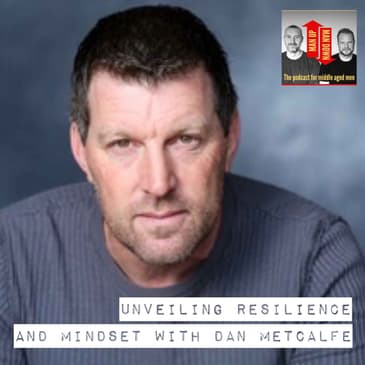
In this episode, we dive into the intriguing world of resilience, mindset, and personal growth through the insights of Dan Metcalfe. Recorded in David’s new studio, this conversation offers a blend of personal stories and practical philosophies that can inspire and challenge you.
Key topics:
- The unique background of Dan Metcalfe and his journey through hardship
- The importance of reserved communication and revealing depth over surface
- Future plans for deeper exploration into mindset and resilience
- The role of authentic storytelling in personal development
- Book recommendations by Dan for understanding resilience
- The significance of curiosity and continuous learning in personal growth
Links:
- Total Balance Company Website: https://totalbalancecompany.com/
- Born Superhuman Website: https://bornsuperhuman.com/
- Born Superhuman Podcasts: https://bornsuperhuman.com/podcasts/
- Balance360uP / Neuro360 / Pro360 Overview: https://totalbalancecompany.com/shop/
- Facebook: https://www.facebook.com/dan.metcalfe.73/
Hosted on Acast. See acast.com/privacy for more information.
[00:00:01] So welcome to another episode of Man Up, Man Down and well I'm gonna have to say this first of all this is the first one I'm recording in the new podcast studio. This won't be the permanent backdrop but yeah so you know and what an episode to lose my cherry to.
[00:00:26] An incredible guest again one of those ones where you're like sorry can you go back you just casually dropped that in there but I don't know star of stage and screen several horrific injuries that would have you know well yeah what did you make of it Volker?
[00:00:49] Yeah I think Dan was great so Dan it's really difficult to describe I mean people will obviously listen to him now it's a lot I think there's a lot more in there than meets the eye I think he's very very reserved in terms of what he tells and I felt like at the end in the longer episode but as you know we got to the point where I went like so what's next what's next and I think we need to have him back to go a bit deeper
[00:01:18] and I ordered his book straight after the podcast because I'm really curious now how you know it almost seems too good to be true but I think he's on to something I really do I love I love the stuff I mean you know that mindset and stuff that's what I do right so yeah great great stuff I'm very intrigued very intrigued how how it works. Well be interesting to see what the listeners make of it. Yeah. So enjoy.
[00:01:51] Welcome to the Man Up Man Down podcast presented by Volker Ballueder and David Pawsey. We discuss the pressures and challenges faced by men approaching middle age that we're often too embarrassed to speak about with our friends. You can find us online at www.manupdown.com. Enjoy the show and don't forget to subscribe and leave us a review.
[00:02:19] Welcome to another episode of Man Up Man Down. We're excited to have Dan Metcalf on the pod. So Dan is the creator of the Balance 360 system and inventor of the patented Total Balance Training Board. With decades of experience in mobility, balance and performance training, Dan has helped seniors regain independence, supported neurological recovery and trained elite athletes including Olympians.
[00:02:48] His work focuses on strengthening the brain body connection to improve confidence, stability and real world movement. Ben, first of all, welcome to the podcast. Thanks for taking the time. And I'm really curious about your story because you started in England. You're now based in the US. You were a professional footballer and you just told me before we were in life, you also know Dieter Thomas Heck from Germany.
[00:03:16] So please take it away and give us a bit of background. Where are you from? What are you doing? And we take it from there. Yeah, danke. That's a sehr good. I appreciate it. This will not be done in German. But yeah, I lived in Germany for a while. So really quickly, I grew up. All I wanted to be was a professional footballer back in England. I supported Chelsea. So about 90% of the people listening don't dislike me for that. I ended up being at Crystal Palace as a youth player.
[00:03:43] Then I went to Bournemouth when Harry Redknapp was there and then realized I didn't love football the way I thought it was. The professional game in those days wasn't my strength. It was more about, you know, show up, play super talented players. But partying, I was still going to school and further education at the same time. Dropped out. I had done eight years with the Royal Marine Cadets. So I decided to go into the Royal Marines. I started doing aerobics to get supple for mountain climbing because I'm going to go to the special forces.
[00:04:11] Whatever I do, I want to go to the highest level. The teacher there said, you should become a dancer. And I'm like, a dancer? What do you mean a dancer? I'm down in Bournemouth. And, you know, thinking I'm Jack the Lad out on the beaches, working out, looking all good, baby oil on and burning every summer. And so she dared me. I was waiting for my papers. Next thing I know, I'm up at Lane Theatre Arts in Epsom auditioning just for me, for a joke.
[00:04:36] And the principal there, Betty Lane, turned around and said, we're going to give you a three year scholarship starting in two weeks time. And before I knew it, there I was in ballet tights going from this extreme machoism into what I perceived as I had no idea. Well, a year and a half later, I get invited to be in Andrew Lloyd Webber shows, ended up playing the lead in Starlight Express on TV, doing tons of different stuff and ended up out in America. And that's really where my story really began.
[00:05:04] Everything before that was just preparation. But I'm excited to be here today because everybody listening and everybody not listening is way more than society sees them. And I really want to tap into the brilliance of the brain, the brain to body connection. And how do we remove the downward spiral that we've been taught happens around the age of 40 when the truth is age is never the reason. What we do is the reason.
[00:05:34] Brilliant. I'm curious about that. I mean, there's a lot in your story. I mean, I'm not a football fan, so I have to be careful, but I won't comment on various clubs. But that must have been quite a shock going from, yeah, as you say, right? I mean, football, Royal Marines to ballet. Yeah. Hard left for you. The hardest thing was telling my dad.
[00:06:02] I mean, because my dad was a tough guy, grew up on the streets of London. Great guy, but always tough and brought me up as a fighter. Yeah. But this is where my life really changed. The day before I started theater school, when I told my dad I was expecting him to be, what are you doing? But he was like, oh, I love theater. I'd never seen a theater show in my life before. And he took me to see the show Starlight Express. And at the end of the show, he said, what do you think? And I was like, it was incredible.
[00:06:31] These people were like demigods to me. Here they are on skate, singing, dancing, flying around the audience at 30 miles an hour. And he looked at me and he said, one day you'll be in that show. And I went, no, I'll never be good enough. And these were the eight words that changed my life. He said, somebody has to do it. Why not you? Somebody has to do it. Why not you? That's ageless.
[00:06:58] But at that moment, I didn't have a focus on getting on the show. I had a focus on being my best. And whatever I wanted to do, I would commit 100% to it and go for it. And as I said, that is not governed by age. It's governed by attitude. Yeah. So how old were you when you joined the ballet? Almost 19 years old. Okay. So you started the Marines football. That was really early. Yeah. That was a school program.
[00:07:26] And then when I was 16, I got invited into the youth programs and thought I was living my dream until I realized, like I said, it wasn't what I thought it was going to be. But sometimes we get stuck in a rut because we spent our whole life working towards something. And then when we find out we don't want to do that, we actually don't move out of the rut. We just don't enjoy it anymore. But we stay in there because we're scared to step out of the lane we've been driving in.
[00:07:52] I have to say that I saw Starlight Express as a child and my parents used to take me to the West End on quite a regular basis. So your story there did actually give me goosebumps. Yeah. I mean, well, I would have loved to have been a star of the stage if, you know. Well, as you say, well, you know, it's never too late. Perhaps I could still be starring in the West End.
[00:08:21] But I mean, I'm quite curious. And obviously, you know, we don't want to dwell on your amazing like sort of early career because I know that you want to talk about how, you know, how you can share your experience and help people, as you say, stuck in a rut. Was it like the party sort of atmosphere of football at the time that put you off? You know, they weren't as dedicated to their craft as you were expecting.
[00:08:51] Yeah, I wasn't the most talented of players. I was a really hard worker. I was always the captain of the team. I was a leader. But I had to really work hard to keep up with those players that I envied, the natural ability. And when I was at Bournemouth, George Best came in and was meant to be playing 10 games there. That was Harry Redknapp's first season of or first job, I should say, of coaching a professional team. Great guy. And I'd show up.
[00:09:20] I suffered from asthma as a young kid. So I avoid any sort of like alcohol, any sort of smoking, any sort of drugs, those type of things. And I was really health conscious because that had to be in place for me to even pursue my goals and dreams. And it paid off years later. But when I got there, I realized the nighttime, the footballers were out drinking. They're out partying. They're having a good time. Now I said it's very different because there's such structure because there's so much money involved. But in those days, someone could be on a contract of, you know, a thousand pounds a week.
[00:09:49] They want to live their life. They want to enjoy it. They're out partying, enjoying the fame. And that's why I think so many footballers ended up, once they left their career, broke, opening pubs and sadly suicide as well. So was it moving from, well, going from that environment and then into theater? Were you like, oh, actually, yeah, these people are putting in the hard graft to hone their craft? Yeah, it's kind of an oxymoron, right?
[00:10:14] When you look at it, because we know theater people also are on the drinking, the drugs. There's great people. There's a spectrum of everybody in theater. And it was a party world as well. But I found that you were more in charge of your performance on stage than you were in a football game. Because everything's revolving around the football. And if you don't get the football, you can't do it. If someone won't pass to you, it doesn't matter.
[00:10:40] If someone's having a bad game and you're making up for them, the other team can still run over you. But in theater, you are what you do. And what you do is what you think. So if you're professional, you work really hard. Again, I wasn't the most talented person in the theater. But I was able to rise up to play the lead in Andrew Lloyd Webber shows because I had the discipline and the focus that I believe came from sports training and military background training as a youth. They said, if you want it, you've got to be willing to put in the work.
[00:11:08] And if other people can control your remote control of success, then you're always going to be victim of their opinions. So if we can turn around and take control of our life and understand where our power comes from, then it's a golden path ahead with a lot of rocky roads on the way. I don't want to take it away. So what happened next? You went to Las Vegas. So this is where my story really begins. Everything else after that was just preparation.
[00:11:37] So I was in the middle of a show on stage at the Las Vegas Hilton. Again, in Andrew Lloyd Webber's Starlight Express, I performed in London on the West End. Then I toured Japan, had a great time there. Then I was in Germany for a year. And then they asked me to go over to Las Vegas and perform there. I fractured my spine during a show on stage. I was paralyzed. And the doctor said that I would be disabled for the rest of my life. And they wanted me to sign the disability papers while I was in hospital.
[00:12:06] And I refused to do that. I didn't believe that there's no comeback. I'd overcome every challenge along my path, which had actually been pretty free flow, you know, because every obstacle I just saw is a challenge and I'm going to I'm going to conquer it. Now this became personal. And I had the system against me. So how how did you overcome it? It was tough. They see the system wants to set you up to be the victim. You just want to be a number.
[00:12:35] They're just going to give you a label and that's it. And when we accept that, we become that. So when I turned around and said, look, I want to work through this, I refuse to sign because I signed that paper. I would never be able to be employed again. Certainly not in theater or anything athletic because who's good? The insurance won't let you because you're now a liability. Well, they didn't pay me for 18 weeks. They are. We lost the check. Oh, we sent it out. No, we can. You know, if you want the money, you have to sign this. I wasn't suing. I never sued anybody.
[00:13:05] I just want to get healthy. But suddenly when I decided to get a lawyer, not to sue, but the right to see my own doctors, that's all I wanted was because they were sending me to the worst doctors that were in the system that just wanted to write me off. When I found my own lawyer that represented and said, we're going to see our own doctors, we have a right to that. All my papers disappeared. All the x-rays, all the CAT scans, MRIs, everything went because they didn't want to be held liable. And I didn't go to sue. I never sued them at all.
[00:13:35] And so when I started seeing my own doctors, that's when it changed. And I began to feel that I was taking the lead in my journey. But it's scary to do because I don't know. I didn't know at the time that we are born to heal. We're made to heal. A doctor is just an opinion, but they have no more investment in us than they do everybody else. So we have to be leading our path.
[00:14:03] We have to be the strength individually that says, this is my life. This is my journey. And this isn't just health injury. This is in progress in life. This is my life. This is my journey. I'm going to lead the way. And I'm going to find the right team like a boxer going into a fight wants to have the best corner. They want to have the best coach, the best cut man, the best manager, the best promoter. But at the end of the day, you've still got to step in that ring and face the opponent.
[00:14:31] And my opponent was the system and my paralysis at the time. And it took me, it took a long time to come back. I learned how to just pick up a screw, pick up a nut, try and put them together, try to turn them on. And psychologically, they were trying to break me down. So there'd be, take this cart, lean on it, try and follow the yellow line with the cart around the room.
[00:14:57] And it was so monotonous and meticulous that I think most people will give up and just become victim again of the lack of help and push because it's about money. So how long did it take you to overcome that situation? And did you overcome it fully or you still? Yeah, no, I'm okay. So I don't know, right? You might be sitting in a wheelchair as far as I know.
[00:15:25] Oh, and up, I'll jump around and work. Yeah. So when I didn't have any money. It's not funny, but yeah. For those that are listening, I'm jumping all over the place and you'll be happy that you're listening and not watching. Because I wasn't getting any money and I was now broke. I had a wife who was going through college. I said, what can I do that will allow me to start bringing some income in until I can figure out how they're going to pay me all the back wages that I was owed through workers' comp?
[00:15:52] So I started coaching soccer, which was my knowledge from a chair, and took a team that had never won a game. They were a bottom place team in a club. Nobody cared about them. And in seven weeks of my coaching, and I would try and get up. I would try and be moving. I wasn't paralyzed waist down. It wasn't, you know, where I was completely paralyzed. My arms were gone. My legs didn't have feeling, but I could slowly begin to get going. It was maybe about eight weeks in.
[00:16:21] I said, I'm going to try because I've got to earn money. When there's a need, there's also an action, provided the need is big enough. And in seven weeks, that team went from never winning a game to coming to the semifinals of Nevada State Championship. I was then asked to become a head coach on the Olympic Development Programme. I then took on that role, ended up going back into the show, I think for a couple of shows, couldn't continue to perform because the weight of the costume on my neck, on my shoulders was too heavy that it caused all this nerve damage.
[00:16:50] Or nerve reaction, I should say, numbness. So then I went back to California. I became a head coach on the Olympic Development Programme there and the West of America Regional Coach, opened up my own nonprofit for kids. I've trained over 40 players, 43 players and counting now that have gone pro from youth that I've trained.
[00:17:11] I became Nike Youth Coach of the Year and opened my own sports performance training center that I'd have professional teams and players come in, which was all based on movement. Because I'm a big believer that movement is the basis of our health. And just going to a gym and lifting weights is great for muscle mass. We know that muscle mass helps with longevity, but then at the same time, how are we using it for everyday life?
[00:17:39] So that's kind of like part one of my recovery. And I went on, I raced the Ironman up in Canada, did very well there, raced the Malibu Triathlon five years in a row, came second five years in a row. All these different things, couldn't quite break that top spot. But it really was where we come down to the second part, which is mindset.
[00:18:01] So the first one has to be when the challenge comes up or if you're coasting through life, you're happy, but you want more. You have to create the uphill. You have to create the challenge and get out of your comfort zone. So that's the first part. Create the comfort zone, face the challenge. And then when you begin to see success, don't let the momentum slow down, but expect more challenges because the only guarantee in life is change.
[00:18:29] And if you want it to be safe all the time, you will decline because you won't face the obstacles that allow you to maintain or grow. I don't want to backtrack too much, Dan. But and I guess it sort of ties in with what you've been saying. But I mean, from going through such a, you know, horrific injury to then in your life. And there's a lot of all this that you say quite casually, you know, because I'm like thinking, oh, wow.
[00:18:59] So you were paralyzed whilst fighting a legal battle. And I'm like, you know, having both those two things, you know, the mental focus and energy. Yeah, to me, that's astounding anyway. But then you're like, oh, and, you know, I did a couple more performances. I mean, what was that like sort of getting back in the skates?
[00:19:24] You know, when the last time you did it, you were paralyzed. Honestly, I loved it because I love being on stage. I love performing. Performing isn't about an ego of look at me. Performing is about being able to share a story that impacts people emotionally. And when you can see the impact that you have on stage, which when I went into movies later on, you never see the audience.
[00:19:53] You get the adoration. You go to the premieres. Everyone wants your autograph. That sounds great. Or TV shows. But I love people. I love helping people. I love inspiring people. Not because of me, but because of them. In other words, we only connect to what we relate to. So if I can find a way to relate to you, and I looked at it in two and a half hours in the show, or in Vegas, it was an hour and a half because they cut out the interval because they want to get people out gambling.
[00:20:19] But in that hour and a half, I wanted to make sure that our performance, our story, left people feeling better about themselves and their life when they left than when they came in. And I remember, David, back in Starlight in London, there'd be people that were in the show that didn't want to go see it. I didn't know I wanted to see it when I went back in. There were expensive tickets. You go in. You don't know what to expect. And maybe you're only there because someone bought you a ticket. It was a birthday gift.
[00:20:49] You spent money on it because you read a review, but you're not sure. Or maybe your dog passed away that day, but because someone said they're going to take you go anyway. We have a unique opportunity from this stage or in your podcast, exactly what you and Volker are doing, to impact people's lives while they're driving the car, while they're sitting at home, to leave them feeling better than when they first signed on. And I'm sure they do every time.
[00:21:17] But yeah, it's lovely of you to say that. And yeah, you know, it's... I mean, that's why you hear a lot of actors sort of say, you know, Hollywood actors, while a lot of the time their aim is to tread the boards at the Old Vic or, you know, in the West End. And it's... And I think, yeah, it's... Well, it's...
[00:21:42] I guess it is that immediate feedback, but I guess you are putting yourself out there. There's more risk because with films, you know, you can retake. Whereas, you know, the live performance, it's live. Yeah, absolutely. And it's the greatest challenge because a mistake. Mistakes happen on stage. If the audience notice it, but you allow them to hold onto it, they'll remember it.
[00:22:11] Most of the time, people love seeing people make mistakes. It's how you handle it and move on that people will remember how good you were, not because of the mistake and the down. But often, I look at it in football. You're dribbling, you lose the ball. When you lose the ball, you have an opportunity to show your character, to come back and win it back. If you sit there, throw your hands in the air, blame the referee, blame everybody else, you've lost the opportunity. So always aim to be your highest level of excellence either side of the game.
[00:22:40] And we know, having been, again, with coaching professional footballers, if you ask anybody how much of the game performance is mental, they'll say 80 to 90%. I would say at least 90%. And some neurologists would turn around, neuroscientists would turn around and say it's 100% because once the game starts, it's all about what you bring, not what you've got. Right? So we're all in the game of life.
[00:23:07] When we all look at it, every single one of us is in the game of life. And if we don't have a strong mindset to recognize the impact we can have, we are then building somebody else's dream for them instead of building our dream for ourselves. And so we have this option in life. Who are we? And that comes down to mindset. Again, I don't want to take more away, but you had another accident, didn't you?
[00:23:33] So this is where it really gets great because this is, I'll preface this by saying everything in life is a gift if we wrap it correctly. Right. Why be a victim when you can be a hero? And that comes down to mindset. So yes, before that, let me give a little bit of a pause in here because I listened to an episode that you had and I know some of your most impacting ones have been about suicide.
[00:24:01] And I know they've had a huge impact on your audience. So I don't normally share this, but I would love to share this with you because listening to you and listening to your top 100 podcasts and the ones. So your, your a hundred podcasts and your favorite ones, you talked about suicide because. I would say everybody has a thought about why am I living? So let me, if I can go into this and I appreciate everyone's time.
[00:24:28] I opened my sports performance training center, had an incredible experience. FIFA came in, said we had the best indoor facility of, of artificial turf. The closest it was to real grass. We had people flying in all over the world. And I had a Russian business partner who was a con man. And I didn't know. So I ended up investing all my money into him or really into the facility. He was meant to fund it. I was meant to run it, but his money was always stuck in Russia. It was always stuck in Latvia.
[00:24:58] It was always stuck in Greece. Couldn't get it down. Just put the money in. And I ran out of money. I'd gone back, been very successful again after the, the whole show situation. My nonprofit organization was flying with the number one team in the country. The day I messaged him and said, Sergei, I'm out of money. I'm dumpster diving for dollars, 47 boxes. He said, Dan, give me the business or I'm going to sue you. Because he knew that I couldn't defend a law.
[00:25:27] He was a very wealthy man. And so I said, I'm not giving this up. And it became a fight because I had worked three and a half years in that facility to build it to what it was. Let's just say I was shown guns. I will say that he launched a lawsuit against me. He accused me of theft, embezzlement, fraud, breach of fiduciary promise, mismanagement of business, everything that he possibly could because he was also the vice president of the Russian lawyers union.
[00:25:56] He knew how to play and he had done this to multiple people. I found out as it went on. So here I am now in a lawsuit that's there to take me down, take the business. Well, I didn't have any money. So how do you win a lawsuit? Because in America, whoever has the most money normally has the best lawyer and whoever has the best lawyer normally wins. It's not about innocent or guilty. It's who can afford the best defense or attack. So I took out loans. I borrowed money. I did everything I could. And I was struggling.
[00:26:25] I let my house out for someone to come and move in to pay the rent. And I traveled for a while to get away from the threats that I was facing. So I was just traveling in a van up and down California, waiting for things to settle down. And when I came back, the person I was letting the house out to wouldn't move out. So now I'm stuck in a van. And I said, this is it. I'm done. I can't take this anymore. It's too much pressure. It's not always the glory story of, oh, everything just worked out for Dan. Everything's just great.
[00:26:55] I decided. And after racing the Ironman, I used to race bikes like the Tour de France. I didn't race the Tour de France, but that was my passion. So I decided to ride my last day up to the top of a mountain. And I was going to end it. Couldn't do with it anymore. So I got on the bike, started up this climb, which is a pretty steep climb. It goes up to 19, 20%. It's called the wall. I used to race up this, not fast, but strong. And I got halfway up. I couldn't do it anymore.
[00:27:26] I didn't want it. I had no energy. My sails were dead. So I got my bike. I threw it in the bushes on the side of the hill, walked to the edge that had a drop-off. And I stood there and I said, do it. And I looked down and a voice from somewhere just said, get back on your bike and get to the top of the mountain. I said, I don't want this. I can't do this anymore. It's too painful. I've lost everything. I had nothing. I literally had a van and that was it.
[00:27:56] Get on the bike and get to the top of the mountain. I put my feet a little bit closer over the edge. Get on your bike and get back to the top of the mountain. Eventually I did. I went back. I pulled my bike out of the bush as I got back and I rode to the top of that mountain so slow. There was no energy. But this voice was driving me on. Get to the top of the mountain. The slowest maybe anybody ever rode it. I finally got to the top and it wasn't like, yes, I got here.
[00:28:26] Yeah, it's great. Words went into my mind that then propelled me forward again. Those words were, if the pilot light is still on, the flame can be immense. I'll say it again. If the pilot light is still on, the flame can be immense. I went back down that mountain as slow as I went up it. There was no energy, no enthusiasm.
[00:28:53] But I kept thinking of those words and saying, okay, if the flame can be immense with the pilot light, I just need to have the fuel. I need to find the gas to add to that pilot light and then I can become immense again. It took me four years of depression, of fear, of still facing this lawsuit that went on for seven years, getting back into my house, having to decide who I was putting on a ton of weight.
[00:29:24] And realizing I lost who I was. So I decided to start riding again, get out because that was my passion. So can I just quickly ask, how old were you at this point? Actually, David, I don't talk age, but I will tell you, and I explain why, because this is really dynamic to my teaching. But I would say I was past 40. Okay. So when we look at it at a chronological age.
[00:29:54] And so I went out for a bike ride and I've been back training a little bit and I'm coming through a guard gated community, which is what I lived in. I moved into that again, the safety with the threats that I had. And I'm coming in, gates open. I've done it so many times in the years that I had been training. And the guard brings the metal gate down on my head at 22 miles an hour. It hits me on the frontal lobe. I'm knocked unconscious immediately.
[00:30:23] I fly through the air frozen. Have you ever seen someone be knocked out in a street fight and you just see they're completely frozen? That was me. I then hit the ground, break my coccyx, the lower spine. I then back of my head hits the ground so hard it breaks my helmet open. I'm already unconscious. Now I've got a cerebellum hit. I'm unconscious for about three minutes. And the only reason I know this is because I have the video from the security cameras.
[00:30:48] I stumble around like a broken fool after my body is, you know, I see it kicking back in like a computer rebooting. My fingers are moving. My feet are beginning to move. My legs, but I'm still not conscious. Then I get up. I said a broken fool. It was kind of that, but I meant a drunken fool. I then am stumbling around. I do pick up my bike. The security guard came out, stood there. We couldn't see much of his body. Apparently he took notes and went back in and left me there.
[00:31:16] Then I'm standing on the side of the street for 15 minutes. Eventually I get on my bike. I ride home. And I don't remember any of it. And 40 minutes later, I finally wake up. Part of my brain had died. I had to learn to talk again, learn to function, learn to move. I put on even more weight. I went through PTSD, depression. Why me?
[00:31:41] Until I made that decision that I was going to take my life back into my hands again. And that's where I created Born Superhuman, which everything kind of comes under that. That's my business because we are all born superhuman. So what I had to do was I had to go study the brain to understand how the brain works because part of mine had died.
[00:32:05] And understand that within our brain, we can take on other areas that needed to do the work, be passed on to new areas that will help you. No different than someone that's paralyzed or someone that's severed nerve. And they said, you'll never move your thumb again. They start moving the thumb because the thought would tap into other neurological pathways that then will rebuild that resistance and strength.
[00:32:28] And that was really the path that I've now come to, having trained over 70,000 people with brain to body connection, with seven pillars of natural health. Number six is mindset in the order of importance for life. But the first one I teach is mindset. And when we understand our brain and how the brain works, it's incredible what we can achieve.
[00:32:53] And now I'm living the best life I've ever had, achieving more than I ever have along the way and using all the experiences that I gained from football, from the stage, from being a coach, from opening facilities, having a tremendously successful financial business to then losing everything to then coming back again. And it all comes from what we think is what we are. And what we think has to become what we do.
[00:33:25] Hello, folks. It's Volker here. I hope you enjoy this week's episode. As you know, I coach executives, whether that is for leadership skills or sales leadership skills or working as a therapist, too. There are a few ways I can help you to get unstuck, improve your work-life balance or become a better version of yourself. So you will be more productive and have more time for your family.
[00:33:50] Whatever it is, you can join my client list of people from General Electric, Pepsi, DHL, Boots and many others. Book a free exploratory call via my website https://obnat.us. That's O-B-N-A-T dot U-S. Now back to the show. There's a lot in there. So first of all, thanks for sharing the story.
[00:34:19] So maybe a stupid question, but I put my hands up. What is it you do now? Do you teach? Do you train people? Do you still work one-to-one? I mean, I know you built a balance board. For a better word, it's probably a lot more than a balance board. Yeah. So what is it we need to learn? I mean, body-mind connection is nothing new, right?
[00:34:48] But what can we do to enforce that? Yeah. So this is the program. I do have programs that I teach. The balance board came from helping a celebrity who was falling a lot. And so I did what any good trainer would do. I would turn around, let's strengthen the legs, strengthen the hip flexors, strengthen your core. You're going to walk better. Within two minutes, I realized as a master trainer, that wasn't true. Balance doesn't come from the body. Balance comes from the brain. It's the neurological connection.
[00:35:16] So how do we, and I'll explain that very simply. If strength was the reason we were able to move and go to the gym, you'll walk better. Why don't we take kids? And I know you have kids. Why don't you take them to the gym to help them learn to walk? It's not. They stand up. They're rocking around. They fall. They rock around. What's happening is the brain is learning the pressure points going through the body, proprioception. What's happening? Where does the pressure need to be?
[00:35:43] Sensory messaging going back to your brain of this is what's happening. And slowly, all of us learn to stand, to wobble, to step, to walk, to run, to slow down, to climb, to jump, all these things. And there's millions of people around the world that have never, ever stepped foot in a gym that are moving better and living a stronger, healthy life than those that go to the gym.
[00:36:12] So the gym is great for strength, stamina, and endurance. You want more? Go to the gym. I love going to the gym. I lift almost every day. But if you take care of the brain, the body will follow because our control center is the brain. Our life force is the heart. But like our brain is like a computer, it can only operate on the information that it's given.
[00:36:38] So if you turn around and you say to yourself, and let's get onto the 40 to 60 age range. Yeah. It's in there. When we were born, we were then fed into a society that tells us this is what success is. We've got to have goals. We've got to work hard for them. We've got to go through whatever your chosen career is, whether it's business, whether it's
[00:37:04] making money, whether it's sports, whatever it is, we're taught this is the route for success. And then we're also taught that there's an age time frame as well. So we work hard, we pursue our dreams. And yet along the way, we're also beaten down by being, having these walls built around us that turn around and say, this is what you have to be. And there's a little boy inside or a little girl inside that says, but that's not my dream.
[00:37:32] Or it's part of my dream, but now I'm not free to go and pursue it because that's considered failure. If I don't reach this success, then we get to our twenties, we get to our thirties and we begin to feel that time's running out because we've been told if you're not successful by this age, it's, you're never going to be successful. Well, I'm a huge believer. You've heard me say twice on here already. Age is never the reason.
[00:38:00] It was created by someone that said, when we get to this age, we should have aches and pains. When we get to this age, we're going to start losing our mind. We're going to feel less about ourself. We're going to have dementia kicking in. And my dad, who's in his eighties, went to the doctor recently and said, my right leg's hurting. He goes, well, Malcolm, it's because you're getting older. He goes, well, my left leg's the same age. How come that one's not hurting? Right. Great answer.
[00:38:29] But there's a problem. How do we solve it? So when we start looking at mindset, we have to look at the wiring of the brain. When we're born as babies, we have roughly 86 billion brain cells, maybe even you more. Sitting there where you are today, Volker and David, you still have roughly 86 billion brain cells. The difference is when we're born, there's no wiring. There's no synapse telling us how those brain cells are going to work.
[00:38:59] But where you're sitting now, we have our own thought process from as kids. What did we see? What were we told? What did we mimic? What did we dream? And what was shut down from those dreams? So to get the right mindset, we have to go back in and rewire the brain. We have to take the subconscious. Why am I doing the same thing again that isn't working? Why am I believing what everybody else believes when it doesn't serve my purpose?
[00:39:26] And uncover the subconscious, make it conscious. Then we can come back in with the right mindset to rewire, to then turn around and go, you know what? I can think differently because how we think, as I've said already, is what we'll do. If we believe we'll heal, if we believe we can do better, we'll take action. And so by rewiring the brain, which is my specialty from having gone and studied the brain for my
[00:39:53] own health and then training loads of people that I now see, give up smoking that day and never touch a cigarette again. Get on their goals and pursue them because they're thinking differently by rewiring and getting those brain cells to function for you, not for society. I'm going to just go off on a slight tangent and it's probably another one for the man up, man down bingo card talking about dads.
[00:40:20] But you've mentioned your dad a couple of times and how his words completely changed things for you. And also how you were sort of expecting a negative response to, you know, I don't want to be a footballer. I want to go into the theatre. I mean, what sort of upbringing or lessons did you have from him? I mean, is he the same sort of character where he's never let anything stand in his way or,
[00:40:49] you know, have you, are you sort of cutting a whole new sort of path in terms of your ancestry? Yeah, it's a great question. And as Volker said earlier, it might be a stupid question. There's no such thing as stupid questions. I might not be able to answer them, but they're all great questions. But, um, no, I didn't have a great relationship with my dad growing up. He was a tough guy. Um, I spent a lot of time on my own escaping, if that's the right way to say it.
[00:41:18] Um, it was a, let's just say it was a physical upbringing. My dad brought me up to be tough, to be strong, to be a fighter. I got scars on my face from street fights and, you know, things that, um, was the way I was brought up because I believe that a man should be able to fight. The tougher I was, the stronger I was, the better woman I would find, the prettier woman I'd find, the sexier woman I would find. And that's what was kind of in my brain. Um, and my dad was a tough dad.
[00:41:44] There was none, but I think looking back, he did the best he knew how to do because he was brought up as a fighter and we replicate what we believe is the right way until we open our mind to say, but I'm not happy. My ultimate goal in life is happiness. I can't find happiness if I don't have peace. And so I left home pretty young. Uh, I, I would go and sleep in the woods at nighttime.
[00:42:11] Um, I'm not proud to say it, but sometimes I break into people's garages and take food, only pizza and meat to cook it. And it was like, you know, living on the streets and it, but it served me, but I don't hold my dad responsible. I don't turn around and say, oh, he was a bad dad. He was a great dad because look at the resilience. It bought me. If I didn't have that resilience, I wouldn't have been able to face what I faced and come out of it. So I'm super grateful.
[00:42:39] I'm for my mom as well, because, um, it wasn't a case of not loving me. It was a case of me now having to go into survival because of the home situation and then learn how to take care of myself from a young age. Um, but I had food on the table. I had a bed. I had a roof over my head. I had parents that loved me the best way they could. And so, um, everything's positive. And that's where I go back. Everything's a gift if we wrap it correctly.
[00:43:09] But when we turn around and blame other people for who we are today, it's because we haven't taken hold of what I call the L right. For people watching, I'll put an L on my head. What does this mean? Loser. Loser, right? General turns. Yeah. Yeah, absolutely. I got the L on my head for those that can't see. And I believe that we are losers unless we turn that L into learner. So the L on my head stands for learning.
[00:43:38] Everything is a learning opportunity because I look at it and say every level has its own devil. The more we rise, the greater the challenge, the smaller the progress, but the harder what we're facing. But if we refuse to learn what's happened to us, we're going to lose the opportunity to go ahead, to get ahead, to live where we want.
[00:44:02] So we reframe what happened to us as gifts to create more strength because strength only comes. I was out on a bike ride this morning and I'm climbing this really steep hill and I realized that's where I'm growing. It's the slowest I go, but the hardest I face. So if we don't have challenges in life, how are we going to grow? But if we keep complaining about the mountain and wanting to just go backwards down it again
[00:44:30] and sit at the bottom looking, complaining, we're not willing to work at it. It's because we haven't learned and got the tools that helps us get there. So everybody, every single person has the ability, potential and power to improve the quality of their life. If they change the way they think, which isn't hard to do, it's really not hard to do, provided
[00:44:52] they're willing to open up the lessons they've gone through and convert them into potential power that lets them thrive and rise. I listen with awe, Dan. I want to be honest. As a therapist, I'm thinking, does that replace therapy? Does that replace coaching? No, it doesn't because think about it. Yeah.
[00:45:19] And I'm going to give maybe hopefully a little nugget here for people listening. It can take with them as well. And I'll come to that in a second. But we build a team. When you're born, this is why I have born superhuman. All of us are born superhuman. When we're born, the doctor doesn't look at the baby or the mother and say, OK, we're going to cut the umbilical cord. Are you ready? And then they cut it. No, they just cut it.
[00:45:43] And for the first time in existence since conception, that baby is 100% on their own. And the system kicks in and the lungs suddenly go and the pain of breathing goes in there and they take that deep breath. And then that's painful. So they take shorter breaths because the system goes, I don't want pain. How can I minimize it? And then the blood's going, which we had from the placentia from the mother. But now the heart is taking its own energy in.
[00:46:10] So if we're born with that power, we also had a team around us. The doctor, the parents, the friends, that if there was a problem, they would support our system to help us. But they couldn't replace it. You don't see babies going in and having their brain removed and another brain being put in. But they'll do the best they can to help the system fight.
[00:46:35] So as we grow more mature in age, we still want to have the right team. You've got to have people that believe in you. You've got to have people that see you for who you are. Because I would say 99% of people living on this earth know there's more inside of them that nobody's ever seen. And they live in sadness because I knew there was more for my life. But nobody supported them with the courage to bring it out.
[00:47:03] And so therapists, teachers, courses, friends, the right friends are critical because we become our environment. And the most important environment you will ever be in is the one you build inside yourself first, which says, this is non-negotiable. These are the people I want around me. I support them and they support me. And you don't always have that in your immediate family or your immediate friends. Sometimes it's a very lonely road.
[00:47:33] Going out there. And you have to sometimes say goodbye to people because they're not serving you. I hate to say this, Dan, but unfortunately, we are running out of time. I mean, if possible, it would be great to get another date in because I feel like we're only scraping the surface. But I mean, do you have any more questions, Volker? No, no. I mean, yes. I mean, there's a more obvious question.
[00:48:04] I think. And obviously, we can become naturally we put in the show notes as well. Do you have a book? You have a podcast? Where can people find out more about you and the methodology? And, you know, is it something we can practice ourselves? We sign up to a course. I mean, I'm highly fascinated by it. So I'm, you know, I already looked up your podcast and everything. So thank you. Yeah, I'm very fortunate.
[00:48:32] First off, thank you for allowing me to be on your show to share the message because my mission as yours is as well as to help people live a happier, better, more knowledgeable life to make decisions. So thank you both for having me. I'd love to come back on because as I'm talking, I'm like, I'm throwing all this stuff on you and you're like, okay, what do we say now? Because there's so much to it and so much more. But you can go to bornsuperhuman.com to find both my podcast is on YouTube and Spotify,
[00:49:01] the same place as you guys are. And I love your podcast, which is how I reached out and contacted you as well. You can go to totalbalancecompany.com, which would talk about training the brain to body connection that's also preventative as well as recovery for anything to do with balance, movement, mobility. And it's an incredible program. It's not just a board. It's a program that is only great because it truly works.
[00:49:32] And again, my book, you can go on Amazon. It's called Born Superhuman, The Seven Pillars for Natural Health and How to Unleash the Miracle Inside. And yeah, I'd love to, if I can leave with one thing, is that okay? Because I know we're running out of time. Yeah, no, please do. And I'd love to come back on because I'd love to go into the seven pillars of natural health. That's free. It's easy. You just have to make that change. Earlier, when I said about age, you said, how old are you?
[00:50:00] And I said, I don't talk age. This is what it is. When people say to me, how old are you? I say, oh, I'm amazing. And they go, oh, come on. That's it. Now, how old are you? I said, I'm amazing. They said, no, no, you've got to, you know, don't be shy. Don't be embarrassed. And I say, well, I'm amazing. I'm not saying it for you because society taught us to think at 40, we should be this age. At 40, we should be this condition. At 40, we should be. And we heard 40 is the new 30.
[00:50:30] 50 is the new 40s though. Well, we are what we think as I go back to. I was speaking at a place called Radfest, which is a biohacking event. I'm not a biohacker, but I love to learn what's out there. And afterwards, one of the scientists came and said, I want to test you at a cellular age. How old are you? And I said, I'm amazing. He goes, no, no. How old are you? I said, just test me. He tested my cellular age, which was two years ago, was 19.
[00:51:01] I'm 19 years old at a cellular age, 31 at a brain age. Biologically, I'm 19 years younger than I am chronologically. Now, people say, so what do you take it? What's the supplements? I don't. There's a few things I take, but I'm not relying on. How could you be so young? Because I don't allow somebody else to judge me relative to my age. So if I said to you, Volker or David, don't tell me, how old are you?
[00:51:28] You tell me, and then you'll also subconsciously with mirror neurons look and go, does he think I'm doing good? Does he think I'm doing bad? Do I look good? And someone goes, oh, you look good for your age. Yeah. And you're like, they didn't mean it. Oh, wow, you're doing great. Oh, I feel good. And so we react, and that will affect our cells. Because what we think is how our cells function. So when people say, oh, I'm getting older. I can't do this because I'm getting older. You're killing your life. So when I say I'm amazing, it's not for you.
[00:51:58] It's not for anybody. It's not for an ego. What I've told myself in my brain is I'm amazing. So what does the brain do? I'm amazing. It starts to function and saying to the cells, I'm amazing. We will function at an amazing level. And we can reverse the aging by changing the way we think. Because now we don't allow ourselves to decline. And I'm still racing bikes. I'm beating guys that are 25, 30 years old, even though I'm more than double their age.
[00:52:25] So when you turn around and say that, that's what I want to leave people with. Start thinking about the message you're sending to your brain because that is how you're going to function. And that's what you believe would be your path. And I have people in their 90s that are incredible and outperforming people in their 60s because of the way they live their life. I love that. Dan, thank you so much for being our guest.
[00:52:55] And yeah, I think I second what David says. I think we need to take a part to some point. Well, yeah, you know, it's your fault for having such a fascinating life, Dan. I'm sorry. I'm all over it because I know there's so much to it. And people say, how could you have lived all these things? You must be lying. I'm like, no, no, no. It's all there. It's all documented. You can find it all on Google search.
[00:53:20] But where we kind of end today is where I really love to start because today it's been about me. Yeah, we'll tell a story because it qualifies me or people are interested, want to know more. And if anybody wants to know more, leave comments in the podcast and I'll follow it. I'll answer anything in there. But I'd love to come back and set up a part two because now we really get to the nitty gritty. That's great. Brilliant. Thank you. Thanks very much, Dan.
[00:53:48] And yeah, we'll talk about when we can get you on again. Thanks so much. Thanks for listening to this week's episode. Feel free to reach out to Volker or David via our website, www.manupdown.com or podcast at manupdown.com with any feedback or to let us know what topics you'd like us to cover in the future. Hear you again soon.