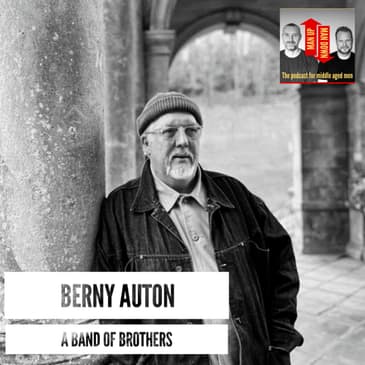
In this episode of "Man Up, Man Down," David and Volker talk to Berny Auton from A Band of Brothers. A Band of Brothers is an organisation that mentors young men involved with or at risk of involvement in the criminal justice system. We discuss the organisation's aim to support these young men in finding a purposeful and responsible life path. Founded in 2009, the organisation assists those who've faced trauma, substance abuse, or homelessness, often resulting from early family breakdowns or care system experiences.
Berny highlights the prevalence of undiagnosed mental health and nuerodiversity issues among young men in the criminal justice system and emphasises the importance of listening and non-judgmental support.
Berny talks about how the mentoring process is personalised and aims to empower young men to make their own decisions. Mentors and mentees meet regularly in a neutral environment, fostering trust and open communication. The organisation's approach is not about imposing decisions but supporting the young men in their journey to adulthood, offering a contemporary rite of passage that marks their transition into responsible adult life.
Berny opens up about his personal connection to the cause, driven by a traumatic event involving his daughter. This experience fuelled his commitment to contribute positively to young men's lives in his community, highlighting the transformative power of understanding, empathy, and community support.
Volker and David delve into the structure and support system for mentors within A Band of Brothers, ensuring they are well-equipped to assist without bearing the emotional weight alone. The discussion touches on the challenges and rewarding moments of mentoring, emphasising the importance of patience, commitment, and the impact of genuine human connection.
Berny's story and the work of A Band of Brothers illustrate the profound effect that compassionate mentorship can have on individuals and communities, offering hope and a path forward for young men at risk of falling through the cracks of the criminal justice system.
You can find out more about the amazing work carried out by A Band of Brothers here https://abandofbrothers.org.uk/ and you can connect with Berny here https://www.linkedin.com/in/bernardauton
Hosted on Acast. See acast.com/privacy for more information.
[00:00:00] Welcome to the Man Up Man Down podcast presented by Volker Ballueder and David Pawsey.
[00:00:12] We discuss the pressures and challenges faced by men approaching middle age that we're
[00:00:16] often too embarrassed to speak about with our friends.
[00:00:20] You can find us online at www.manupdown.com.
[00:00:26] Enjoy the show and don't forget to subscribe and leave us a review.
[00:00:34] Hello, welcome to another episode of Man Up Man Down.
[00:00:37] On today's episode this is one that I've been looking forward to quite a while.
[00:00:40] It's an organisation that got in touch with us quite a while ago but let's know we've
[00:00:44] been victims of our own success that we've had interviews booked in so far in advance.
[00:00:49] So on today we have Bernie Orton from Abandoned Brothers.
[00:00:55] Abandoned Brothers is an organisation that was founded in 2009 and it works with
[00:00:59] young men who have been involved in the criminal justice system, many of whom
[00:01:03] have experienced traumatic events early in their lives such as the breakup of family,
[00:01:07] being placed in care, who have struggled with issues such as substance and alcohol abuse
[00:01:12] and homelessness.
[00:01:14] The aim is to help them transition to adulthood that is not only crime free but one of the
[00:01:19] greatest sense of purpose and responsibility.
[00:01:21] It's an interesting fact that, you know, I say interesting, it's not a good fact
[00:01:27] but over half of the nearly 80,000 prisoners in UK prisons have poor mental health according
[00:01:33] to analysis from the Institute of Psychiatry and campaigners also point out that children
[00:01:38] and young people who come into contact with the criminal justice system are three times
[00:01:43] more likely to have mental health problems than those who do not.
[00:01:46] I mean, I sort of have a personal opinion that, you know, I'd be interested to
[00:01:52] know sort of how many diagnosed cases of neurodiversity, ADHD, you know, are in the prison system because,
[00:02:00] you know, I think, you know, obviously we're going to talk about some amazing work that
[00:02:04] you guys do but, you know, I guess a lot of the work, you know, it's could we get
[00:02:09] in there sooner?
[00:02:10] But anyway, sorry, Bernie, I'm rambling already.
[00:02:13] Thanks for joining us.
[00:02:14] Love to hear more and, you know, tell us about how you got involved with this
[00:02:18] organisation.
[00:02:19] So I got involved through a social media campaign on Facebook that I popped up on an
[00:02:26] algorithm somewhere and got sent a message about a group in Oxford that was talking to
[00:02:33] support mentor young men in the community.
[00:02:37] That sparked an interest.
[00:02:38] I went along to a meeting and met some other men who had a similar motivation and some
[00:02:45] of them were already working in that area and it appealed.
[00:02:49] And two weeks later, I was in a field in Sussex with a group of men from around the country
[00:02:55] who were also interested in this work.
[00:02:58] That was the beginning of my journey with the band of brothers.
[00:03:01] When I joined that organisation, what you described there was very much part of what
[00:03:06] we were doing and still do.
[00:03:09] I would like to just add a little nuance and that's so much as one of the things
[00:03:13] we would like to be and that we would be successful as if the young man who we're
[00:03:19] working with had never been arrested or never been on probation, never been on
[00:03:24] remand.
[00:03:26] And so one of the things we also try to address is young men who are at risk of
[00:03:31] involvement in the criminal justice system.
[00:03:34] You mentioned in your introduction and your own personal perspective that you're
[00:03:38] curious about how many men in the criminal justice system had undiagnosed or
[00:03:45] diagnosed diversity and I think it's a very significant number.
[00:03:49] That might be one of the reasons why that young man feels isolated or is
[00:03:57] seeking engagement with a group of people looking for inclusion.
[00:04:01] There's always a need to get the guidance he needs.
[00:04:06] We also know a significant number of those young men have challenges with
[00:04:10] learning.
[00:04:12] It might be dyslexia, dyspraxia, that type of neurodiverse.
[00:04:16] Diodiversity could simply be illiteracy or enumeracy or lack of confidence.
[00:04:23] And so yeah, the root cause or the reasons because it's very rarely is
[00:04:29] it one thing what drives our behaviour is often some of the things you
[00:04:35] talked about that we know that from the young men that we support who choose
[00:04:42] it take upon themselves to seek getting mentoring from an organisation like ourselves.
[00:04:48] I mean, it's sort of, I guess, well my perspective and understanding is that
[00:04:55] you know, all those sort of conditions, I'm not sure if that's the correct
[00:05:00] phrase, but you know with dyslexia and dyspraxia and other neurodiverse
[00:05:06] conditions, it is that feeling of isolation and not feeling understood.
[00:05:12] I mean, I looked at a video on the website and there was some quotes
[00:05:16] with the guys that you work with and one was it was amazing to know
[00:05:20] that someone was on my side and to know I could talk to someone without
[00:05:24] them judging me.
[00:05:25] And again, I sort of think about, I just, I mean,
[00:05:30] a number of people that me and Volker have sort of interviewed where,
[00:05:34] you know, they've kind of with neurodiversity, but they've,
[00:05:39] they've, you know, luckily, you know, they've made it and they've done
[00:05:42] very well, but they talk about at school, you know, they were isolated
[00:05:46] and seen as sort of well being judged.
[00:05:50] And I can just imagine that that is so much a part of what these young
[00:05:55] guys go through is constantly being judged and misunderstood.
[00:05:59] And sorry, there was another quote there, which was I wish I'd known
[00:06:03] about Band of Brothers a long time before because I would have saved
[00:06:06] myself six or seven years in prison.
[00:06:08] It's a very powerful quote there.
[00:06:11] I'm glad you mentioned that video because it sits on the home page
[00:06:15] of our website, bandofbrothers.org.
[00:06:17] It's four minutes long.
[00:06:18] And I don't think there's a better way of describing what we do
[00:06:22] because it's the experience of men who've been supported by our
[00:06:26] organization and men who work in our organization.
[00:06:29] It's their word.
[00:06:30] So it's a much better representation of our organization
[00:06:33] than I can provide in the podcast.
[00:06:35] So if any of your listeners have got four minutes of spare,
[00:06:38] I would urge them to go and have a quick look at what that
[00:06:42] it's obviously had an impact on you.
[00:06:44] And I hope it will have the same impact on them.
[00:06:48] That'd be great.
[00:06:49] Having said that, I'm also here to answer your questions
[00:06:51] and share it with you as well.
[00:06:54] Yeah, I did.
[00:06:55] All those things you talked about, those are,
[00:06:58] I think they're the common experience of all of us.
[00:07:01] You know, there are, you and I have been judged in our past
[00:07:05] by people often extraordinary well-meaning, loving people
[00:07:11] who are doing the best thing they can
[00:07:15] or the best they believe they're doing
[00:07:17] and in doing so, can touch a nerve.
[00:07:20] You know, I'll speak to my own experience.
[00:07:22] So I remember many, many, many occasions
[00:07:26] when my mum said to me, you know, how's good?
[00:07:28] But hey, what if you'd done this?
[00:07:32] And I carried that for a long time.
[00:07:34] And it, you know, compared to some of the.
[00:07:40] Crap people have to carry that may not be very significant
[00:07:44] or in my mind, it didn't seem very significant.
[00:07:47] And one of the things I learned about being
[00:07:49] in the band of brothers was a recognizing that
[00:07:53] the stone in your shoe is uncomfortable
[00:07:55] and you will feel better and be a better person
[00:07:58] when you get rid of it.
[00:08:00] It doesn't matter what the stone is.
[00:08:02] Doesn't matter how big it is.
[00:08:05] It's making you uncomfortable
[00:08:08] and then we get and help you support you,
[00:08:10] swallowing in that process.
[00:08:12] Then you're going to be in a better position
[00:08:14] to do all sorts of things.
[00:08:17] And that's what we try to do when we were
[00:08:19] women venturing the young man.
[00:08:21] So welcome from me as well.
[00:08:23] I mean, how does it look like day to day?
[00:08:26] So how do I, you know, without having watched the video,
[00:08:28] I want to be honest, how but I will,
[00:08:31] you know, how does it work on a daily basis?
[00:08:33] Do if I say do you go out and if I say find offenders
[00:08:35] and talk to the police or do you do rooms
[00:08:38] or streets off, you know, Oxford and, you know,
[00:08:40] you obviously in a few location.
[00:08:41] In most cases, young men are referred to us
[00:08:46] by an agency who's already working with them.
[00:08:50] Now that ain't in Seattle, I'll use the word agency.
[00:08:52] It may be a government organization.
[00:08:56] It could be like police and probation service.
[00:08:59] It could be part of social services.
[00:09:02] Significant number of the young men
[00:09:05] who are referred to us have been in the care system.
[00:09:10] Because all the time we work with the adults,
[00:09:11] they're 18 years old then.
[00:09:14] And they now have agency.
[00:09:15] They have decision-making authority.
[00:09:18] They can decide things and they're responsible
[00:09:20] for their own decisions.
[00:09:22] And the only difference between the 18 year old
[00:09:24] who makes that and the 17 year old who is supported
[00:09:28] is one day our birthday.
[00:09:30] It's a, suddenly they're in that situation
[00:09:32] where they're held responsible for their own actions.
[00:09:35] And then they're not always resourced to do that.
[00:09:38] So an organization makes a referral
[00:09:40] to a band of brothers and we then put them in,
[00:09:44] we are mental coordinator.
[00:09:48] We have 13, 14 circles around the country.
[00:09:51] The local mental coordinator will call that young man,
[00:09:54] make contact and check on a couple of things.
[00:09:56] One, the first thing you wanna make sure
[00:09:58] is this is something that the young man wants them to
[00:10:00] himself.
[00:10:01] This is an opt-in.
[00:10:03] It's not a requirement.
[00:10:04] And by working with the band of brothers
[00:10:06] it makes no difference to the engagement
[00:10:09] that you might have with other organizations.
[00:10:11] So it's a personal decision by that young man.
[00:10:14] He wants to opt-in and find out a little bit more
[00:10:17] about what we do and how we work.
[00:10:19] And then repair him with a mentor.
[00:10:22] And that mentor will meet with him
[00:10:23] on a one-to-one basis for about an hour,
[00:10:27] 45 minutes to an hour once a week.
[00:10:29] Not only meet for a coffee somewhere neutral,
[00:10:32] somewhere where they can talk
[00:10:35] with a degree of confidentiality,
[00:10:37] but it's also a place where they both feel comfortable
[00:10:40] in the community.
[00:10:42] Very good opportunities to go for a walk.
[00:10:45] Because when we walk and talk,
[00:10:47] you can have quite long silences on a walk
[00:10:50] and they're okay.
[00:10:52] And time to think about what you wanna say next.
[00:10:54] And it's just a neutral place
[00:10:56] where you can start to build a relationship
[00:11:01] based on trust.
[00:11:03] And while we have a number of topics
[00:11:08] that we're looking to,
[00:11:10] that we know from our experience
[00:11:11] are worthwhile talking about with a young man,
[00:11:14] it's really, we're trying to create circumstances
[00:11:18] which he feels comfortable in driving the conversation.
[00:11:22] I don't know what it is
[00:11:23] that's really important to him
[00:11:25] until I've had the opportunity
[00:11:27] to listen to him really carefully.
[00:11:29] That's one of the things we try to do
[00:11:31] is just listen really carefully, actively and without judgment.
[00:11:35] Because what we might hear to begin with might not be
[00:11:39] the thing that the young man wants to talk about.
[00:11:42] We don't always reveal ourselves immediately.
[00:11:44] We want to test the waters a little bit.
[00:11:47] What do I think this guy's coming on to talk to me?
[00:11:50] I need to understand a little bit more about him.
[00:11:54] So we also explain about our background
[00:11:56] and why we,
[00:11:57] that one-to-one mentoring takes place
[00:12:00] for around about 10 to 12 weeks.
[00:12:02] And what we're called the National Quest
[00:12:06] Preparation Cycle,
[00:12:08] NQPC, because what we're trying to do
[00:12:11] is help that young man prepare for the next stage
[00:12:15] of our engulgence with him,
[00:12:17] which is to invite him to come away with us for a weekend.
[00:12:21] And that weekend is spent in the company
[00:12:24] of other young men who are also going through their mentoring.
[00:12:28] And what we're going to offer them,
[00:12:30] what we do offer them is a contemporary rite of passage.
[00:12:33] It's a really clear threshold
[00:12:38] between adolescence and the responsibilities
[00:12:42] of a mature adult man.
[00:12:44] And during that weekend where we don't have any telephones,
[00:12:49] we don't have any radio, we don't have any clocks,
[00:12:52] we just spend time talking to each other
[00:12:55] and listening to each other through a guided program.
[00:12:59] And I think in essence, what we're saying to young man is,
[00:13:03] you know, what's your story?
[00:13:05] Is that the story you want to tell about yourself?
[00:13:09] And if it's not the story you want to tell,
[00:13:11] well, what do you wanna do different?
[00:13:14] What's the story you want to tell
[00:13:16] and how do we help you get from where you are now
[00:13:18] to where you can tell that story
[00:13:20] with all authenticity and truth?
[00:13:23] And that's a big step.
[00:13:25] And I don't know what it is for each man
[00:13:27] until I've had a chance to listen to him
[00:13:29] and why peers and other mentors will be listening
[00:13:33] and supporting him.
[00:13:36] And when he has decided that's what he wants to do,
[00:13:39] then the third stage of our program
[00:13:42] is to stand alongside him
[00:13:43] and help him move towards that objective.
[00:13:46] And that objective might be six months in advance,
[00:13:50] it might be two years, who knows what it might be?
[00:13:53] But we're not there to tell him,
[00:13:55] we're not standing in front of him and saying,
[00:13:57] follow me, I'll show you.
[00:13:59] We don't stand behind him and say,
[00:14:00] you need to go this way.
[00:14:02] We stand beside him and say, I'll walk with you.
[00:14:05] I'll support you, but these are your decisions
[00:14:09] you're making and if I can help you
[00:14:12] to think about the options
[00:14:14] and weigh up the pros and cons of decisions
[00:14:17] and then you to make a decision
[00:14:19] and then I'll hold you accountable.
[00:14:20] So if you say you're going to get this done by next week,
[00:14:24] when we meet next week,
[00:14:25] one of the things I'll ask is, have you done that?
[00:14:28] And if you have, fantastic.
[00:14:31] And if you haven't, no judgment,
[00:14:34] but there might be some reasons why
[00:14:36] and that might be worth exploring.
[00:14:38] So that's the nature of the work we do.
[00:14:41] We're not a therapeutic or a clinical organisation.
[00:14:44] As I know, you're one of the themes around your podcast
[00:14:47] is mental health, but you know,
[00:14:50] mental health and wellbeing might be
[00:14:54] one of the things that this young man is looking to address.
[00:14:57] Hello, it's Volker here.
[00:14:59] I hope you enjoy this episode.
[00:15:02] You might not realise that I have been coaching
[00:15:04] for almost a decade through both third parties
[00:15:07] and private clients.
[00:15:09] During that time, I've worked with brands
[00:15:11] such as General Electric, Imperial Brands, DHL and Pepsi.
[00:15:17] However, this year I'm putting a big emphasis
[00:15:20] on growing my private coaching practice,
[00:15:22] improving lives of middle-aged men in leadership positions.
[00:15:26] So if you hit mid-life transition point
[00:15:28] and you might be a bit stuck
[00:15:30] or looking to improve your work-life balance,
[00:15:32] your career or productivity,
[00:15:35] you want to build a new habit
[00:15:37] where you just want to become a better version of yourself.
[00:15:40] Please hit me up.
[00:15:42] You can reach me on Volker.natus, that's Volker at
[00:15:46] obnat.us or LinkedIn, whatever is easiest.
[00:15:53] Thanks and now back to the episode.
[00:15:58] I mean, as I say, it's a classic coaching approach, right?
[00:16:02] You give them enough guidance,
[00:16:04] but they have to make their own decisions and move forward.
[00:16:08] I mean, how well is it accepted by, if I say, youngsters?
[00:16:13] Right? So I'm just envisaging it.
[00:16:16] Please tell me, I'm totally on the wrong track here.
[00:16:20] If you are, I don't know, 17, 18, right?
[00:16:23] You're on the wrong side of the tracks.
[00:16:25] You got yourself in trouble.
[00:16:28] And there's a man coming up to you,
[00:16:31] if I say a man coming up to you, it's a bit dodgy.
[00:16:32] But you get introduced to someone,
[00:16:36] if I say a little bit older and wiser.
[00:16:38] And that process, I teach you how to not go into prison kind of thing
[00:16:43] and help you in your life.
[00:16:44] People go like, oh yeah, this is great, this is what I want to do.
[00:16:47] Or is there more of a hesitant bit where they go like,
[00:16:50] oh actually, I already have social services,
[00:16:52] I don't need someone else to tell me what to do.
[00:16:55] How is it accepted?
[00:16:57] So there are things that we offer, which we believe differentiate ourselves
[00:17:02] significantly from,
[00:17:04] I'm not taking away from the amazing work
[00:17:06] that's done by people in social services
[00:17:09] and supported accommodation, lease and probation.
[00:17:12] So a lot of those organizations,
[00:17:15] they're statutory organizations,
[00:17:17] they are working very hard, they're overstretched,
[00:17:21] they're underfunded, all sorts of issues.
[00:17:23] There's a couple of differences.
[00:17:25] One, we're volunteers.
[00:17:27] I don't do this for a job.
[00:17:29] I do this because I think it's important in my community.
[00:17:33] Now that surprises most young men.
[00:17:37] Why would this person give up their time
[00:17:40] to spend it with me for no reward?
[00:17:44] Whereas the reward is astonishing.
[00:17:48] Absolutely mind-blowing.
[00:17:50] When a young man does come back and say,
[00:17:54] you know what, as a result of talking to you
[00:17:57] or your organization and your peers,
[00:18:00] I now have a job.
[00:18:02] Or I have a family.
[00:18:03] I've reestablished a link with somebody who's really important to me.
[00:18:07] In some cases, I'm only a lie
[00:18:12] because of the things that you did for me.
[00:18:16] So the first thing is we're volunteers.
[00:18:18] The second thing is
[00:18:21] that young man is making a judgment about us.
[00:18:25] And we might address that and say,
[00:18:27] are you making assumptions about me?
[00:18:30] Because I'm trying really hard
[00:18:31] not to make assumptions about you.
[00:18:34] And you don't know my lived experience.
[00:18:37] And we come, the men who come with a huge variety
[00:18:42] of their lived experience.
[00:18:46] If I don't mind, David,
[00:18:49] I'll just use a very simple example.
[00:18:52] I know how it feels to have lost my dad.
[00:18:57] I feel your grief.
[00:19:00] Because that is a common experience.
[00:19:02] I don't know whether that's an experience for Volker, yeah?
[00:19:06] But it is something that,
[00:19:08] so there's an authenticity to our relationship
[00:19:12] based on that fact.
[00:19:15] I've had all sorts of other experiences in my life.
[00:19:19] Some good, some bad.
[00:19:21] And that's true of a lot of the men
[00:19:24] because we are older men.
[00:19:26] We've just been around the block.
[00:19:28] And in some cases, our lived experience is significantly,
[00:19:35] it might be the same.
[00:19:37] It might be significantly different from the young man
[00:19:38] but we're just trying to say,
[00:19:40] we don't come, we are coming here
[00:19:42] to claim we've lived your life.
[00:19:46] I've lived mine and I will share
[00:19:49] what I think is relevant.
[00:19:51] And you could ask me questions
[00:19:52] that I will choose not to answer or to answer you.
[00:19:56] That's the way we build up trust
[00:19:58] is by being authentic with the young men that we work.
[00:20:02] I mean, going back to what,
[00:20:04] we're Volker's sort of question of,
[00:20:05] how do they kind of accept it?
[00:20:08] Or what is their reaction to it?
[00:20:10] And I guess my thought is, well,
[00:20:14] a lot of the time it probably is, wow,
[00:20:17] here's the first time in their lives
[00:20:19] that someone that is taking an interest in them,
[00:20:24] not because they have to or it's like,
[00:20:27] wow, someone's actually creating time for me.
[00:20:32] I remember working with a young man,
[00:20:35] it was on a weekend and he was,
[00:20:39] we were doing some work together as a group.
[00:20:42] He was telling his story or a story.
[00:20:46] I think the session was about 45 minutes or so.
[00:20:49] And we finished that, it was great.
[00:20:51] We moved on to the next thing
[00:20:53] and it was the top of my shoulder
[00:20:54] and there was this young man there
[00:20:58] with tears running down his face.
[00:21:00] And he said to me, nobody has ever listened to me
[00:21:05] for 45 minutes without interrupting.
[00:21:09] And there is something I think it's a quote on the video.
[00:21:13] There is no greater privilege
[00:21:16] than the ability to offer a man or someone else.
[00:21:19] I'll just listen to what you have to say.
[00:21:22] And it has an enormous impact.
[00:21:25] So that's what we're doing,
[00:21:26] we're trying to build up a level of trust and honesty.
[00:21:30] And when you hear, at the end of the whole process
[00:21:34] and we've done 10 weeks of preparation,
[00:21:36] the quest weekend,
[00:21:38] and then we've completed the mentoring afterwards,
[00:21:41] we celebrate their welcome into our community
[00:21:45] as an adult man through what we call the homecoming ceremony.
[00:21:49] So we use a series of contemporary rituals
[00:21:51] to mark these important steps.
[00:21:55] And during those occasions, you'll hear fantastic testimony
[00:21:59] from these young men about what it's meant to them
[00:22:01] and how they've, the connection they've built
[00:22:04] because very often society doesn't give a lot of opportunity
[00:22:08] for young men to sit down with the elders
[00:22:11] and listen to them.
[00:22:13] And we try to provide that.
[00:22:16] And going back to something that Volker asked me
[00:22:18] or one of your other distinctive features
[00:22:20] of our organization is when they completed their homecoming,
[00:22:25] that is only the beginning of their journey
[00:22:28] in our organization.
[00:22:30] They are members for life.
[00:22:32] We don't ever turn a man away from our circle.
[00:22:37] They can go to any cell.
[00:22:38] That's one day they may be resourced in a position
[00:22:43] where they can be mentoring other people.
[00:22:45] And indeed we have young men
[00:22:47] who are in leadership of our organization,
[00:22:50] who have joined us or were originally mentees
[00:22:55] and are now experienced mentors training other mentors.
[00:22:59] So because we are a volunteer organization,
[00:23:04] we are somebody saying when you come here,
[00:23:08] you'll never get turned away again.
[00:23:10] And that's a big difference is that there's a commitment.
[00:23:13] I had a call last night with a young man
[00:23:17] who wants to come back to circle.
[00:23:19] We haven't heard from him for over a year.
[00:23:22] But he's now in the right place to wanna come back
[00:23:25] or then you come back, it's great.
[00:23:27] So it's a lifelong membership, is everything?
[00:23:30] It's a lifelong commitment
[00:23:31] because even side it's a membership.
[00:23:33] It's a side, if I want great men in my community,
[00:23:38] that isn't time bound.
[00:23:39] Because I want them to be great men and great dads
[00:23:42] and great grandads.
[00:23:44] So that's the commitment.
[00:23:46] It's our community making.
[00:23:49] The reason I'm asking is so,
[00:23:51] I don't know if David even knows that or not.
[00:23:53] I'm a member of the German fraternity.
[00:23:54] And so very similar, you have a lifelong,
[00:23:58] I call it membership,
[00:23:59] but you have a lifelong commitment.
[00:24:01] So I still, if I say financially,
[00:24:03] but also from a mentorship coaching perspective,
[00:24:06] support the younger members.
[00:24:08] Whether they are alumni by now
[00:24:09] or whether they're still in their study days.
[00:24:13] And if I say it's similar,
[00:24:16] it's more around academics and personal development.
[00:24:20] That's what we focus on in our group.
[00:24:22] And others are about religion, et cetera, et cetera.
[00:24:25] So those are different groups.
[00:24:27] But it makes sense because if you can grow that
[00:24:30] within a community,
[00:24:31] you get a strong community overall.
[00:24:33] Right?
[00:24:34] I feel so.
[00:24:35] So that makes, to me it makes a lot more sense,
[00:24:38] but I don't know David,
[00:24:39] did I ever tell you that?
[00:24:41] You've mentioned about your fraternity a few times
[00:24:45] and I've just kind of created an image in my head
[00:24:47] of what that involves and what that means.
[00:24:50] Jumping and drinking.
[00:24:51] And basically.
[00:24:53] The dueling scar on the cheek.
[00:24:55] Yeah.
[00:24:55] Yeah.
[00:24:56] What happens?
[00:24:57] I have them on the side of my head actually.
[00:25:00] I don't have my...
[00:25:02] But you know, it's interesting you say that
[00:25:04] because there is that yearning in all of us
[00:25:07] to be in a group that welcomes us.
[00:25:12] And if that group is...
[00:25:14] And that yearning can lead to engagement with groups
[00:25:17] who provide enormous amounts of positivity
[00:25:20] and support and encouragement.
[00:25:23] But they could also lead to engagement
[00:25:25] with organisations or groups who take advantage of it.
[00:25:28] And that's one of the reasons why we want to work
[00:25:32] with young men who are at risk of the criminal justice system
[00:25:34] is we know that significant number of young men
[00:25:38] who have been involved in the care system,
[00:25:41] you know, come out of the care system
[00:25:42] that have been looked after children.
[00:25:45] They're extraordinarily vulnerable to exploitation
[00:25:48] by gangs and county lines
[00:25:51] and they find it...
[00:25:53] They may be challenging to find a job.
[00:25:56] If you find you can't...
[00:25:58] Don't have the dignity of an income
[00:25:59] that makes housing really difficult to get hold of,
[00:26:03] then you don't have an address.
[00:26:04] It just becomes this horrible, horrible spiral,
[00:26:07] a downward spiral and we can do what we can
[00:26:11] to support those young men who choose not to...
[00:26:15] They don't want to go down that path.
[00:26:17] I mean, that was sort of one of the other things that...
[00:26:20] Well, I can't remember if I mentioned it or not,
[00:26:22] but on the flip side of...
[00:26:25] That's the first time someone's taken that time to listen to me.
[00:26:29] But yeah, without it kind of being part of their job
[00:26:32] or whether it's relative is all...
[00:26:35] Or, you know, what's in it for them?
[00:26:38] Why are they trying to take advantage of me?
[00:26:41] So is this the first time...
[00:26:42] Well, when you got involved with a band of brothers,
[00:26:45] is this the first sort of time
[00:26:47] that you'd got involved with this kind of demographic,
[00:26:50] shall we say?
[00:26:52] This kind of demographic, you mean men?
[00:26:55] I mean, well, I'm just saying that, I guess.
[00:26:58] I mean, I'm making a judgment about...
[00:27:01] And I really respect it.
[00:27:03] Actually, we challenge language.
[00:27:05] Language is really...
[00:27:06] The words we choose are really important
[00:27:08] and they can have...
[00:27:09] They're loaded with meaning for other people
[00:27:11] that we don't always recognize.
[00:27:13] Yeah.
[00:27:13] And I really appreciate you, Zop.
[00:27:15] I sense you discovered what you're trying to say
[00:27:18] and exactly what you're trying to say.
[00:27:20] It wasn't...
[00:27:22] In my own personal experience,
[00:27:24] I've worked with young men in the past
[00:27:27] in a sort of professional capacity a little bit.
[00:27:29] I was a school teacher for a while.
[00:27:31] I got involved with youth groups.
[00:27:34] I have two lovely girls who are now young women.
[00:27:37] And so I didn't have a huge amount of in contact with boys
[00:27:43] and young men.
[00:27:43] So they were the large hairy things
[00:27:46] which appeared at my front door on occasions
[00:27:48] then ate the contents of my fridge.
[00:27:50] And I was, I think, suspicious of them.
[00:27:54] But, yeah, they're almost certain.
[00:27:57] I share this with her permission and endorsement.
[00:28:02] My daughter was sexually assaulted by a gang
[00:28:06] when she was very young.
[00:28:07] She was drunk at a party.
[00:28:10] And she eventually told me about that.
[00:28:15] And I wanted to...
[00:28:18] I couldn't find the perpetrators.
[00:28:20] I couldn't deal with them on an individual basis.
[00:28:26] But I made this...
[00:28:27] What can I do about this?
[00:28:28] What can I do to make sure this doesn't happen?
[00:28:32] And I can't guarantee that's not going to happen.
[00:28:35] But what I can do is do my best to make sure that
[00:28:38] there were...
[00:28:39] I do what I can to mean that young men
[00:28:44] in our community have, possibly,
[00:28:47] the opportunity to think more wisely
[00:28:50] about what their decisions are going to be.
[00:28:52] Because the impact of their decisions can be horrific.
[00:28:56] Those decisions were made by a group of boys,
[00:29:00] and I call them boys because I don't...
[00:29:02] They were very easy to picture the fact
[00:29:05] that they were egging each other on
[00:29:08] and all sorts of things.
[00:29:09] The damage they did was horrific.
[00:29:12] So I wanted to address that.
[00:29:15] And that was my motivation for joining a band of brothers.
[00:29:18] And we all come with different motivations
[00:29:20] and different experience.
[00:29:23] Man Up, Man Down is sponsored by Well-Doing.
[00:29:25] There's someone who has seen a counsellor
[00:29:27] for a number of years, I think their approach is great.
[00:29:29] They want you to find the mental health professional
[00:29:31] who is right for you.
[00:29:33] You can fill to your search to highlight therapists
[00:29:35] with expertise where you need it,
[00:29:36] or you can pay to use their personalised matching service.
[00:29:40] The people who run Well-Doing are experts
[00:29:42] in mental wellbeing,
[00:29:43] and they also have loads of posts and interviews
[00:29:45] to keep your mental health in good shape.
[00:29:47] Take a look at WellDoing.org.
[00:29:51] Was that the immediate kind of reaction,
[00:29:55] or did it take a couple of years
[00:29:58] to kind of think,
[00:30:00] well, this is how I can make a difference all?
[00:30:04] It was for me...
[00:30:06] I can only talk about my personal story.
[00:30:10] For me, it was a fairly immediate reaction,
[00:30:15] but I learned something in a band of brothers
[00:30:17] which I didn't expect.
[00:30:19] Because one thing we haven't touched on as well
[00:30:21] about our organisation is we also recruit, train,
[00:30:25] support and provide mentoring
[00:30:28] to a whole number of volunteer mentors.
[00:30:31] Men from our community who prepare to step out and say,
[00:30:35] I want to make a difference.
[00:30:37] And the way in which we talked a little bit
[00:30:40] earlier about the importance of a mental being authentic
[00:30:45] to a young man,
[00:30:48] that's the way you bridge and build trust.
[00:30:50] And I came in to our organisation
[00:30:54] with a very strong motivation.
[00:30:56] I had some experience working in mentoring and counselling
[00:31:01] and supporting young people.
[00:31:02] And I'd been a coach in my professional life
[00:31:05] and I felt I was extraordinarily well-equipped
[00:31:09] to deal with this and deliver.
[00:31:13] What I learned in our process,
[00:31:15] because when we train and develop and support our mentors,
[00:31:19] we actually run them through exactly the same programme
[00:31:22] as we do for the young men.
[00:31:24] Because that's going to be a common experience
[00:31:27] they can tap into as they engage
[00:31:29] and work with mentors later on.
[00:31:31] But during that process,
[00:31:33] I recognised there were things that in my past
[00:31:36] that I had not dealt with,
[00:31:38] that I needed to resolve.
[00:31:40] And one of those was my issues with anger.
[00:31:44] And I was so extraordinarily angry
[00:31:48] and not in control of that
[00:31:50] that my daughter was afraid to tell me
[00:31:54] that she'd been assaulted.
[00:31:56] And so she kept that from me and from her mum the full year.
[00:32:02] I mean, well thank you for sharing that.
[00:32:06] Yeah.
[00:32:07] I can't imagine.
[00:32:08] I mean, and well, in some ways I can, I guess,
[00:32:11] which is why I sort of asked was that you're immediate.
[00:32:15] You know, because, yeah, I guess, you know,
[00:32:19] the least an approach would be my first thought.
[00:32:22] And I guess I can relate to the fact
[00:32:25] that my daughter probably has seen me get angry enough
[00:32:30] to think I shouldn't tell that.
[00:32:33] And I wouldn't wish that on you, David,
[00:32:36] or any other dad.
[00:32:38] It was horrible.
[00:32:42] But it also, in dealing with my own anger,
[00:32:47] has put me in a much better position now
[00:32:50] to recognise the anger in a young man.
[00:32:53] And that's a common link.
[00:32:56] You know, I don't have all...
[00:32:58] That's my lived experience.
[00:33:01] And it's different from theirs.
[00:33:03] But it's one which I've spent quite a bit of time
[00:33:06] working with my peers in a band of brothers
[00:33:10] to address and recognise and talk about.
[00:33:12] We describe it as doing our own work
[00:33:15] because we have to do that in order to be the authentic person
[00:33:20] who supports a young man.
[00:33:22] This isn't an academic exercise.
[00:33:24] You can't train someone to be a mentor.
[00:33:28] You have to live to be a mentor.
[00:33:30] And that's part of what we do.
[00:33:33] And I stand alongside lots of other men
[00:33:37] from our community around Oxford.
[00:33:39] And indeed, there are communities in Brighton and Hastings
[00:33:43] and Falmouth and Bristol and Manchester
[00:33:46] who also have a hugely varied life experience.
[00:33:51] We bring that to bear in common
[00:33:53] to support these young men.
[00:33:54] So collectively, there's probably very little
[00:33:58] that a young man would present to us
[00:34:00] that we can't turn around and say,
[00:34:01] actually, you know what?
[00:34:03] I think there's a guy who might share that experience
[00:34:06] who we can lean into and get support from.
[00:34:10] So have you come up with a situation where you've...
[00:34:15] You know, you're dealing with lads
[00:34:18] that have done the same thing that happened to your daughter?
[00:34:23] Yes, I have.
[00:34:25] Wow.
[00:34:27] Well, I have to take my hat off to you for being a good man.
[00:34:33] Well, yeah, and it's...
[00:34:34] Yeah, I'm not going to condone it.
[00:34:37] I mean, I don't feel like to do...
[00:34:38] It is a challenge because sometimes
[00:34:41] you will be faced with things that you...
[00:34:45] Yeah.
[00:34:47] Would otherwise...
[00:34:49] You know, maybe I would have just been on a rage beforehand.
[00:34:55] Try and make things a little bit more positive.
[00:34:58] I mean, are there aspects that have sort of surprised you
[00:35:05] with these people, with these boys that you're dealing with
[00:35:09] that has completely changed your kind of...
[00:35:14] I mean, I think what you talk about is, well,
[00:35:18] it's the Atticus Finch quote,
[00:35:20] you can't judge a man till you've walked a mile in your shoes
[00:35:23] and it's sort of...
[00:35:28] It's easy to judge someone
[00:35:30] if you don't know the circumstances that they've lived in.
[00:35:34] So, you know, it's kind of that thing of,
[00:35:37] I don't think anyone goes out intentionally thinking,
[00:35:40] I want to cause pain and suffering.
[00:35:43] You know, my God philosophy is,
[00:35:46] it's always defense mechanism.
[00:35:48] Don't judge anyone till you know their story, really.
[00:35:51] But yes, I mean, have there been sort of things where you're like?
[00:35:56] I mean, I think one of the things that...
[00:36:00] One of the things that continues to motivate me,
[00:36:02] and this can be a very challenging thing to...
[00:36:08] A very challenging offer because it's...
[00:36:10] There's no requirement for the young man to turn up.
[00:36:14] I've sat and waited on many, many occasions
[00:36:18] for a guy to turn up for an appointment that he made
[00:36:21] to meet with me and he hasn't turned up.
[00:36:25] Now, I can make all sorts of assumptions as well
[00:36:28] why he hasn't turned up.
[00:36:30] But I made it correct to be there for an hour.
[00:36:32] So I might as well just be there for an hour
[00:36:33] and I'll read a book.
[00:36:35] That could be really frustrating and really hard
[00:36:37] but it might also be that he is equally nervous.
[00:36:41] He's equally scared.
[00:36:42] He doesn't know how to make that step.
[00:36:44] He doesn't trust me.
[00:36:47] He's suspicious.
[00:36:48] All sorts of really good reasons.
[00:36:49] He may have lots and lots of really, really good reasons
[00:36:52] why he isn't there either.
[00:36:53] And you deal with that.
[00:36:56] But I took out, I'll share a story.
[00:36:58] I work with the young man.
[00:36:59] We had, I think it was six to eight appointments.
[00:37:06] He'd be to one and he didn't turn up for the next.
[00:37:08] It was just a mess and eventually there was no contact
[00:37:12] and tried to make contact.
[00:37:15] Won't get through and you said, okay, frustrating.
[00:37:20] We'll move on to the next.
[00:37:22] Nine months later, Christmas morning, phone rings
[00:37:28] and he calls and says,
[00:37:30] I just want to wish you and your family
[00:37:31] a very happy Christmas.
[00:37:35] Where did that come from?
[00:37:37] Yeah, that joy you feel is phenomenal.
[00:37:43] And it was that and now we've reestablished contact.
[00:37:48] We've now been in contact with,
[00:37:50] are we getting on three years?
[00:37:52] Every now and then they get a call.
[00:37:54] Hiya, Bernie.
[00:37:56] How you doing?
[00:37:57] What's okay?
[00:37:58] What are you up to?
[00:37:59] This is what I'm up to.
[00:38:00] I need a chat or whatever I might be.
[00:38:02] That's the thing that most surprises me is that
[00:38:07] we work in a fairly fast-paced society
[00:38:11] and a lot of us are looking for relatively
[00:38:15] instant gratification, the young man and us and me.
[00:38:21] But actually that does,
[00:38:22] I think one of the things I've learned in this process
[00:38:25] is it can take more time than you think
[00:38:30] and sometimes it takes less time than you think
[00:38:33] but it generally doesn't take the time that you think
[00:38:36] for something to be resolved and moved forward.
[00:38:39] Yeah, for me that's one of the things
[00:38:40] that I've learned though, the great pieces of learning
[00:38:42] and also one of the great rewards.
[00:38:45] There's always these surprises.
[00:38:49] I mean I've got hundreds more questions.
[00:38:53] Well, we're in some other time.
[00:38:57] We've only got a few minutes left.
[00:38:59] I mean, so I think you sort of made
[00:39:02] there's a couple of points.
[00:39:04] Do they have like a Bernie phone number
[00:39:07] or do they have like your number?
[00:39:10] Well, you know, is there like a band of brothers
[00:39:12] number that they ring?
[00:39:14] No, we normally establish a personal relationship
[00:39:18] with the young man.
[00:39:19] I mean if the young man chooses not to engage with us then
[00:39:24] then we delete those records later on.
[00:39:29] But generally we work with that.
[00:39:32] You know, and the other thing is
[00:39:37] as an older man, the ways in which I work
[00:39:41] communicate aren't necessarily the ones
[00:39:43] that work for young people.
[00:39:44] So we get very, very, you get much better
[00:39:48] at what's happened to another social media platforms
[00:39:53] as mechanisms to connect.
[00:39:55] But what we're trying to do is we're using those
[00:39:57] just to create circumstances in which we can have
[00:40:00] a face-to-face conversation.
[00:40:02] That's what we're trying to do.
[00:40:05] That I can sort of still remember how to do pretty well.
[00:40:09] To you kind of, well, A, how do you kind of
[00:40:13] almost separate yourself emotionally?
[00:40:16] And I mean, is it the onus always on them
[00:40:19] to be in contact with you
[00:40:20] rather than you being in contact with them?
[00:40:24] So what we're trying to establish is that
[00:40:27] this is his mentoring journey
[00:40:30] and he's engaged with it and we're there to support him.
[00:40:34] So we're holding him to the commitment.
[00:40:38] Where are we going to meet?
[00:40:39] We're going to meet next Thursday at this coffee shop.
[00:40:43] Okay, I'll be there.
[00:40:46] I'm going to make you a commitment.
[00:40:47] I will be there.
[00:40:48] I'll show you and I want you to make the same commitment
[00:40:51] and we meet up and he may or may not
[00:40:54] just be make the next meeting next next meeting.
[00:40:56] So generally we're the communication is taking place
[00:41:00] at the meetings.
[00:41:01] We're not chasing them.
[00:41:03] If I don't hear from him,
[00:41:04] I might chase following him up with a phone call.
[00:41:07] And one of the things I'll say to him
[00:41:08] right at the beginning of the mentoring relationship
[00:41:10] is I'm not going to chase you.
[00:41:12] Yeah, this is I will call.
[00:41:14] I will, I chase you.
[00:41:16] If I'm going to be late,
[00:41:17] I will call you and tell you I'm going to be late.
[00:41:19] Could try not to be, but that could happen.
[00:41:22] Or I can't be there because I'm unwell
[00:41:24] or I've got a piece of work on.
[00:41:26] We are volunteers and we're not available all the time.
[00:41:31] So we're trying to establish those boundaries
[00:41:35] and those agreements that will be with each other.
[00:41:41] I mean, do you have any more questions, Volker?
[00:41:44] To be honest, I had a few.
[00:41:45] I didn't get a word in the door again.
[00:41:47] Come on.
[00:41:48] I'll ask some more questions.
[00:41:50] I'll put some of this stuff out and put yours back here again.
[00:41:53] But no, you know, it is,
[00:41:55] you know, what David asked as well, right?
[00:41:57] How do you support each other?
[00:41:58] How do you deal with your own mental health?
[00:41:59] Right.
[00:42:00] All right.
[00:42:01] That's a good question.
[00:42:02] So I was kind of like what what David kind of, I think was
[00:42:04] a little bit of a second.
[00:42:06] No, no, no, that guy tried to think.
[00:42:07] So one week we meet in circle once a week.
[00:42:11] Right.
[00:42:11] So we meet up.
[00:42:13] There's no compulsion to go to somewhere.
[00:42:15] You're encouraged to go.
[00:42:16] I did the circle.
[00:42:17] We talk about our journey at our mentoring.
[00:42:21] I go to mentoring supervision once every once a week,
[00:42:26] once in a couple of weeks.
[00:42:27] So if you're mentoring, you're required to to log your call
[00:42:32] to just to make sure that it was a record of we've had this meeting
[00:42:36] and you're required to go to supervision and supervision is
[00:42:40] is not about telling you how to be a mentor.
[00:42:44] It's about supporting you to be the best mentor you can be.
[00:42:48] And often you learn that by listening to other mentors.
[00:42:51] And having that shared frustration of the young man didn't turn up.
[00:42:56] What do I do?
[00:42:57] Well, you it's his decision.
[00:43:00] Actually by deciding not to come, he's made a decision.
[00:43:05] Isn't that a good thing?
[00:43:07] Now, wasn't the best decision he could make?
[00:43:10] Don't know.
[00:43:11] But he chose to make a decision not to come.
[00:43:14] And actually saying to someone, you know,
[00:43:16] Oh, I couldn't be bothered.
[00:43:18] Okay.
[00:43:19] That's the reason why you couldn't be here.
[00:43:22] So why can't you be bothered?
[00:43:25] That's an interesting far one question.
[00:43:26] So mentoring supervision as well.
[00:43:28] Things we also have within each circle.
[00:43:30] We have a someone who's responsible safeguarding.
[00:43:33] You have a national organization that has a safeguarding responsibility
[00:43:38] and duty of care.
[00:43:39] We do training in our circles and weekends for staff.
[00:43:45] There's a leadership development program within a better form.
[00:43:49] And because the other half of our program,
[00:43:51] not really talked about that very much is we also provide
[00:43:56] a fantastic opportunity for men with experience
[00:44:00] to be in service to their community.
[00:44:04] We don't, we do support young men,
[00:44:06] but we also help to build community by providing a mechanism for
[00:44:12] you and me and others to go and contribute
[00:44:15] and that's very important.
[00:44:16] So we do some induction and training
[00:44:20] and development of those people as well.
[00:44:23] And that's part of the support structure
[00:44:25] that means that I don't have to carry this on my own.
[00:44:29] I have support all the time for that.
[00:44:33] I think that's super important, right?
[00:44:35] Yeah.
[00:44:35] It's extraordinary important.
[00:44:37] The work you do does require, you know,
[00:44:42] so it helps and then the support.
[00:44:44] And the other thing is by seeking and gaining
[00:44:47] and getting support from other men,
[00:44:50] I might actually be a great example to the young man.
[00:44:53] Yeah.
[00:44:53] I don't do this on my own.
[00:44:55] I can't do this on my own.
[00:44:57] I go for support.
[00:44:58] I go for help.
[00:45:00] I help other men.
[00:45:02] I'm in a community of people who are supporting me
[00:45:05] in order to deliver this
[00:45:07] and you don't have to do this on your own either.
[00:45:11] You may get your support from us,
[00:45:13] but you can get your support from friends,
[00:45:16] family, peers, teachers, coaches, whatever else it might be.
[00:45:20] You don't have to do this on your own.
[00:45:22] And giving a young man a mission to go and get help
[00:45:28] is very empowering.
[00:45:30] I mean, as I say, I've been looking forward
[00:45:33] to this episode for a while.
[00:45:36] But yeah, I mean, I've been blown away by,
[00:45:38] well, by rope and the spurny.
[00:45:41] You know, thanks for being so vulnerable yourself.
[00:45:45] But yeah, I mean, well, I guess the question is,
[00:45:49] so if I want to get involved with a band of brothers,
[00:45:52] how do I get involved?
[00:45:53] So the first thing I'd like to do is go to bandofbrothers.org,
[00:45:58] which is our website.
[00:46:00] You just put a band of brothers in there with all one word.
[00:46:03] Otherwise you get a quite interesting series
[00:46:06] about text based on the war.
[00:46:09] A band of brothers, all one word
[00:46:10] and on that, on the front pages, it's a four minute video
[00:46:13] that will either tell you that you're curious or not.
[00:46:17] There's also a link there that will contact your local circle
[00:46:20] and there are 14 around the country
[00:46:22] or just contact the website
[00:46:23] so you're interested in our organization.
[00:46:26] And why are you interested?
[00:46:27] Are you interested because you want to be a mentor
[00:46:31] or are you interested because you know a young man
[00:46:34] who might benefit from your support?
[00:46:37] That's it.
[00:46:38] Then we'll either give you a call or get in contact
[00:46:41] and answer your questions, but we welcome...
[00:46:44] We can only offer great mentoring
[00:46:46] if we've got great mentors to do it.
[00:46:49] And they're as important as reaching out
[00:46:55] and being introduced to young men who can get us
[00:46:58] who might benefit from our support if they opt into it.
[00:47:02] Thanks for everything you do, Birdie.
[00:47:04] Thanks for sharing your story.
[00:47:06] Thanks very much.
[00:47:07] Thank you.
[00:47:12] Thanks for listening to this week's episode.
[00:47:14] Feel free to reach out to Folker or David via our website
[00:47:17] www.manupdown.com
[00:47:20] or podcast at manupdown.com
[00:47:22] with any feedback
[00:47:23] or to let us know what topics you'd like us to cover in the future.
[00:47:27] Hear you again soon.